On teaching developmental biology in the 21st century: a biofundamentalist perspective

On teaching developmental biology and trying to decide where to start: differentiation

Having considered the content of courses in chemistry [1] and  biology [2, 3], and preparing to teach developmental biology for the first time, I find myself reflecting on how such courses might be better organized.  In my department, developmental biology (DEVO) has returned after a hiatus as the final capstone course in our required course sequence, and so offers an opportunity within which to examine what students have mastered as they head into their more specialized (personal) educational choices.  Rather than describe the design of the course that I will be teaching, since at this point I am not completely sure what will emerge, what I intend to do (in a series of posts) is to describe, topic by topic, the progression of key concepts, the observations upon which they are based, and the logic behind their inclusion.

Modern developmental biology emerged during the mid-1800s from comparative embryology [4] and was shaped by the new cell theory (the continuity of life and the fact that all organisms are composed of cells and their products) and the ability of cells to differentiate, that is, to adopt different structures and behaviors [5].  Evolutionary theory was also key.  The role of genetic variation based on mutations and selection, in the generation of divergent species from common ancestors, explained why a single, inter-connected Linnaean (hierarchical) classification system (the phylogenic tree of life →) of organisms was possible and suggested that developmental mechanisms were related to similar processes found in their various ancestors. 

So then, what exactly are the primary concepts behind developmental biology and how do they emerge from evolutionary, cell, and molecular biology?  The concept of “development” applies to any process characterized by directional changes over time.  The simplest such process would involve the progress from the end of one cell division event to the beginning of the next; cell division events provide a convenient benchmark.  In asexual species, the process is clonal, a single parent gives rise to a genetically identical (except for the occurrence of new mutations) offspring. Often there is little distinction between parent and offspring.  In sexual species, a dramatic and unambiguous benchmark involves the generation of a new and genetically distinct organism.  This “birth” event is marked by the fusion of two gametes (fertilization) to form a new diploid organism.  Typically gametes are produced by a complex cellular differentiation process (gametogenesis), ending with meiosis and the formation of haploid cells.  In multicellular organisms, it is often the case that a specific lineage of cells (which reproduce asexually), known as the germ line, produce the gametes.  The rest of the organism, the cells that do not produce gametes, is known as the soma, composed of somatic cells.   Cellular continuity remains, however, since gametes are living (albeit haploid) cells.  

It is common for the gametes that fuse to be of two different types, termed oocyte and sperm.  The larger, and generally immotile gamete type is called an oocyte and an individual that produces oocytes is termed female. The smaller, and generally motile gamete type is called a sperm; individuals that produces sperm are termed male. Where a single organism can produce both oocytes and sperm, either at the same time or sequentially, they are referred to as hermaphrodites (named after Greek Gods, the male Hermes and the female Aphrodite). Oocytes and sperm are specialized cells; their formation involves the differential expression of genes and the specific molecular mechanisms that generate the features characteristic of the two cell types.  The fusion of gametes, fertilization,  leads to a zygote, a diploid cell that (usually) develops into a new, sexually mature organism.    

An important feature of the process of fertilization is that it requires a level of social interaction, the two fusing cells (gametes) must recognize and fuse with one another.  The organisms that produce these gametes must cooperate; they need to produce gametes at the appropriate time and deliver them in such a way that they can find and recognize each other and avoid “inappropriate” interactions”.  The specificity of such interactions underlie the reproductive isolation that distinguishes one species from another.  The development of reproductive isolation emerges as an ancestral population of organisms diverges to form one or more new species.  As we will see, social interactions, and subsequent evolutionary effects, are common in the biological world.  

The cellular and molecular aspects of development involve the processes by which cells grow, replicate their genetic material (DNA replication), divide to form distinct parent-offspring or similar sibling cells, and may alter their morphology (shape), internal organization, motility, and other behaviors, such as the synthesis and secretion of various molecules, and how these cells respond to molecules released by other cells.  Developmental processes involve the expression and the control of all of these processes.

Essentially all changes in cellular behavior are associated with changes in the activities of biological molecules and the expression of genes, initiated in response to various external signaling events – fertilization itself is such a signal.  These signals set off a cascade of regulatory interactions, often leading to multiple “cell types”, specialized for specific functions (such as muscle contraction, neural and/or hormonal signaling, nutrient transport, processing, and synthesis,  etc.).  For specific parts of the organism, external or internal signals can result in a short term “adaptive” response (such as sweating or panting in response to increased internal body temperature), after which the system returns to its original state, or in the case of developing systems, to new states, characterized by stable changes in gene expression, cellular morphology, and behavior.    

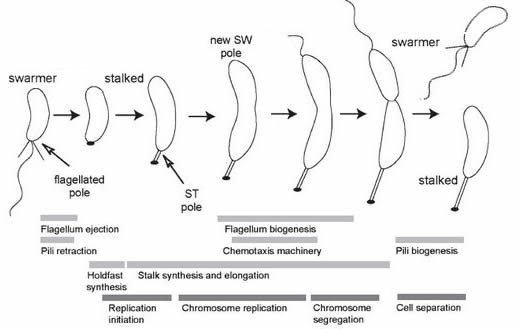
Development in bacteria (and other unicellular organisms):  In most unicellular organisms, the cell division process is reasonably uneventful, the cells produced are similar to the original cell – but not always.  A well studied example is the bacterium Caulobacter crescentus (and related species) [link][link].  In cases such as this, the process of growth  leads to phenotypically different daughters.  While it makes no sense to talk about a beginning (given the continuity of life after the appearance of the last universal common ancestor or LUCA), we can start with a “swarmer” cell, characterized by the presence of a motile flagellum (a molecular machine driven by coupled chemical reactions – see past blogpost] that drives motility [figure modified from 6 ]. 

A swarmer will eventually settle down, loose the flagellum, and replace it with a specialized structure (a holdfast) designed to anchor the cell to a solid substrate.  As the organism grows, the holdfast develops a stalk that lifts the cell away from the substrate.  As growth continues, the end of the cell opposite the holdfast begins to differentiate (becomes different) from the holdfast end of the cell – it begins the process leading to the assembly of a new flagellar apparatus.  When reproduction (cell growth, DNA replication, and cell division) occurs, a swarmer cell is released and can swim away and colonize another area, or settle nearby.  The holdfast-anchored cell continues to grow, producing new swarmers.  This process is based on the inherent asymmetry of the system – the holdfast end of the cell is molecularly distinct from the flagellar end [see 7].
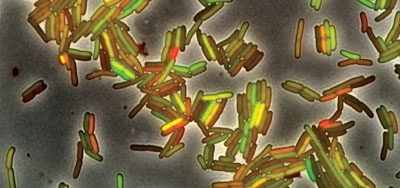
The process of swarmer cell formation in Caulobacter is an example of what we will term deterministic phenotypic switching.  Cells can also exploit molecular level noise (stochastic processes) that influence gene expression to generate phenotypic heterogeneity, different behaviors expressed by genetically identical cells within the same environment [see 8, 9].  Molecular noise arises from the random nature of molecular movements and the rather small (compared to macroscopic systems) numbers of most molecules within a cell.  Most cells contain one or two copies of any particular gene, and a similarly small number of molecular sequences involved in their regulation [10].  Which molecules are bound to which regulatory sequence, and for how long, is governed by inter-molecular surface interactions and thermally driven collisions, and is inherently noisy.  There are strategies that can suppress but not eliminate such noise [see 11].  As dramatically illustrated by Elowitz  and colleagues [8](), molecular level noise can produce cells with different phenotypes.  Similar processes are active in eukaryotes (including humans), and can lead to the expression of one of the two copies of a gene (mono-allelic expression) present in a diploid organism.  This can lead to effects such as haploinsufficiency and selective (evolutionary) lineage effects if the two alleles are not identical [12, 13]. Such phenotypic heterogeneity among what are often genetically identical cells is a topic that is rarely discussed (as far as I can discern) in introductory cell, molecular, or developmental biology courses [past blogpost].

The ability to switch phenotypes can be a valuable trait if an organism’s environment is subject to significant changes.  As an example, when the environment gets hostile, some bacterial cells transition from a rapidly dividing to a slow or non-dividing state.  Such “spores” can differentiate so as to render them highly resistant to dehydration and other stresses.  If changes in environment are very rapid, a population can protect itself by continually having some cells (stochastically) differentiating into spores, while others continue to divide rapidly. Only a few individuals (spores) need to survive a catastrophic environmental change to quickly re-establish the population.

Dying for others – social interactions between “unicellular” organisms:  Many students might not predict that one bacterial cell would “sacrifice” itself for the well being of others, but in fact there are a number of examples of this type of self-sacrificing behavior, known as programmed cell death, which is often a stochastic process.  An interesting example is provided by cellular specialization for photosynthesis or nitrogen fixation in cyanobacteria [see 9].  These two functions require mutually exclusive cellular environments to occur, in particular the molecular oxygen (O2) released by photosynthesis inhibits the process of nitrogen fixation.  Nevertheless, both are required for optimal growth.  The solution?  some cells differentiate into what are known as heterocysts, cells committed to nitrogen fixation ( a heterocyst in Anabaena spiroides, adapted from link), while most ”vegetative” cells continue with photosynthesis.  Heterocysts cannot divide, and eventually die – they sacrifice themselves for the benefit of their neighbors, the vegetative cells, cells that can reproduce.

The process by which the death of an individual can contribute resources that can be used to insure or enhance the survival and reproduction of surrounding individuals is an inherently social process, and is subject of social evolutionary mechanisms [14, 15][past blogpost].  Social behaviors can be selected for because the organism’s neighbors, the beneficiaries of their self-sacrifice are likely to be closely (clonally) related to themselves.  One result of the social behavior is, at the population level, an increase in one aspect of evolutionary fitness,  termed “inclusive fitness.”  

Such social behaviors can enable a subset of the population to survive various forms of environmental stress (see spore formation above).  An obvious environmental stress involves the impact of viral infection.  Recall that viruses are completely dependent upon the metabolic machinery of the infected cell to replicate. While there are a number of viral strategies, a common one is bacterial lysis – the virus replicates explosively, kills the infected cells, leading to the release of virus into the environment to infect others.  But, what if the infected cell kills itself BEFORE the virus replicates – the dying (self-sacrificing, altruistic) cell “kills” the virus (although viruses are not really alive) and stops the spread of the infection.  Typically such genetically programmed cell death responses are based on a simple two-part system, involving a long lived toxin and a short-lived anti-toxin.  When the cell is stressed, for example early during viral infection, the level of the anti-toxin can fall, leading to the activation of  the toxin. 

Other types of social behavior and community coordination (quorum effects):  Some types of behaviors only make sense when the density of organisms rises above a certain critical level.  For example,  it would make no sense for an Anabaena cell  to differentiate into a heterocyst (see above) if there are no vegetative cells nearby.  Similarly, there are processes in which a behavior of a single bacterial cell, such as the synthesis and secretion of a specific enzyme, a specific import or export machine,  or the construction of a complex, such as a DNA uptake machine, makes no sense in isolation – the secreted molecule will just diffuse away, and so be ineffective, the molecule to be imported (e.g. lactose) or exported (an antibiotic) may not be present, or there may be no free DNA to import.  However, as the concentration (organisms per volume) of bacteria increases, these behaviors can begin to make biological sense – there is DNA to eat or incorporate and the concentration of secreted enzyme can be high enough to degrade the target molecules (so they are inactivated or can be imported as food).   

So how does a bacterium determine whether it has neighbors or whether it wants to join a community of similar organisms?  After all, it does not have eyes to see. The process used is known as quorum sensing.  Each individual synthesizes and secretes a signaling molecule and a receptor protein whose activity is regulated by the binding of the signaling molecule.  Species specificity in signaling molecules and receptors insures that organisms of the same kind are talking to one another and not to other, distinct types of organisms that may be in the environment.   At low signaling molecule concentrations, such as those produced by a single bacterium in isolation, the receptor is not activated and the cell’s behavior remains unchanged.  However, as the concentration of bacteria increases, the concentration of the signal increases, leading to receptor activation.  Activation of the receptor can have a number of effects, including increased synthesis of the signal and other changes, such as movement in response to signals through regulation of flagellar and other motility systems, such a system can lead to the directed migration (aggregation) of cells [see 16].   

In addition to driving the synthesis of a common good (such as a useful extracellular molecule), social interactions can control processes such as  programmed cell death.  When the concentration of related neighbors is high, the programmed death of an individual can be beneficial, it can  lead to release of nutrients (common goods, including DNA molecules) that can be used by neighbors (relatives)[17, 18] – an increase in the probability of cell death in response to a quorum can increased in a way that increases inclusive fitness.  On the other hand,  if there are few related individuals in the neighborhood, programmed cell death “wastes” these resources, and so is likely to be suppressed (you might be able to generate a plausible mechanism that could control the probability of programmed cell death).     

As we mentioned previously with respect to spore formation, the generation of a certain percentage of “persisters” – individuals that withdraw from active growth and cell division, can enable a population to survive stressful situations, such as the presence of an antibiotic.  On the other hand, generating too many persisters may place the population at a reproductive disadvantage.  Once the antibiotic is gone, the persisters can return into active division. The ability of bacteria to generate persisters is a serious problem in treating people with infections, particularly those who stop taking their antibiotics too early [19].  

Of course, as in any social system, the presumption of cooperation (expending energy to synthesize the signal, sacrificing oneself for others) can open the system to cheaters [blogpost].  All such “altruistic” behaviors are vulnerable to cheaters.*  For example, a cheater that avoids programmed cell death (for example due to an inactivating mutation that effects the toxin molecule involved) will come to take over the population.  The downside, for the population, is that if cheaters take over,  the population is less likely to survive the environmental events that the social behavior was evolve to address.  In response to the realities of cheating, social organisms adopt various social-validation and policing systems [see 20 as an example]; we see this pattern of social cooperation, cheating, and social defense mechanism throughout the biological world. 

Follow-on posts:

footnotes:

* Such as people who fail to pay their taxes or disclose their tax returns.

literature cited: 

1. Cooper, M.M. and M.W. Klymkowsky, Chemistry, life, the universe, and everything: a new approach to general chemistry, and a model for curriculum reform. J. Chem. Educ. 2013. 90: 1116-1122 & Cooper, M. M., R. Stowe, O. Crandell and M. W. Klymkowsky. Organic Chemistry, Life, the Universe and Everything (OCLUE): A Transformed Organic Chemistry Curriculum. J. Chem. Educ. 2019. 96: 1858-1872.

2. Klymkowsky, M.W., Teaching without a textbook: strategies to focus learning on fundamental concepts and scientific process. CBE Life Sci Educ, 2007. 6: 190-3.

3. Klymkowsky, M.W., J.D. Rentsch, E. Begovic, and M.M. Cooper, The design and transformation of Biofundamentals: a non-survey introductory evolutionary and molecular biology course. LSE Cell Biol Edu, 2016. pii: ar70.

4. Arthur, W., The emerging conceptual framework of evolutionary developmental biology. Nature, 2002. 415:  757.

5. Wilson, E.B., The cell in development and heredity. 1940.

6. Jacobs‐Wagner, C., Regulatory proteins with a sense of direction: cell cycle signalling network in Caulobacter. Molecular microbiology, 2004. 51:7-13.

7. Hughes, V., C. Jiang, and Y. Brun, Caulobacter crescentus. Current biology: CB, 2012. 22:R507.

8. Elowitz, M.B., A.J. Levine, E.D. Siggia, and P.S. Swain, Stochastic gene expression in a single cell. Science, 2002. 297:1183-6.

9. Balázsi, G., A. van Oudenaarden, and J.J. Collins, Cellular decision making and biological noise: from microbes to mammals. Cell, 2011. 144: 910-925.

10. Fedoroff, N. and W. Fontana, Small numbers of big molecules. Science, 2002. 297:1129-1131.

11. Lestas, I., G. Vinnicombe, and J. Paulsson, Fundamental limits on the suppression of molecular fluctuations. Nature, 2010. 467:174-178.

12. Zakharova, I.S., A.I. Shevchenko, and S.M. Zakian, Monoallelic gene expression in mammals. Chromosoma, 2009. 118:279-290.

13. Deng, Q., D. Ramsköld, B. Reinius, and R. Sandberg, Single-cell RNA-seq reveals dynamic, random monoallelic gene expression in mammalian cells. Science, 2014. 343: 193-196.

14. West, S.A., A.S. Griffin, A. Gardner, and S.P. Diggle, Social evolution theory for microorganisms. Nature reviews microbiology, 2006. 4:597.

15. Bourke, A.F.G., Principles of Social Evolution. Oxford series in ecology and evolution. 2011, Oxford: Oxford University Press.

16. Park, S., P.M. Wolanin, E.A. Yuzbashyan, P. Silberzan, J.B. Stock, and R.H. Austin, Motion to form a quorum. Science, 2003. 301:188-188.

17. West, S.A., S.P. Diggle, A. Buckling, A. Gardner, and A.S. Griffin, The social lives of microbes. Annual Review of Ecology, Evolution, and Systematics, 2007: 53-77.

18. Durand, P.M. and G. Ramsey, The Nature of Programmed Cell Death. Biological Theory, 2018:  1-12.

19. Fisher, R.A., B. Gollan, and S. Helaine, Persistent bacterial infections and persister cells. Nature Reviews Microbiology, 2017. 15:453.

20. Queller, D.C., E. Ponte, S. Bozzaro, and J.E. Strassmann, Single-gene greenbeard effects in the social amoeba Dictyostelium discoideum. Science, 2003. 299: 105-106.

On teaching genetics, social evolution and understanding the origins of racism

Links between genetics and race crop up periodically in the popular press (link; link), but the real, substantive question, and the topic of a number of recent essays (see Saletan. 2018a. Stop Talking About Race and IQ) is whether the idea of “race” as commonly understood, and used by governments to categorize people (link), makes scientific sense.  More to the point, do biology educators have an unmet responsibility to modify and extend their materials and pedagogical approaches to address the non-scientific, often racist, implications of racial characterizations.  Such questions are complicated by a social geneticssecond factor, independent of whether the term race has any useful scientific purpose, namely to help students understand the biological (evolutionary) origins of racism itself, together with the stressors that lead to its periodic re-emergence as a socio-political factor. In times of social stress, reactions to strangers (others) identified by variations in skin color or overt religious or cultural signs (dress), can provoke hostility against those perceived to be members of a different social group.  As far as I can tell, few in the biology education community, which includes those involved in generating textbooks, organizing courses and curricula, or the design, delivery, and funding of various public science programs, including PBS’s NOVA, the science education efforts of HHMI and other private foundations, and programs such as Science Friday on public radio, directly address the roots of racism, roots associated with biological processes such as the origins and maintenance of multicellularity and other forms of social organization among organisms, involved in coordinating their activities and establishing defenses against social cheaters and processes such as cancer, in an organismic context (1).  These established defense mechanisms can, if not recognized and understood, morph into reflexive and unjustified intolerance, hostility toward, and persecution of various “distinguishable others.”  I will consider both questions, albeit briefly, here. 


Two factors have influenced my thinking about these questions.  The first involves the design of the biofundamentals text/course and its extension to include topics in genetics (2).  This involved thinking about what is commonly taught in genetics, what is critical for students to know going forward (and by implication what is not), and where materials on genetic processes best fit into a molecular biology curriculum (3).  While engaged in such navel gazing there came an email from Malcolm Campbell describing student responses to the introduction of a chapter section on race and racism in his textbook Integrating Concepts in Biology.  The various ideas of race, the origins of racism, and the periodic appearance of anti-immigrant, anti-religious and racist groups raise important questions – how best to clarify what is an undeniable observation, that different, isolated, sub-populations of a species can be distinguished from one another (see quote from Ernst Mayr’s 1994 “Typological versus Population thinking” ), from the deeper biological reality, that at the level of the individual these differences are meaningless. In what I think is an interesting way, the idea that people can be meaningfully categorized as different types of various platonic ideals (for example, as members of one race or the other) based on anatomical / linguistic differences between once distinct sub-populations of humans is similar to the dichotomy between common wisdom (e.g. that has influenced people’s working understanding of the motion of objects) and the counter-intuitive nature of empirically established scientific ideas (e.g. Newton’s laws and the implications of Einstein’s theory of general relativity).  What appears on the surface to be true but in fact is not.  In this specific case, there is a pressure toward what Mayr terms “typological” thinking, in which we class people into idealized (platonic) types or races ().   

As pointed out most dramatically, and repeatedly, by Mayr (1985; 1994; 2000), and supported by the underlying commonality of molecular biological mechanisms and the continuity of life, stretching back to the last universal common ancestor, there are only individuals who are members of various populations that have experienced various degrees of separation from one another.  In many cases, these populations have diverged and, through geographic, behavioral, and structure adaptations driven by natural, social, and sexual selection together with the effects of various events, some non-adaptive, such as bottlenecks, founder effects, and genetic drift, may eventually become reproductively isolated from one another, forming new species.  An understanding of evolutionary principles and molecular mechanisms transforms biology from a study of non-existent types to a study of populations with their origins in common, sharing a single root – the last universal common ancestor (LUCA).   Over the last ~200,000 years the movement of humans first within Africa and then across the planet  has been impressive ().  These movements have been accompanied by the fragmentation of human populations. Campbell and Tishkoff (2008) identified 13 distinct ancestral African populations while Busby et al (2016) recognized 48 sub-saharan population groups.  The fragmentation of the human population is being reversed (or rather rendered increasingly less informative) by the effects of migration and extensive intermingling ().   

    Ideas, such as race (and in a sense species), try to make sense of the diversity of the many different types of organisms we observe. They are based on a form of essentialist or typological thinking – thinking that different species and populations are completely different “kinds” of objects, rather than individuals in a population connected historically to all other living things. Race is a more pernicious version of this illusion, a pseudo-scientific, political and ideological idea that postulates that humans come  in distinct, non-overlapping types (quote  again, from Mayr).  Such a weird idea underlies various illogical and often contradictory legal “rules” by which a person’s “race” is determined.  

Given the reality of the individual and the unreality of race, racial profiling (see Satel,
2002) can lead to serious medical mistakes, as made clear in the essays by Acquaviva & Mintz (2010) “Are We Teaching Racial Profiling?”,  Yudell et al  (2016) “Taking Race out of Human Genetics”, and Donovan (2014) “The impact of the hidden curriculum”. 

The idea of race as a type fails to recognize the dynamics of the genome over time.  If possible (sadly not) a comparative analysis of the genome of a “living fossil”, such as modern day coelacanths and their ancestors (living more than 80 million years ago) would likely reveal dramatic changes in genomic DNA sequence.  In this light the fact that between 100 to 200 new mutations are introduced into the human genome per generation (see Dolgin 2009 Human mutation rate revealed) seems like a useful number to be widely appreciated by students, not to mention the general public. Similarly, the genomic/genetic differences between humans, our primate relatives, and other mammals and the mechanisms behind them (Levchenko et al., 2017)(blog link) would seem worth considering and explicitly incorporating into curricula on genetics and human evolution.  

While race may be meaningless, racism is not.  How to understand racism?  Is it some kind of political artifact, or does it arise from biological factors.  Here, I believe, we find a important omission in many biology courses, textbooks, and curricula – namely an introduction and meaningful discussion of social evolutionary mechanisms. Many is the molecular/cell biology curriculum that completely ignores such evolutionary processes. Yet, the organisms that are the primary focus of biological research (and who pay for such research, e.g. humans) are social organisms at two levels.  In multicellular organisms somatic cells, which specialize to form muscular, neural, circulatory and immune systems, bone and connective tissues, sacrifice their own inter-generational reproductive future to assist their germ line (sperm and/or eggs) relatives, the cells that give rise to the next generation of organisms, a form of inclusive fitness (Dugatkin, 2007).  Moreover, humans are social organisms, often sacrificing themselves, sharing their resources, and showing kindness to other members of their group. This social cooperation is threatened by cheaters of various types (POST LINK).  Unless these social cheaters are suppressed, by a range of mechanisms, and through processes of kin/group selection, multicellular organisms die and socially dysfunctional social populations are likely to die out.  Without the willingness to cooperate, and when necessary, self-sacrifice, social organization is impossible – no bee hives, no civilizations.  Imagine a human population composed solely of people who behave in a completely selfish manner, not honoring their promises or social obligations.  

A key to social interactions involves recognizing those who are, and who are not part of your social group.  A range of traits can serve as markers for social inclusion.  A plausible hypothesis is that the explicit importance of group membership and defined social interactions becomes more critical when a society, or a part of society, is under stress.  Within the context of social stratification, those in the less privileged groups may feel that the social contract has been broken or made a mockery of.  The feeling (apparent reality) that members of “elite” or excessively privileged sub-groups are not willing to make sacrifices for others serves as evidence that social bonds are being broken (4). Times of economic and social disruption (migrations and conquests) can lead to increased explicit recognition of both group and non-group identification.  The idea that outsiders (non-group members) threaten the group can feed racism, a justification for why non-group members should be treated differently from group members.  From this position it is a small (conceptual) jump to the conclusion that non-group members are somehow less worthy, less smart, less trustworthy, less human – different in type from members of the group – many of these same points are made in an op-ed piece by Judis. 2018. What the Left Misses About Nationalism.

That economic or climatic stresses can foster the growth of racist ideas is no new idea; consider the unequal effects of various disruptions likely to be associated with the spread of automation (quote from George Will ) and the impact of climate change on migrations of groups within and between countries (see Saletan 2018b: Why Immigration Opponents Should Worry About Climate Change) are likely to spur various forms of social unrest, whether revolution or racism, or both – responses that could be difficult to avoid or control.   

So back to the question of biology education – in this context understanding the ingrained responses of social creatures associated with social cohesion and integrity need to be explicitly presented. Similarly, variants of such mechanisms occur within multicellular organisms and how they work is critical to understanding how diseases such as cancer, one of the clearest forms of a cheater phenotype, are suppressed.  Social evolutionary mechanisms provide the basis for understanding a range of phenomena, and the ingrained effects of social selection may be seen as one of the roots of racism, or at the very least a contributing factor worth acknowledging explicitly.  

Thanks to Melanie Cooper and Paul Strode for comments. Minor edits 4 May 2019.

Footnotes:

  1. It is an interesting possibility whether the 1%, or rather the super 0.1% represent their own unique form of social parasite, leading periodically to various revolutions – although sadly, new social parasites appear to re-emerge quite quickly.
  2. A part of the CoreBIO-biofundamentals project 
  3. At this point it is worth noting that biofundamentals itself includes sections on social evolution, kin/group and sexual selection (see Klymkowsky et al., 2016; LibreText link). 
  4. One might be forgiven for thinking that rich and privileged folk who escape paying what is seen as their fair share of taxes, might be cast as social cheaters (parasites) who, rather than encouraging racism might lead to revolutionary thoughts and actions. 

Literature cited: 

Acquaviva & Mintz. (2010). Perspective: Are we teaching racial profiling? The dangers of subjective determinations of race and ethnicity in case presentations. Academic Medicine 85, 702-705.

Busby et  al. (2016). Admixture into and within sub-Saharan Africa. Elife 5, e15266.

Campbell & Tishkoff. (2008). African genetic diversity: implications for human demographic history, modern human origins, and complex disease mapping. Annu. Rev. Genomics Hum. Genet. 9, 403-433.

Donovan, B.M. (2014). Playing with fire? The impact of the hidden curriculum in school genetics on essentialist conceptions of race. Journal of Research in Science Teaching 51: 462-496.

Dugatkin, L. A. (2007). Inclusive fitness theory from Darwin to Hamilton. Genetics 176, 1375-1380.

Klymkowsky et al., (2016). The design and transformation of Biofundamentals: a non-survey introductory evolutionary and molecular biology course..” LSE Cell Biol Edu pii: ar70.

Levchenko et al., (2017). Human accelerated regions and other human-specific sequence variations in the context of evolution and their relevance for brain development. Genome biology and evolution 10, 166-188.

Mayr, E. (1985). The Growth of Biological Thought: Diversity, Evolution, and Inheritance. Cambridge, MA: Belknap Press of Harvard University Press.

Mayr, E. (1994). Typological versus population thinking. Conceptual issues in evolutionary biology, 157-160.

—- (2000). Darwin’s influence on modern thought. Scientific American 283, 78-83.

Satel, S. (2002). I am a racially profiling doctor. New York Times 5, 56-58.

Yudell et al., (2016). Taking race out of human genetics. Science 351, 564-565.

Genes – way weirder than you thought

Pretty much everyone, at least in societies with access to public education or exposure to media in its various forms, has been introduced to the idea of the gene, but “exposure does not equate to understanding” (see Lanie et al., 2004).  Here I will argue that part of the problem is that instruction in genetics (or in more modern terms, the molecular biology of the gene and its role in biological processes) has not kept up with the advances in our understanding of the molecular mechanisms underlying biological processes (Gayon, 2016). spacer bar

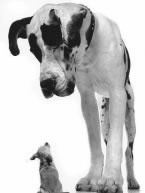
Let us reflect (for a moment) on the development of the concept of a gene: Over the course of human history, those who have been paying attention to such things have noticed that organisms appear to come in “types”, what biologists refer to as species. At the same time, individual organisms of the same type are not identical to one  another, they vary in various ways. Moreover, these differences can be passed from generation to generation, and by controlling  which organisms were bred together; some of the resulting offspring often displayed more extreme versions of the “selected” traits.  By strictly controlling which individuals were breddogs
together, over a number of generations, people were able to select for the specific traits they desired (→).  As an interesting aside, as people domesticated animals, such as cows and goats, the availability of associated resources (e.g. milk) led to reciprocal effects – resulting in traits such as adult lactose tolerance (see Evolution of (adult) lactose tolerance & Gerbault et al., 2011).  Overall, the process of plant and animal breeding is generally rather harsh (something that the fanciers of strange breeds who object to GMOs might reflect upon), in that individuals that did not display the desired trait(s) were generally destroyed (or at best, not allowed to breed). spacer bar

Charles Darwin took inspiration from this process, substituting “natural” for artificial (human-determined) selection to shape populations, eventually generating new species (Darwin, 1859).  Underlying such evolutionary processes was the presumption that traits, and their variation, was “encoded” in some type of “factors”, eventually known as genes and their variants, alleles.  Genes influenced the organism’s molecular, cellular, and developmental systems, but the nature of these inheritable factors and the molecular trait building machines active in living systems was more or less completely obscure. 

Through his studies on peas, Gregor Mendel was the first to clearly identify some of the rules for the behavior of these inheritable factors using highly stereotyped, and essentially discontinuous traits – a pea was either yellow or green, wrinkled or smooth.  Such traits, while they exist in other organisms, are in fact rare – an example of how the scientific exploration of exceptional situations can help understand general processes, but the downside is the promulgation of the idea that genes and traits are somehow discontinuous – that a trait is yes/no, displayed by an organism or not – in contrast to the realities that the link between the two is complex, a reality rarely directly addressed (apparently) in most introductory genetics courses.  Understanding such processes is critical to appreciating the fact that genetics is often not destiny, but rather alterations in probabilities (see Cooper et al., 2013).  Without such an more nuanced and realistic understanding, it can be difficult to make sense of genetic information.     spacer bar

A gene is part of a molecular machine:  A number of observations transformed the abstraction of Darwin’s and Mendel’s hereditary factors into physical entities and molecular mechanisms (1).  In 1928 Fred Griffith demonstrated that a genetic trait could be transferred from dead to living organisms – implying a degree of physical / chemical stability; subsequent observations implied that the genetic information transferred involved DNA molecules. The determination of the structure of double-stranded DNA immediately suggested how information could be stored in DNA (in variations of bases along the length of the molecule) and how this information could be duplicated (based on the specificity of base pairing).  Mutations could be understood as changes in the sequence of bases along a DNA molecule (introduced by chemicals, radiation, mistakes during replication, or molecular reorganizations associated with DNA repair mechanisms and selfish genetic elements.  

But on their own, DNA molecules are inert – they have functions only within the context of a living organism (or highly artificial, that is man made, experimental systems).  The next critical step was to understand how a gene works within a biological system, that is, within an organism.  This involve appreciating the molecular mechanisms (primarily proteins) involved in identifying which stretches of a particular DNA molecule were used as templates for the synthesis of RNA molecules, which in turn could be used to direct the synthesis of polypeptides (see previous post on polypeptides and proteins).  In the context of the introductory biology courses I am familiar with (please let me know if I am wrong), these processes are based on a rather deterministic context; a gene is either on or off in a particular cell type, leading to the presence or absence of a trait. Such a deterministic presentation ignores the stochastic nature of molecular level processes (see past post: Biology education in the light of single cell/molecule studies) and the dynamic interaction networks that underlie cellular behaviors.  spacer bar

But our level of resolution is changing rapidly (2).  For a number of practical reasons, when the human genome was first sequence, the identification of polypeptide-encoding genes was based on recognizing “open-reading frames” (ORFs) encoding polypeptides of > 100 amino acids in length (> 300 base long coding sequence).  The increasing sensitivity of mass spectrometry-based proteomic studies reveals that smaller ORFs (smORFs) are present and can lead to the synthesis of short (< 50 amino acid long) polypeptides (Chugunova et al., 2017; Couso, 2015).  Typically an ORF was considered a single entity – basically one gene one ORF one polypeptide (3).  A recent, rather surprising discovery is what are known as “alternative ORFs” or altORFs; these RNA molecules that use alternative reading frames to encode small polypeptides.  Such altORFs can be located upstream, downstream, or within the previously identified conventional ORFalternative orfs
(figure →)(see Samandi et al., 2017).  The implication, particularly for the analysis of how variations in genes link to traits, is that a change, a mutation or even the  experimental  deletion of a gene, a common approach in a range of experimental studies, can do much more than previously presumed – not only is the targeted ORF effected, but various altORFs can also be modified.  

The situation is further complicated when the established rules of using RNAs to direct polypeptide synthesis via the process of translation, are violated, as occurs in what is known as “repeat-associated non-ATG (RAN)” polypeptide synthesis (see Cleary and Ranum, 2017).  In this situation, the normal signal for the start of RNA-directed polypeptide synthesis, an AUG codon, is subverted – other RNA synthesis start sites are used leading to underlying or imbedded gene expression.  This process has been found associated with a class of human genetic diseases, such as amyotrophic lateral sclerosis (ALS) and frontotemporal dementia (FTD) characterized by the expansion of simple (repeated) DNA sequences  (see Pattamatta et al., 2018).  Once they exceed a certain length, such“repeat” regions have been found to be associated with the (apparently) inappropriarepeat region RAN process
te transcription of RNA in both directions, that is using both DNA strands as templates (← A: normal situation, B: upon expansion of the repeat domain).  These abnormal repeat region RNAs are translated via the RAN process to generate six different types of toxic polypeptides. spacer bar

So what are the molecular factors that control the various types of altORF transcription and translation?  In the case of ALS and FTD, it appears that other genes, and the polypeptides and proteins they encode, are involved in regulating the expression of repeat associated RNAs (Kramer et al., 2016)(Cheng et al., 2018).  Similar or distinct mechanisms may be involved in other  neurodegenerative diseases  (Cavallieri et al., 2017).  

So how should all of these molecular details (and it is likely that there are more to be discovered) influence how genes are presented to students?  I would argue that DNA should be presented as a substrate upon which various molecular mechanisms occur; these include transcription in its various forms (directed and noisy), as well as DNA synthesis, modification, and repair mechanisms occur.   Genes are not static objects, but key parts of dynamic systems.  This may be one reason that classical genetics, that is genes presented within a simple Mendelian (gene to trait) framework, should be moved deeper into the curriculum, where students have the background in molecular mechanisms needed to appreciate its complexities, complexities that arise from the multiple molecular machines acting to access, modify, and use the information captured in DNA (through evolutionary processes), thereby placing the gene in a more realistic cellular perspective (4). 

Footnotes:

1. Described greater detail in biofundamentals™

2. For this discussion, I am completely ignoring the roles of genes that encode RNAs that, as far as is currently know, do not encode polypeptides.  That said, as we go on, you will see that it is possible that some such non-coding RNA may encode small polypeptides.  

3. I am ignoring the complexities associated with alternative promoter elements, introns, and the alternative and often cell-type specific regulated splicing of RNAs, to create multiple ORFs from a single gene.  

4. With respects to Norm Pace – assuming that I have the handedness of the DNA molecules wrong or have exchanged Z for A or B. 

literature cited: 

  • Cavallieri et al, 2017. C9ORF72 and parkinsonism: Weak link, innocent bystander, or central player in neurodegeneration? Journal of the neurological sciences 378, 49.
  • Cheng et al, 2018. C9ORF72 GGGGCC repeat-associated non-AUG translation is upregulated by stress through eIF2α phosphorylation. Nature communications 9, 51.
  • Chugunova et al, 2017. Mining for small translated ORFs. Journal of proteome research 17, 1-11.
  • Cleary & Ranum, 2017. New developments in RAN translation: insights from multiple diseases. Current opinion in genetics & development 44, 125-134.
  • Cooper et al, 2013. Where genotype is not predictive of phenotype: towards an understanding of the molecular basis of reduced penetrance in human inherited disease. Human genetics 132, 1077-1130.
  • Couso, 2015. Finding smORFs: getting closer. Genome biology 16, 189.
  • Darwin, 1859. On the origin of species. London: John Murray.
  • Gayon, 2016. From Mendel to epigenetics: History of genetics. Comptes rendus biologies 339, 225-230.
  • Gerbault et al, 2011. Evolution of lactase persistence: an example of human niche construction. Philosophical Transactions of the Royal Society of London B: Biological Sciences 366, 863-877.
  • Kramer et al, 2016. Spt4 selectively regulates the expression of C9orf72 sense and antisense mutant transcripts. Science 353, 708-712.
  • Lanie et al, 2004. Exploring the public understanding of basic genetic concepts. Journal of genetic counseling 13, 305-320.
  • Pattamatta et al, 2018. All in the Family: Repeats and ALS/FTD. Trends in neurosciences 41, 247-250.
  • Samandi et al, 2017. Deep transcriptome annotation enables the discovery and functional characterization of cryptic small proteins. Elife 6.

Molecular machines and the place of physics in the biology curriculum

The other day, through no fault of my own, I found myself looking at the courses required by our molecular biology undergraduate degree program. I discovered a requirement for a 5 credit hour physics course, and a recommendation that this course be taken in the students’ senior year – a point in their studies when most have already completed their required biology courses.  Befuddlement struck me, what was the point of requiring an introductory physics course in the context of a molecular biology major?  Was this an example of time-travel (via wormholes or some other esoteric imagining) in which a physics course in the future impacts a students’ understanding of molecular biology in the past?  I was also struck by the possibility that requiring such a course in the students’ senior year would measurably impact their time to degree. 

In a search for clarity and possible enlightenment, I reflected back on my own experiences in an undergraduate biophysics degree program – as a practicing cell and molecular  biologist, I was somewhat confused. I could not put my finger on the purpose of our physics requirement, except perhaps the admirable goal of supporting physics graduate students. But then, after feverish reflections on the responsibilities of faculty in the design of the courses and curricula they prescribe for their students and the more general concepts of instructional (best) practice and malpractice, my mind calmed, perhaps because I was distracted by an article on Oxford Nanopore’s MinION (↓), a “portable real-time device for DNA and RNA sequencing”,a device that plugs into the USB port on one’s laptop!

Distracted from the potentially quixotic problem of how to achieve effective educational reform at the undergraduate level, I found myself driven on by an insatiable curiosity (or a deep-seated insecurity) to insure that I actually understood how this latest generation of DNA sequencers worked. This led me to a paper by Meni Wanunu (2012. Nanopores: A journey towards DNA sequencing)[1].  On reading the paper, I found myself returning to my original belief, yes, understanding physics is critical to developing a molecular-level understanding of how biological systems work, BUT it was just not the physics normally inflicted upon (required of) students [2]. Certainly this was no new idea.  Bruce Alberts had written on this topic a number of times, most dramatically in his 1989 paper “The cell as a collection of molecular machines” [3].  Rather sadly, and not withstanding much handwringing about the importance of expanding student interest in, and understanding of, STEM disciplines, not much of substance in this area has occurred. While (some minority of) physics courses may have adopted active engagement pedagogies (in the meaning of Hake [4]) most insist on teaching macroscopic physics, rather than to focus on, or even to consider, the molecular level physics relevant to biological systems, explicitly the physics of protein machines in a cellular (biological) context. Why sadly, because conventional, that is non-biologically relevant introductory physics and chemistry courses, all to often serve the role of a hazing ritual, driving many students out of biology-based careers [5], in part I suspect, because they often seem irrelevant to students’ interests in the workings of biological systems. (footnote 1)  

Nanopore’s sequencer and Wanunu’s article (footnote 2) got me thinking again about biological machines, of which there are a great number, ranging from pumps, propellers, and oars to  various types of transporters, molecular truckers that move chromosomes, membrane vesicles, and parts of cells with respect to one another, to DNA detanglers, protein unfolders, and molecular recyclers (↓). 

Nanopore’s sequencer works based on the fact that as a single strand of DNA (or RNA) moves through a narrow pore, the different bases (A,C,T,G) occlude the pore to different extents, allowing different numbers of ions, different amounts of current, to pass through the pore. These current differences can be detected, and allows for a nucleotide sequence to be “read” as the nucleic acid strand moves through the pore. Understanding the process involves understanding how molecules move, that is the physics of molecular collisions and energy transfer, how proteins and membranes allow and restrict ion movement, and the impact of chemical gradients and electrical fields across a membrane on molecular movements  – all physical concepts of widespread significance in biological systems (here is an example of where a better understanding of physics could be useful to biologists).  Such ideas can be extended to the more general questions of how molecules move within the cell, and the effects of molecular size and inter-molecular interactions within a concentrated solution of proteins, protein polymers, lipid membranes, and nucleic acids, such as described in Oliverira et al., (2016 Increased cytoplasmic viscosity hampers aggregate polar segregation in Escherichia coli)[6].  At the molecular level, the processes, while biased by electric fields (potentials) and concentration gradients, are stochastic (noisy). Understanding of stochastic processes is difficult for students [7], but critical to developing an appreciation of how such processes can lead to phenotypic  differences between cells with the same genotypes (previous post) and how such noisy processes are managed by the cell and within a multicellular organism.   

As path leads on to path, I found myself considering the (←) spear-chucking protein machine present in the pathogenic bacteria Vibrio cholerae; this molecular machine is used to inject toxins into neighbors that the bacterium happens to bump into (see Joshi et al., 2017. Rules of Engagement: The Type VI Secretion System in Vibrio cholerae)[8].  The system is complex and acts much like a spring-loaded and rather “inhumane” mouse trap.  This is one of a number of bacterial  type VI systems, and “has structural and functional homology to the T4 bacteriophage tail spike and tube” – the molecular machine that injects bacterial cells with the virus’s genetic material, its DNA.

Building the bacterium’s spear-based injection system is control by a social (quorum sensing) system, a way that unicellular organisms can monitor whether they are alone or living in an environment crowded with other organisms. During the process of assembly, potential energy, derived from various chemically coupled, thermodynamically favorable reactions, is stored in both type VI “spears” and the contractile (nucleic acid injecting) tails of the bacterial viruses (phage). Understanding the energetics of this process, exactly how coupling thermodynamically favorable chemical reactions, such as ATP hydrolysis, or physico-chemical reactions, such as the diffusion of ions down an electrochemical gradient, can be used to set these “mouse traps”, and where the energy goes when the traps are sprung is central to students’ understanding of these and a wide range of other molecular machines. 

Energy stored in such molecular machines during their assembly can be used to move the cell. As an example, another bacterial system generates contractile (type IV pili) filaments; the contraction of such a filament can allow “the bacterium to move 10,000 times its own body weight, which results in rapid movement” (see Berry & Belicic 2015. Exceptionally widespread nanomachines composed of type IV pilins: the prokaryotic Swiss Army knives)[9].  The contraction of such a filament has been found to be used to import DNA into the cell, an early step in the process of  horizontal gene transfer.  In other situations (other molecular machines) such protein filaments access thermodynamically favorable processes to rotate, acting like a propeller, driving cellular movement. 

During my biased random walk through the literature, I came across another, but molecularly distinct, machine used to import DNA into Vibrio (see Matthey & Blokesch 2016. The DNA-Uptake Process of Naturally Competent Vibrio cholerae)[10].

This molecular machine enables the bacterium to import DNA from the environment, released, perhaps, from a neighbor killed by its spear.  In this system (←), the double stranded DNA molecule is first transported through the bacterium’s outer membrane; the DNA’s two strands are then separated, and one strand passes through a channel protein through the inner (plasma) membrane, and into the cytoplasm, where it can interact with the bacterium’s  genomic DNA.

The value of introducing students to the idea of molecular machines is that it helps to demystify how biological systems work, how such machines carry out specific functions, whether moving the cell or recognizing and repairing damaged DNA.  If physics matters in biological curriculum, it matters for this reason – it establishes a core premise of biology, namely that organisms are not driven by “vital” forces, but by prosaic physiochemical ones.  At the same time, the molecular mechanisms behind evolution, such as mutation, gene duplication,  and genomic reorganization provide the means by which new structures emerge from pre-existing ones, yet many is the molecular biology degree program that does not include an introduction to evolutionary mechanisms in its required course sequence – imagine that, requiring physics but not evolution? (see [11]).

One final point regarding requiring students to take a biologically relevant physics course early in their degree program is that it can be used to reinforce what I think is a critical and often misunderstood point. While biological systems rely on molecular machines, we (and by we I mean all organisms) are NOT machines, no matter what physicists might postulate -see We Are All Machines That Think.  We are something different and distinct. Our behaviors and our feelings, whether ultimately understandable or not, emerge from the interaction of genetically encoded, stochastically driven non-equilibrium systems, modified through evolutionary, environmental, social, and a range of unpredictable events occurring in an uninterrupted, and basically undirected fashion for ~3.5 billion years.  While we are constrained, we are more, in some weird and probably ultimately incomprehensible way.

Footnotes:

[1]  A discussion with Melanie Cooper on what chemistry is relevant to a life science major was a critical driver in our collaboration to develop the chemistry, life, the universe, and everything (CLUE) chemistry curriculum.  

[2]  Together with my own efforts in designing the biofundamentals introductory biology curriculum. 

literature cited

1. Wanunu, M., Nanopores: A journey towards DNA sequencing. Physics of life reviews, 2012. 9(2): p. 125-158.

2. Klymkowsky, M.W. Physics for (molecular) biology students. 2014  [cited 2014; Available from: http://www.aps.org/units/fed/newsletters/fall2014/molecular.cfm.

3. Alberts, B., The cell as a collection of protein machines: preparing the next generation of molecular biologists. Cell, 1998. 92(3): p. 291-294.

4. Hake, R.R., Interactive-engagement versus traditional methods: a six-thousand-student survey of mechanics test data for introductory physics courses. Am. J. Physics, 1998. 66: p. 64-74.

5. Mervis, J., Weed-out courses hamper diversity. Science, 2011. 334(6061): p. 1333-1333.

6. Oliveira, S., R. Neeli‐Venkata, N.S. Goncalves, J.A. Santinha, L. Martins, H. Tran, J. Mäkelä, A. Gupta, M. Barandas, and A. Häkkinen, Increased cytoplasm viscosity hampers aggregate polar segregation in Escherichia coli. Molecular microbiology, 2016. 99(4): p. 686-699.

7. Garvin-Doxas, K. and M.W. Klymkowsky, Understanding Randomness and its impact on Student Learning: Lessons from the Biology Concept Inventory (BCI). Life Science Education, 2008. 7: p. 227-233.

8. Joshi, A., B. Kostiuk, A. Rogers, J. Teschler, S. Pukatzki, and F.H. Yildiz, Rules of engagement: the type VI secretion system in Vibrio cholerae. Trends in microbiology, 2017. 25(4): p. 267-279.

9. Berry, J.-L. and V. Pelicic, Exceptionally widespread nanomachines composed of type IV pilins: the prokaryotic Swiss Army knives. FEMS microbiology reviews, 2014. 39(1): p. 134-154.

10. Matthey, N. and M. Blokesch, The DNA-uptake process of naturally competent Vibrio cholerae. Trends in microbiology, 2016. 24(2): p. 98-110.

11. Pallen, M.J. and N.J. Matzke, From The Origin of Species to the origin of bacterial flagella. Nat Rev Microbiol, 2006. 4(10): p. 784-90.

Making education matter in higher education


It may seem self-evident that providing an effective education, the type of educational experiences that lead to a useful bachelors degree and serve as the foundation for life-long learning and growth, should be a prime aspirational driver of Colleges and Universities (1).  We might even expect that various academic departments would compete with one another to excel in the quality and effectiveness of their educational outcomes; they certainly compete to enhance their research reputations, a competition that is, at least in part, responsible for the retention of faculty, even those who stray from an ethical path. Institutions compete to lure research stars away from one another, often offering substantial pay raises and research support (“Recruiting or academic poaching?”).  Yet, my own experience is that a department’s performance in undergraduate educational outcomes never figures when departments compete for institutional resources, such as supporting students, hiring new faculty, or obtaining necessary technical resources (2).

 I know of no example (and would be glad to hear of any) of a University hiring a professor based primarily on their effectiveness as an instructor (3).

In my last post, I suggested that increasing the emphasis on measures of departments’ educational effectiveness could help rebalance the importance of educational and research reputations, and perhaps incentivize institutions to be more consistent in enforcing ethical rules involving research malpractice and the abuse of students, both sexual and professional. Imagine if administrators (Deans and Provosts and such) were to withhold resources from departments that are performing below acceptable and competitive norms in terms of undergraduate educational outcomes?

Outsourced teaching: motives, means and impacts

Sadly, as it is, and particularly in many science departments, undergraduate educational outcomes have little if any impact on the perceived status of a department, as articulated by campus administrators. The result is that faculty are not incentivized to, and so rarely seriously consider the effectiveness of their department’s course requirements, a discussion that would of necessity include evaluating whether a course’s learning goals are coherent and realistic, whether the course is delivered effectively, whether it engages students (or is deemed irrelevant), and whether students’ achieve the desired learning outcomes, in terms of knowledge and skills achieved, including the ability to apply that knowledge effectively to new situations.  Departments, particularly research focussed (dependent) departments, often have faculty with low teaching loads, a situation that incentivizes the “outsourcing” of key aspects of their educational responsibilities.  Such outsourcing comes in two distinct forms, the first is requiring majors to take courses offered by other departments, even if such courses are not well designed, delivered, or (in the worst cases) relevant to the major.  A classic example is to require molecular biology students to take macroscopic physics or conventional calculus courses, without regard to whether the materials presented in these courses is ever used within the major or the discipline.  Expecting a student majoring in the life sciences to embrace a course that (often rightly) seems irrelevant to their discipline can alienate a student, and poses an unnecessary obstacle to student success, rather than providing students with needed knowledge and skills.  Generally, the incentives necessary to generate a relevant course, for example, a molecular level physics course that would engage molecular biology students, are simply not there.  A version of this situation is to require courses that are poorly designed or delivered (general chemistry is often used as the poster child for such a course). These are courses that have high failure rates, sometimes justified in terms of “necessary rigor” when in fact better course design could (and has) resulted in lower failure rates and improved learning outcomes.  In addition, there are perverse incentives associated with requiring “weed out” courses offered by other departments, as they reduce the number of courses a department’s faculty needs to teach, and can lead to fewer students proceeding into upper division courses.

The second type of outsourcing involves excusing tenure track faculty from teaching introductory courses, and having them replaced by lower paid instructors or lecturers.  Independently of whether instructors, lecturers, or tenure track professors make for better teaching, replacing faculty with instructors sends an implicit message to students.  At the same time, the freedom of instructors/lecturers to adopt an effective (socratic) approach to teaching is often severely constrained; common exams can force classes to move in lock step, independently of whether that pace is optimal for student engagement and learning. Generally, instructors/lecturers do not have the freedom to adjust what they teach, to modify the emphasis and time they spend on specific topics in response to their students’ needs. How an instructor instructs their students suffers when teachers do not have the freedom to customize their interactions with students in response to where they are intellectually.  This is particularly detrimental in the case of underrepresented or underprepared students. Generally, a flexible and adaptive approach to instruction (including ancillary classes on how to cope with college: see An alternative to remedial college classes gets results) can address many issues, and bring the majority of students to a level of competence, whereas tracking students into remedial classes can succeed in driving them out of a major or college (see Colleges Reinvent Classes to Keep More Students in Science and Redesigning a Large-Enrollment Introductory Biology Course and Does Remediation Work for All Students? )

How to address this imbalance, how can we reset the pecking order so that effective educational efforts actually matter to a department? 

My (modest) suggestion is to base departmental rewards on objective measures of educational effectiveness.   And by rewards I mean both at the level of individuals (salary and status) as well as support for graduate students, faculty positions, start up funds, etc.  What if, for example, faculty in departments that excel at educating their students received a teaching bonus, or if the number of graduate students within a department supported by the institution was determined not by the number of classes these graduate students taught (courses that might not be particularly effective or engaging) but rather by a departments’ undergraduate educational effectiveness, as measured by retention, time to degree, and learning outcomes (see below)?  The result could well be a drive within a department to improve course and curricular effectiveness to maximize education-linked rewards.  Given that laboratory courses, the courses most often taught by science graduate students, are multi-hour schedule disrupting events, of limited demonstrable educational effectiveness, that complicate student course scheduling, removing requirements for lab courses deemed unnecessary (or generating more effective versions), would be actively rewarded (of course, sanctions for continuing to offer ineffective courses would also be useful, but politically more problematic.)

A similar situation applies when a biology department requires its majors to take 5 credit hour physics or chemistry courses.  Currently it is “easy” for a department to require its students to take such courses without critically evaluating whether they are “worth it”, educationally.  Imagine how a department’s choices of required courses would change if the impact of high failure rates (which I would argue is a proxy for poorly designed  and delivered courses) directly impacted the rewards reaped by a department. There would be an incentive to look critically at such courses, to determine whether they are necessary and if so, well designed and delivered. Departments would serve their own interests if they invested in the development of courses  that better served their disciplinary goals, courses likely to engage their students’ interests.

So how do we measure a department’s educational efficacy?

There are three obvious metrics: i) retention of students as majors (or in the case of “service courses” for non-majors, whether students master what it is the course claims to teach); ii) time to degree (and by that I mean the percentage of students who graduate in 4 years, rather than the 6 year time point reported in response to federal regulations (six year graduation rate | background on graduation rates); and iii) objective measures of student learning outcomes attained and skills achieved. The first two are easy, Universities already know these numbers.  Moreover they are directly influenced by degree requirements – requiring students to take boring and/or apparently irrelevant courses serves to drive a subset of students out of a major.  By making courses relevant and engaging, more students can be retained in a degree program. At the same time, thoughtful course design can help students  pass through even the most rigorous (difficult) of such courses. The third, learning outcomes, is significantly more challenging to measure, since universal metrics are (largely) missing or superficial.  A few disciplines, such as chemistry, support standardized assessments, although one could argue with what such assessments measure.  Nevertheless, meaningful outcomes measures are necessary, in much the same way that Law and Medical boards and the Fundamentals of Engineering exam serve to help insure (although they do not guarantee) the competence of practitioners. One could imagine using parts of standardized exams, such as discipline specific GRE exams, to generate outcomes metrics, although more informative assessment instruments would clearly be preferable. The initiative in this area could be taken by professional societies, college consortia (such as the AAU), and research foundations, as a critical driver for education reform, increased effectiveness, and improved cost-benefit outcomes, something that could help address the growing income inequality in our country and make success in higher education an important factor contributing to an institution’s reputation.


A footnote or two…
 
1. My comments are primarily focused on research universities, since that is where my experience lies; these are, of course, the majority of the largest universities (in a student population sense).
 
2. Although my experience is limited, having spent my professorial career at a single institution, conversations with others leads me to conclude that it is not unique.
 
3. The one obvious exception would be the hiring of  coaches of sports teams, since their success in teaching (coaching) is more directly discernible and impactful on institutional finances and reputation).
 
minor edits – 16 March 2020