Making sense of noise: introducing students to stochastic processes in order to better understand biological behaviors (and even free will).

 Biological systems are characterized by the ubiquitous roles of weak, that is, non-covalent molecular interactions, small, often very small, numbers of specific molecules per cell, and Brownian motion. These combine to produce stochastic behaviors at all levels from the molecular and cellular to the behavioral. That said, students are rarely introduced to the ubiquitous role of stochastic processes in biological systems, and how they produce unpredictable behaviors. Here I present the case that they need to be and provide some suggestions as to how it might be approached.  

Background: Three recent events combined to spur this reflection on stochasticity in biological systems, how it is taught, and why it matters. The first was an article describing an approach to introducing students to homeostatic processes in the context of the bacterial lac operon (Booth et al., 2022), an adaptive gene regulatory system controlled in part by stochastic events. The second were in-class student responses to the question, why do interacting molecules “come back apart” (dissociate).  Finally, there is the increasing attention paid to what are presented as deterministic genetic factors, as illustrated by talk by Kathryn Harden, author of the “The Genetic Lottery: Why DNA matters for social equality” (Harden, 2021).  Previous work has suggested that students, and perhaps some instructors, find the ubiquity, functional roles, and implications of stochastic, that is inherently unpredictable processes, difficult to recognize and apply. Given their practical and philosophical implications, it seems essential to introduce students to stochasticity early in their educational journey.

added 7 March 2023; Should have cited:  You & Leu (2020).

What is stochasticity and why is it important for understanding biological systems? Stochasticity results when intrinsically unpredictable events, e.g. molecular collisions, impact the behavior of a system. There are a number of drivers of stochastic behaviors. Perhaps the most obvious, and certainly the most ubiquitous in biological systems is thermal motion. The many molecules within a solution (or a cell) are moving, they have kinetic energy – the energy of motion and mass. The exact momentum of each molecule cannot, however, be accurately and completely characterized without perturbing the system (echos of Heisenberg). Given the impossibility of completely characterizing the system, we are left uncertain as to the state of the system’s components, who is bound to whom, going forward. 

Through collisions energy is exchanged between molecules.  A number of chemical processes are driven by the energy delivered through such collisions. Think about a typical chemical reaction. In the course of the reaction, atoms are rearranged – bonds are broken (a process that requires energy) and bonds are formed (a process that releases energy). Many (most) of the chemical reactions that occur in biological systems require catalysts to bring their required activation energies into the range available within the cell.   [1]  

What makes the impact of thermal motion even more critical for biological systems is that many (most) regulatory interactions and macromolecular complexes, the molecular machines discussed by Alberts (1998) are based on relatively weak, non-covalent surface-surface interactions between or within molecules. Such interactions are central to most regulatory processes, from the activation of signaling pathways to the control of gene expression. The specificity and stability of these non-covalent interactions, which include those involved in determining the three-dimensional structure of macromolecules, are directly impacted by thermal motion, and so by temperature – one reason controlling body temperature is important.  

So why are these interactions stochastic and why does it matter?  A signature property of a stochastic process is that while it may be predictable when large numbers of atoms, molecules, or interactions are involved, the behaviors of individual atoms, molecules, and interactions are not. A classic example, arising from factors intrinsic to the atom, is the decay of radioactive isotopes. While the half-life of a large enough population of a radioactive isotope is well defined, when any particular atom will decay is, in current theory, unknowable, a concept difficult for students (see Hull and Hopf, 2020). This is the reason we cannot accurately predict whether Schrȍdinger’s cat is alive or dead. The same behavior applies to the binding of a regulatory protein to a specific site on a DNA molecule and its subsequent dissociation: predictable in large populations, not-predictable for individual molecules. The situation is exacerbated by the fact that biological systems are composed of cells and cells are, typically, small, and so contain relatively few molecules of each type (Milo and Phillips, 2015). There are typically one or two copies of each gene in a cell, and these may be different from one another (when heterozygous). The expression of any one gene depends upon the binding of specific proteins, transcription factors, that act to activate or repress gene expression. In contrast to a number of other cellular proteins, “as a rule of thumb, the concentrations of such transcription factors are in the nM range, corresponding to only 1-1000 copies per cell in bacteria or 103-106 in mammalian cells” (Milo and Phillips, 2015). Moreover, while DNA binding proteins bind to specific DNA sequences with high affinity, they also bind to DNA “non-specifically” in a largely sequence independent manner with low affinity. Given that there are many more non-specific (non-functional) binding sites in the DNA than functional ones, the effective concentration of a particular transcription factor can be significantly lower than its total cellular concentration would suggest. For example, in the case of the lac repressor of the bacterium Escherichia coli (discussed further below), there are estimated to be ~10 molecules of the tetrameric lac repressor per cell, but “non-specific affinity to the DNA causes >90% of LacI copies to be bound to the DNA at locations that are not the cognate promoter site” (Milo and Phillips, 2015); at most only a few molecules are free in the cytoplasm and available to bind to specific regulatory sites.  Such low affinity binding to DNA allows proteins to undergo one-dimensional diffusion, a process that can greatly speed up the time it takes for a DNA binding protein to “find” high affinity binding sites (Stanford et al., 2000; von Hippel and Berg, 1989). Most transcription factors bind in a functionally significant manner to hundreds to thousands of gene regulatory sites per cell, often with distinct binding affinities. The effective binding affinity can also be influenced by positive and negative interactions with other transcription and accessory factors, chromatin structure, and DNA modifications. Functional complexes can take time to assemble, and once assembled can initiate multiple rounds of polymerase binding and activation, leading to a stochastic phenomena known as transcriptional bursting. An analogous process occurs with RNA-dependent polypeptide synthesis (translation). The result, particularly for genes expressed at lower levels, is that stochastic (unpredictable) bursts of transcription/translation can lead to functionally significant changes in protein levels (Raj et al., 2010; Raj and van Oudenaarden, 2008).

Figure adapted from Elowitz et al 2002

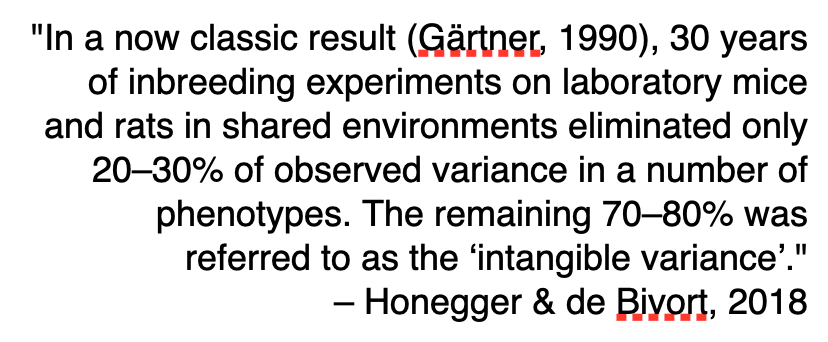
There are many examples of stochastic behaviors in biological systems. Originally noted by Novick and Weiner (1957) in their studies of the lac operon, it was clear that gene expression occurred in an all or none manner. This effect was revealed in a particularly compelling manner by Elowitz et al (2002) who used lac operon promoter elements to drive expression of transgenes encoding cyan and yellow fluorescent proteins (on a single plasmid) in E. coli.  The observed behaviors were dramatic; genetically identical cells were found to express, stochastically, one, the other, both, or neither transgenes. The stochastic expression of genes and downstream effects appear to be the source of much of the variance found in organisms with the same genotype in the same environmental conditions (Honegger and de Bivort, 2018).

Beyond gene expression, the unpredictable effects of stochastic processes can be seen at all levels of biological organization, from the biased random walk behaviors that underlie various forms of chemotaxis (e.g. Spudich and Koshland, 1976) and the search behaviors in C. elegans (Roberts et al., 2016) and other animals (Smouse et al., 2010), the noisiness in the opening of individual neuronal voltage-gated ion channels (Braun, 2021; Neher and Sakmann, 1976), and various processes within the immune system (Hodgkin et al., 2014), to variations in the behavior of individual organisms (e.g. the leafhopper example cited by Honegger and de Bivort, 2018). Stochastic events are involved in a range of “social” processes in bacteria (Bassler and Losick, 2006). Their impact serves as a form of “bet-hedging” in populations that generate phenotypic variation in a homogeneous environment (see Symmons and Raj, 2016). Stochastic events can regulate the efficiency of replication-associated error-prone mutation repair (Uphoff et al., 2016) leading to increased variation in a population, particularly in response to environmental stresses. Stochastic “choices” made by cells can be seen as questions asked of the environment, the system’s response provides information that informs subsequent regulatory decisions (see Lyon, 2015) and the selective pressures on individuals in a population (Jablonka and Lamb, 2005). Together stochastic processes introduce a non-deterministic (i.e. unpredictable) element into higher order behaviors (Murakami et al., 2017; Roberts et al., 2016).

Controlling stochasticity: While stochasticity can be useful, it also needs to be controlled. Not surprisingly then there are a number of strategies for “noise-suppression”, ranging from altering regulatory factor concentrations, the formation of covalent disulfide bonds between or within polypeptides, and regulating the activity of repair systems associated with DNA replication, polypeptide folding, and protein assembly via molecular chaperones and targeted degradation. For example, the identification of “cellular competition” effects has revealed that “eccentric cells” (sometimes, and perhaps unfortunately referred to as of “losers”) can be induced to undergo apoptosis (die) or migration in response to their “normal” neighbors (Akieda et al., 2019; Di Gregorio et al., 2016; Ellis et al., 2019; Hashimoto and Sasaki, 2020; Lima et al., 2021).

Student understanding of stochastic processes: There is ample evidence that students (and perhaps some instructors as well) are confused by or uncertain about the role of thermal motion, that is the transfer of kinetic energy via collisions, and the resulting stochastic behaviors in biological systems. As an example, Champagne-Queloz et al (2016; 2017) found that few students, even after instruction through molecular biology courses, recognize that collisions with other molecules were  responsible for the disassembly of molecular complexes. In fact, many adopt a more “deterministic” model for molecular disassembly after instruction (see part A panel figure on next page). In earlier studies, we found evidence for a similar confusion among instructors (part B of figure on the next page)(Klymkowsky et al., 2010). 

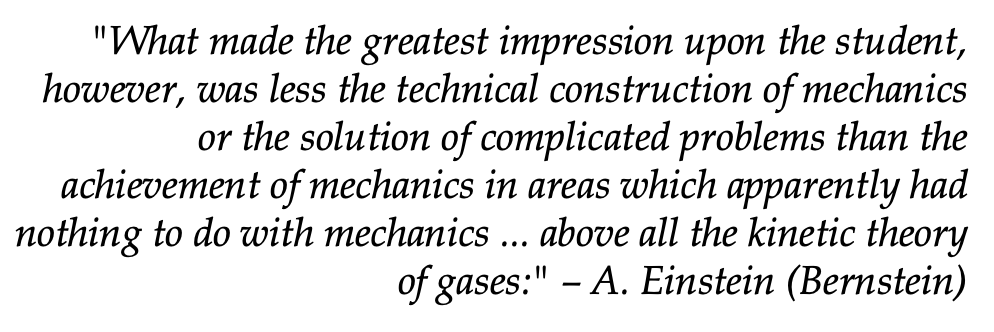
Introducing stochasticity to students: Given that understanding stochastic (random) processes can be difficult for many (e.g. Garvin-Doxas and Klymkowsky, 2008; Taleb, 2005), the question facing course designers and instructors is when and how best to help students develop an appreciation for the ubiquity, specific roles, and implications of stochasticity-dependent processes at all levels in biological systems. I would suggest that  introducing students to the dynamics of non-covalent molecular interactions, prevalent in biological systems in the context of stochastic interactions (i.e. kinetic theory) rather than a ∆G-based approach may be useful. We can use the probability of garnering the energy needed to disrupt an interaction to present concepts of binding specificity (selectivity) and stability. Developing an understanding of the formation and  disassembly of molecular interactions builds on the same logic that Albert Einstein and Ludwig Böltzman used to demonstrate the existence of atoms and molecules and the reversibility of molecular reactions (Bernstein, 2006). Moreover, as noted by Samoilov et al (2006) “stochastic mechanisms open novel classes of regulatory, signaling, and organizational choices that can serve as efficient and effective biological solutions to problems that are more complex, less robust, or otherwise suboptimal to deal with in the context of purely deterministic systems.”

The selectivity (specificity) and stability of molecular interactions can be understood from an energetic perspective – comparing the enthalpic and entropic differences between bound and unbound states. What is often missing from such discussions, aside from the fact of their inherent complexity, particularly in terms of calculating changes in entropy and exactly what is meant by energy (Cooper and Klymkowsky, 2013) is that many students enter biology classes without a robust understanding of enthalpy, entropy, or free energy (Carson and Watson, 2002).  Presenting students with a molecular  collision, kinetic theory-based mechanism for the dissociation of molecular interactions, may help them better understand (and apply) both the dynamics and specificity of molecular interactions. We can gage the strength of an interaction (the sum of the forces stabilizing an interaction) based on the amount of energy (derived from collisions with other molecules) needed to disrupt it.  The implication of student responses to relevant Biology Concepts Instrument (BCI) questions and beSocratic activities (data not shown), as well as a number of studies in chemistry, is that few students consider the kinetic/vibrational energy delivered through collisions with other molecules (a function of temperature), as key to explaining why interactions break (see Carson and Watson, 2002 and references therein).  Although this paper is 20 years old, there is little or no evidence that the situation has improved. Moreover, there is evidence that the conventional focus on mathematics-centered, free energy calculations in the absence of conceptual understanding may serve as an unnecessary barrier to the inclusion of a more socioeconomically diverse, and under-served populations of students (Ralph et al., 2022; Stowe and Cooper, 2019). 

The lac operon as a context for introducing stochasticity: Studies of the E. coli  lac operon hold an iconic place in the history of molecular biology and are often found in introductory courses, although typically presented in a deterministic context. The mutational analysis of the lac operon helped define key elements involved in gene regulation (Jacob and Monod, 1961; Monod et al., 1963). Booth et al (2022) used the lac operon as the context for their “modeling and simulation lesson”, Advanced Concepts in Regulation of the Lac Operon. Given its inherently stochastic regulation (Choi et al., 2008; Elowitz et al., 2002; Novick and Weiner, 1957; Vilar et al., 2003), the lac operon is a good place to start introducing students to stochastic processes. In this light, it is worth noting that Booth et al describes the behavior of the lac operon as “leaky”, which would seem to imply a low, but continuous level of expression, much as a leaky faucet continues to drip. As this is a peer-reviewed lesson, it seems likely that it reflects widely held mis-understandings of how stochastic processes are introduced to, and understood by students and instructors.

E. coli cells respond to the presence of lactose in growth media in a biphasic manner, termed diauxie, due to “the inhibitory action of certain sugars, such as glucose, on adaptive enzymes (meaning an enzyme that appears only in the presence of its substrate)” (Blaiseau and Holmes, 2021). When these (preferred) sugars are depleted from the media, growth slows. If lactose is present, however, growth will resume following a delay associated with the expression of the proteins encoded by the operon that enables the cell to import and metabolize lactose. Although the term homeostatic is used repeatedly by Booth et al, the lac operon is part of an adaptive, rather than a homeostatic, system. In the absence of glucose, cyclic AMP (cAMP) levels in the cell rise. cAMP binds to and activates the catabolite activator protein (CAP), encoded for by the crp gene. Activation of CAP leads to the altered expression of a number of target genes, whose products are involved in adaption to the stress associated with the absence of common and preferred metabolites. cAMP-activated CAP acts as both a transcriptional repressor and activator, “and has been shown to regulate hundreds of genes in the E. coli genome, earning it the status of “global” or “master” regulator” (Frendorf et al., 2019). It is involved in the adaptation to environmental factors, rather than maintaining the cell in a particular state (homeostasis). 

The lac operon is a classic polycistronic bacterial gene, encoding three distinct polypeptides: lacZ (β-galactosidase), lacY (β-galactoside permease), and lacA (galactoside acetyltransferase). When glucose or other preferred energy sources are present, expression of the lac operon is blocked by the inactivity of CAP. The CAP protein is a homodimer and its binding to DNA is regulated by the binding of the allosteric effector cAMP.  cAMP is generated from ATP by the enzyme adenylate cyclase, encoded by the cya gene. In the absence of glucose the enyzme encoded by the crr gene is phosphorylated and acts to activate adenylate cyclase (Krin et al., 2002).  As cAMP levels increase, cAMP binds to the CAP protein, leading to a dramatic change in its structure (↑), such that the protein’s  DNA binding domain becomes available to interact with promoter sequences (figure from Sharma et al., 2009).

Binding of activated (cAMP-bound) CAP is not, by itself sufficient to activate expression of the lac operon because of the presence of the constitutively expressed lac repressor protein, encoded for by the lacI gene. The active repressor is a tetramer, present at very low levels (~10 molecules) per cell. The lac operon contains three repressor (“operator”) binding sites; the tetrameric repressor can bind two operator sites simultaneously (upper figure → from Palanthandalam-Madapusi and Goyal, 2011). In the absence of lactose, but in the presence of cAMP-activated CAP, the operon is expressed in discrete “bursts” (Novick and Weiner, 1957; Vilar et al., 2003). Choi et al (2008) found that these burst come in two types, short and long, with the size of the burst referring to the number of mRNA molecules synthesized (bottm figure adapted from Choi et al ↑). The difference between burst sizes arises from the length of time that the operon’s repressor binding sites are unoccupied by repressor. As noted above, the tetravalent repressor protein can bind to two operator sites at the same time. When released from one site, polymerase binding and initiation produces a small number of mRNA molecules. Persistent binding to the second site means that the repressor concentration remains locally high, favoring rapid rebinding to the operator and the cessation of transcription (RNA synthesis). When the repressor releases from both operator sites, a rarer event, it is free to diffuse away and interact (non-specifically, i.e. with low affinity) with other DNA sites in the cell, leaving the lac operator sites unoccupied for a longer period of time. The number of such non-specific binding sites greatly exceeds the number (three) of specific binding sites in the operon. The result is the synthesis of a larger “burst” (number) of mRNA molecules. The average length of time that the operator  sites remain unoccupied is a function of the small number of repressor molecules present and the repressor’s low but measurable non-sequence specific binding to DNA. 

The expression of the lac operon leads to the appearance of β-galactosidase and β-galactoside permease. An integral membrane protein, β-galactoside permease enables extracellular lactose to enter the cell while cytoplasmic β-galactosidase catalyzes its breakdown and the generation of allolactone, which binds to the lac repressor protein, inhibiting its binding to operator sites, and so removing repression of transcription. In the absence of lactose, there are few if any of the proteins (β-galactosidase and β-galactoside permease) needed to activate the expression of the lac operon, so the obvious question is how, when lactose does appear in the extracellular media, does the lac operon turn on? Booth et al and the Wikipedia entry on the lac operon (accessed 29 June 2022) describe the turn on of the lac operon as “leaky” (see above). The molecular modeling studies of Vilar et al and Choi et al (which, together with Novick and Weiner, are not cited by Booth et al) indicate that the system displays distinct threshold and maintenance concentrations of lactose needed for stable lac gene expression. The term “threshold” does not occur in the Booth et al article. More importantly, when cultures are examined at the single cell level, what is observed is not a uniform increase in lac expression in all cells, as might be expected in the context of leaky expression, but more sporadic (noisy) behaviors. Increasing numbers of cells are “full on” in terms of lac operon expression over time when cultured in lactose concentrations above the operon’s activation threshold. This illustrates the distinctly different implications of a leaky versus a stochastic process in terms of their impacts on gene expression. While a leak is a macroscopic metaphor that produces a continuous, dependable, regular flow (drips), the occurrence of “bursts” of gene expression implies a stochastic (unpredictable) process ( figure from Vilar et al ↓). 

As the ubiquity and functionally significant roles of stochastic processes in biological systems becomes increasingly apparent, e.g. in the prediction of phenotypes from genotypes (Karavani et al., 2019; Mostafavi et al., 2020), helping students appreciate and understand the un-predictable, that is stochastic, aspects of biological systems becomes increasingly important. As an example, revealed dramatically through the application of single cell RNA sequencing studies, variations in gene expression between cells of the same “type” impacts organismic development and a range of behaviors. For example, in diploid eukaryotic cells is now apparent that in many cells, and for many genes, only one of the two alleles present is expressed; such “monoallelic” expression can impact a range of processes (Gendrel et al., 2014). Given that stochastic processes are often not well conveyed through conventional chemistry courses (Williams et al., 2015) or effectively integrated into, and built upon in molecular (and other) biology curricula; presenting them explicitly in introductory biology courses seems necessary and appropriate.

It may also help make sense of discussions of whether humans (and other organisms) have “free will”.  Clearly the situation is complex. From a scientific perspective we are analyzing systems without recourse to non-natural processes. At the same time, “Humans typically experience freely selecting between alternative courses of action” (Maoz et al., 2019)(Maoz et al., 2019a; see also Maoz et al., 2019b)It seems possible that recognizing the intrinsically unpredictable nature of many biological processes (including those of the central nervous system) may lead us to conclude that whether or not free will exists is in fact a non-scientific, unanswerable (and perhaps largely meaningless) question. 

footnotes

[1]  For this discussion I will ignore entropy, a factor that figures in whether a particular reaction in favorable or unfavorable, that is whether, and the extent to which it occurs.  

Acknowledgements: Thanks to Melanie Cooper and Nick Galati for taking a look and Chhavinder Singh for getting it started. Updated 6 January 2023.

literature cited:

Akieda, Y., Ogamino, S., Furuie, H., Ishitani, S., Akiyoshi, R., Nogami, J., Masuda, T., Shimizu, N., Ohkawa, Y. and Ishitani, T. (2019). Cell competition corrects noisy Wnt morphogen gradients to achieve robust patterning in the zebrafish embryo. Nature communications 10, 1-17.

Alberts, B. (1998). The cell as a collection of protein machines: preparing the next generation of molecular biologists. Cell 92, 291-294.

Bassler, B. L. and Losick, R. (2006). Bacterially speaking. Cell 125, 237-246.

Bernstein, J. (2006). Einstein and the existence of atoms. American journal of physics 74, 863-872.

Blaiseau, P. L. and Holmes, A. M. (2021). Diauxic inhibition: Jacques Monod’s Ignored Work. Journal of the History of Biology 54, 175-196.

Booth, C. S., Crowther, A., Helikar, R., Luong, T., Howell, M. E., Couch, B. A., Roston, R. L., van Dijk, K. and Helikar, T. (2022). Teaching Advanced Concepts in Regulation of the Lac Operon With Modeling and Simulation. CourseSource.

Braun, H. A. (2021). Stochasticity Versus Determinacy in Neurobiology: From Ion Channels to the Question of the “Free Will”. Frontiers in Systems Neuroscience 15, 39.

Carson, E. M. and Watson, J. R. (2002). Undergraduate students’ understandings of entropy and Gibbs free energy. University Chemistry Education 6, 4-12.

Champagne-Queloz, A. (2016). Biological thinking: insights into the misconceptions in biology maintained by Gymnasium students and undergraduates”. In Institute of Molecular Systems Biology. Zurich, Switzerland: ETH Zürich.

Champagne-Queloz, A., Klymkowsky, M. W., Stern, E., Hafen, E. and Köhler, K. (2017). Diagnostic of students’ misconceptions using the Biological Concepts Instrument (BCI): A method for conducting an educational needs assessment. PloS one 12, e0176906.

Choi, P. J., Cai, L., Frieda, K. and Xie, X. S. (2008). A stochastic single-molecule event triggers phenotype switching of a bacterial cell. Science 322, 442-446.

Coop, G. and Przeworski, M. (2022). Lottery, luck, or legacy. A review of “The Genetic Lottery: Why DNA matters for social equality”. Evolution 76, 846-853.

Cooper, M. M. and Klymkowsky, M. W. (2013). The trouble with chemical energy: why understanding bond energies requires an interdisciplinary systems approach. CBE Life Sci Educ 12, 306-312.

Di Gregorio, A., Bowling, S. and Rodriguez, T. A. (2016). Cell competition and its role in the regulation of cell fitness from development to cancer. Developmental cell 38, 621-634.

Ellis, S. J., Gomez, N. C., Levorse, J., Mertz, A. F., Ge, Y. and Fuchs, E. (2019). Distinct modes of cell competition shape mammalian tissue morphogenesis. Nature 569, 497.

Elowitz, M. B., Levine, A. J., Siggia, E. D. and Swain, P. S. (2002). Stochastic gene expression in a single cell. Science 297, 1183-1186.

Feldman, M. W. and Riskin, J. (2022). Why Biology is not Destiny. In New York Review of Books. NY.

Frendorf, P. O., Lauritsen, I., Sekowska, A., Danchin, A. and Nørholm, M. H. (2019). Mutations in the global transcription factor CRP/CAP: insights from experimental evolution and deep sequencing. Computational and structural biotechnology journal 17, 730-736.

Garvin-Doxas, K. and Klymkowsky, M. W. (2008). Understanding Randomness and its impact on Student Learning: Lessons from the Biology Concept Inventory (BCI). Life Science Education 7, 227-233.

Gendrel, A.-V., Attia, M., Chen, C.-J., Diabangouaya, P., Servant, N., Barillot, E. and Heard, E. (2014). Developmental dynamics and disease potential of random monoallelic gene expression. Developmental cell 28, 366-380.

Harden, K. P. (2021). The genetic lottery: why DNA matters for social equality: Princeton University Press.

Hashimoto, M. and Sasaki, H. (2020). Cell competition controls differentiation in mouse embryos and stem cells. Current Opinion in Cell Biology 67, 1-8.

Hodgkin, P. D., Dowling, M. R. and Duffy, K. R. (2014). Why the immune system takes its chances with randomness. Nature Reviews Immunology 14, 711-711.

Honegger, K. and de Bivort, B. (2018). Stochasticity, individuality and behavior. Current Biology 28, R8-R12.

Hull, M. M. and Hopf, M. (2020). Student understanding of emergent aspects of radioactivity. International Journal of Physics & Chemistry Education 12, 19-33.

Jablonka, E. and Lamb, M. J. (2005). Evolution in four dimensions: genetic, epigenetic, behavioral, and symbolic variation in the history of life. Cambridge: MIT press.

Jacob, F. and Monod, J. (1961). Genetic regulatory mechanisms in the synthesis of proteins. Journal of molecular biology 3, 318-356.

Karavani, E., Zuk, O., Zeevi, D., Barzilai, N., Stefanis, N. C., Hatzimanolis, A., Smyrnis, N., Avramopoulos, D., Kruglyak, L. and Atzmon, G. (2019). Screening human embryos for polygenic traits has limited utility. Cell 179, 1424-1435. e1428.

Klymkowsky, M. W., Kohler, K. and Cooper, M. M. (2016). Diagnostic assessments of student thinking about stochastic processes. In bioArXiv: http://biorxiv.org/content/early/2016/05/20/053991.

Klymkowsky, M. W., Underwood, S. M. and Garvin-Doxas, K. (2010). Biological Concepts Instrument (BCI): A diagnostic tool for revealing student thinking. In arXiv: Cornell University Library.

Krin, E., Sismeiro, O., Danchin, A. and Bertin, P. N. (2002). The regulation of Enzyme IIAGlc expression controls adenylate cyclase activity in Escherichia coli. Microbiology 148, 1553-1559.

Lima, A., Lubatti, G., Burgstaller, J., Hu, D., Green, A., Di Gregorio, A., Zawadzki, T., Pernaute, B., Mahammadov, E. and Montero, S. P. (2021). Cell competition acts as a purifying selection to eliminate cells with mitochondrial defects during early mouse development. bioRxiv, 2020.2001. 2015.900613.

Lyon, P. (2015). The cognitive cell: bacterial behavior reconsidered. Frontiers in microbiology 6, 264.

Maoz, U., Sita, K. R., Van Boxtel, J. J. and Mudrik, L. (2019a). Does it matter whether you or your brain did it? An empirical investigation of the influence of the double subject fallacy on moral responsibility judgments. Frontiers in Psychology 10, 950.

Maoz, U., Yaffe, G., Koch, C. and Mudrik, L. (2019b). Neural precursors of decisions that matter—an ERP study of deliberate and arbitrary choice. Elife 8, e39787.

Milo, R. and Phillips, R. (2015). Cell biology by the numbers: Garland Science.

Monod, J., Changeux, J.-P. and Jacob, F. (1963). Allosteric proteins and cellular control systems. Journal of molecular biology 6, 306-329.

Mostafavi, H., Harpak, A., Agarwal, I., Conley, D., Pritchard, J. K. and Przeworski, M. (2020). Variable prediction accuracy of polygenic scores within an ancestry group. Elife 9, e48376.

Murakami, M., Shteingart, H., Loewenstein, Y. and Mainen, Z. F. (2017). Distinct sources of deterministic and stochastic components of action timing decisions in rodent frontal cortex. Neuron 94, 908-919. e907.

Neher, E. and Sakmann, B. (1976). Single-channel currents recorded from membrane of denervated frog muscle fibres. Nature 260, 799-802.

Novick, A. and Weiner, M. (1957). Enzyme induction as an all-or-none phenomenon. Proceedings of the National Academy of Sciences 43, 553-566.

Palanthandalam-Madapusi, H. J. and Goyal, S. (2011). Robust estimation of nonlinear constitutive law from static equilibrium data for modeling the mechanics of DNA. Automatica 47, 1175-1182.

Raj, A., Rifkin, S. A., Andersen, E. and van Oudenaarden, A. (2010). Variability in gene expression underlies incomplete penetrance. Nature 463, 913-918.

Raj, A. and van Oudenaarden, A. (2008). Nature, nurture, or chance: stochastic gene expression and its consequences. Cell 135, 216-226.

Ralph, V., Scharlott, L. J., Schafer, A., Deshaye, M. Y., Becker, N. M. and Stowe, R. L. (2022). Advancing Equity in STEM: The Impact Assessment Design Has on Who Succeeds in Undergraduate Introductory Chemistry. JACS Au.

Roberts, W. M., Augustine, S. B., Lawton, K. J., Lindsay, T. H., Thiele, T. R., Izquierdo, E. J., Faumont, S., Lindsay, R. A., Britton, M. C. and Pokala, N. (2016). A stochastic neuronal model predicts random search behaviors at multiple spatial scales in C. elegans. Elife 5, e12572.

Samoilov, M. S., Price, G. and Arkin, A. P. (2006). From fluctuations to phenotypes: the physiology of noise. Science’s STKE 2006, re17-re17.

Sharma, H., Yu, S., Kong, J., Wang, J. and Steitz, T. A. (2009). Structure of apo-CAP reveals that large conformational changes are necessary for DNA binding. Proceedings of the National Academy of Sciences 106, 16604-16609.

Smouse, P. E., Focardi, S., Moorcroft, P. R., Kie, J. G., Forester, J. D. and Morales, J. M. (2010). Stochastic modelling of animal movement. Philosophical Transactions of the Royal Society B: Biological Sciences 365, 2201-2211.

Spudich, J. L. and Koshland, D. E., Jr. (1976). Non-genetic individuality: chance in the single cell. Nature 262, 467-471.

Stanford, N. P., Szczelkun, M. D., Marko, J. F. and Halford, S. E. (2000). One-and three-dimensional pathways for proteins to reach specific DNA sites. The EMBO Journal 19, 6546-6557.

Stowe, R. L. and Cooper, M. M. (2019). Assessment in Chemistry Education. Israel Journal of Chemistry.

Symmons, O. and Raj, A. (2016). What’s Luck Got to Do with It: Single Cells, Multiple Fates, and Biological Nondeterminism. Molecular cell 62, 788-802.

Taleb, N. N. (2005). Fooled by Randomness: The hidden role of chance in life and in the markets. (2nd edn). New York: Random House.

Uphoff, S., Lord, N. D., Okumus, B., Potvin-Trottier, L., Sherratt, D. J. and Paulsson, J. (2016). Stochastic activation of a DNA damage response causes cell-to-cell mutation rate variation. Science 351, 1094-1097.

You, Shu-Ting, and Jun-Yi Leu. “Making sense of noise.” Evolutionary Biology—A Transdisciplinary Approach(2020): 379-391.

Vilar, J. M., Guet, C. C. and Leibler, S. (2003). Modeling network dynamics: the lac operon, a case study. J Cell Biol 161, 471-476.

von Hippel, P. H. and Berg, O. G. (1989). Facilitated target location in biological systems. Journal of Biological Chemistry 264, 675-678.

Williams, L. C., Underwood, S. M., Klymkowsky, M. W. and Cooper, M. M. (2015). Are Noncovalent Interactions an Achilles Heel in Chemistry Education? A Comparison of Instructional Approaches. Journal of Chemical Education 92, 1979–1987.


Thinking about biological thinking: Steady state, half-life & response dynamics

Insights into student thinking & course design, part of the biofundamentals project. 

Something that often eludes both instructors and instructional researchers is a clear appreciation of what it is that students do and do not know, what ideas they can and cannot call upon to solve problems and generate clear, coherent, and plausible explanations. What information – thought to have been presented effectively through past instruction, appears to be unavailable to students. As an example, few instructors would believe that students completing college level chemistry could possibly be confused about the differences between covalent and non-covalent molecular interactions, yet there is good evidence that they are (Williams et al., 2015). Unless these ideas, together with their  conceptual bases and practical applications, are explicitly called out in the design and implementation of instructional materials, they often fail to become a working (relevant) part of the students’ conceptual tool-kit.   

To identify ideas involved in understanding biological systems, we are using an upper division undergraduate course in developmental biology (blog link) to provide context; this is a final “capstone” junior/senior level course that comes after students have completed multiple required courses in chemistry and biology.  Embryonic development integrates a range of molecular level processes, including the control of gene expression, cellular morphology and dynamics, through intrinsic and extrinsic signaling systems.   

A key aspect of the course’s design is the use of formative assessment activities delivered through the beSocratic system. These activities generally include parts in which students are asked to draw a graph or diagram. Students are required to complete tasks before the start of each class meeting; their responses are used to inform in-class discussions, a situation akin to reviewing game film and coaching in sports. Analysis of student drawings and comments, carried out in collaboration with Melanie Cooper and her group at Michigan State University, can reveal unexpected aspects of students’ thinking (e.g. Williams et al., 2015). What emerges from this Socratic give and take is an improved appreciation of the qualities of the tasks that engage students (as well as those that do not), and insights into how students analyze specific tasks, what sets of ideas they see as necessary and which necessary ideas they ignore when generating explanatory and predictive models. Most importantly, they can reveal flaws in how necessary ideas are developed. While at an admittedly early stage in the project, here I sketch out some preliminary findings: the first of these deal with steady state concentration and response dynamics.

The ideas of steady state concentration and pathway dynamics were identified by Loertscher et al (2014)as two of five “threshold concepts” in  biochemistry and presumably molecular biology as well. Given the non-equilibrium nature of biological systems, we consider the concentration of a particular molecule in a cell in dynamic terms, a function of its rate of synthesis (or importation from the environment) together with its rate of breakdown.  On top of this dynamic, the activity of existing molecules can be regulated through various post-translational mechanisms.  All of the populations of molecules within a cell or organism have a characteristic steady state concentration with the exception of genomic DNA, which while synthesized is not, in living organisms, degraded, although it is repaired.

In biological systems, molecules are often characterized by their “half life” but this can be confusing, since it is quite different from the way the term is used in physics, where students are likely to first be introduced to it.[1]  Echos from physics can imply that a molecule’s half-life is an intrinsic feature of the molecule, rather than of the system in which the molecule finds itself.  The equivalent of half-life would be doubling time, but these terms make sense only under specific conditions.  In a system in which synthesis has stopped (synthesis rate = 0) the half life is the time it takes for the number of molecules in the system to decrease by 50%, while in the absence of degradation (degradation rate = 0), the doubling time is the time it takes to double the number of molecules in the system.  Both degradation and synthesis rates are regulateable and can vary, often dramatically, in response to various stimuli.

In the case of RNA and polypeptide levels, the synthesis rate is determined by many distinct processes, including effective transcription factor concentrations, the signals that activate transcription factors, rates of binding of transcription factors to transcription factor binding sites (which can involve both DNA sequences and other proteins), as well as relevant binding affinities, and the rates associated with the recruitment and activation of DNA-dependent, RNA polymerase. Once activated, the rate of gene specific RNA synthesis will be influenced  by the rate of RNA polymerization (nucleotide bases added per second) and the length of the RNA molecules synthesized.  In eukaryotes, the newly formed RNA will generally need to have introns removed through interactions with splicing machinery, as well as other  post-transcriptional reactions, after which the processed RNA will be transported from the nucleus to the cytoplasm through the nuclear pore complex. In the cytoplasm there are rates associated with the productive interaction of RNAs with the translational machinery (ribosomes and associated factors), and the rate at which polypeptide synthesis occurs (amino acids added per second) together with the length of the polypeptide synthesized (given that things are complicated enough, I will ignore processes such as those associated with the targeting of membrane proteins and codon usage, although these will be included in a new chapter in biofundamentals reasonably soon, I hope). On the degradative side, there are rates associated with interactions with nucleases (that breakdown RNAs) and proteinases (that breakdown polypeptides).  These processes are energy requiring; generally driven by reactions coupled to the hydrolysis of adenosine triphosphate (ATP). 

That these processes matter is illustrated nicely in work from Harima and colleagues (2014).   The system, involved in the segmentation of the anterior region of the presomitic mesoderm, responds to signaling by activating the Hes7 gene, while the Hes7 gene product act to inhibit Hes7 gene expression. The result is an oscillatory response that is “tuned” by the length of the transcribed region (RNA length). This can be demonstrated experimentally by generating mice in which two of the genes three introns (Hes7-3) or all three introns (intron-less) are removed. Removing introns changes the oscillatory behavior of the system (Hes7 mRNA -blue and Hes7 protein – green)(Harima et al., 2013).

In the context of developmental biology, we use beSocratic activities to ask students to consider a molecule’s steady state concentration as a function of its synthesis and degradation rates, and to predict how the system would change when one or the other is altered. These ideas were presented in the context of observations by Schwanhausser et al (2011) that large discrepancies between steady state RNA and polypeptide concentrations are common and that there is an absence of a correlation between RNA and polypeptide half-lives (we also use these activities to introduce the general idea of correlation). In their responses, it was common to see students’ linking high steady state concentrations exclusively to long half-lives. Ask to consider the implications in terms of system responsiveness (in the specific context of a positively-acting transcription factor and target gene expression), students often presumed that a longer half-life would lead to higher steady state concentration which in turn would lead to increased target gene expression, primarily because collisions between the transcription factor and its DNA-binding sites would increase, leading to higher levels of target gene expression. This is an example of a p-prim (Hammer, 1996) – the heuristic that “more is more”, a presumption that is applicable to many systems. 

In biological systems, however, this is generally not the case – responses “saturate”, that is  increasing transcription factor concentration (or activity) above a certain level generally does not lead to a proportionate, or any increase in target gene expression. We would not call this a misconception, because this is an example of an idea that is useful in many situations, but generally isn’t in biological systems – where responses are generally inherently limited. The ubiquity and underlying mechanisms of response saturation need to be presented explicitly, and its impact on various processes reinforced repeatedly, preferably by having students use them to solve problems or construct plausible explanations. A related phenomenon that students seemed not to recognize involves the non-linearity of the initial response to a stimulus, in this case, the concentration of transcription factor below which target gene expression is not observed (or it may occur, but only transiently or within a few cells in the population, so as to be undetectable by the techniques used).

So what ideas do students need to call upon when they consider steady state concentration, how it changes, and the impact of such changes on system behavior?  It seems we need to go beyond synthesis and degradation rates and include the molecular processes associated with setting the system’s response onset and saturation concentrations.  First we need to help students appreciate why such behaviors (onset and saturation) occur – why doesn’t target gene expression begin as soon as a transcription factor appears in a cell?  Why does gene expression level off when transcription factor concentrations rise above a certain level?  The same questions apply to the types of threshold behaviors often associated with signaling systems.  For example, in quorum sensing among unicellular organisms, the response of cells to the signal occurs over a limited concentration range, from off to full on.  A related issue is associated with morphogen gradients (concentration gradients over space rather than time), in which there are multiple distinct types of “threshold” responses. One approach might be to develop a model in which we set the onset concentration close to the saturation concentration. The difficulty (or rather instructional challenge) here is that these are often complex processes involving cooperative as well as feedback interactions.

Our initial approach to steady state and thresholds has been to build activities based on the analysis of a regulatory network presented by Saka and Smith (2007), an analysis based on studies of early embryonic development in the frog Xenopus laevis. We chose the system because of its simplicity, involving only four components (although there are many other proteins associated with the actual system).  Saka and Smith modeled the regulatory network controlling the expression of the transcription factor proteins Goosecoid (Gsc) and Brachyury (Xbra) in response to the secreted signaling protein activin (↓), a member of

the TGFβ superfamily of secreted signaling proteins (see Li and Elowitz, 2019).   The network involves the positive action of Xbra on the gene encoding the transcription factor protein Xom.  The system’s behavior depends on the values of various parameters, parameters that include response to activator (Activin), rates of synthesis and the half-lives of Gsc, Xbra, and Xom, and the degrees of regulatory cooperativity and responsiveness.

Depending upon these parameters, the system can produce a range of complex responses.  In different regimes (→),  increasing concentrations of activin (M) can lead, initially, to increasing, but mutually exclusive, expression of either Xba (B) or Gsc (A) as well as sharp transitions in which expression flips from one to the other, as Activin concentration increases, after which the response saturates. There are also conditions at very low Activin concentration (marked by ↑) in which both Xbra and Gsc are expressed at low levels, a situation that students are asked to explain.

Lessons learned: Based on their responses, captured through beSocratic and revealed during in class discussions, it appears that there is a need to be more explicit (early in the course, and perhaps the curriculum as well) when considering the mechanisms associated with response onset and saturation, in the context of how changes in the concentrations of regulatory factors (through changes in synthesis, turn-over, and activity) impact system responses. This may require a more quantitative approach to molecular dynamics and system behaviors. Here we may run into a problem, the often phobic responses of biology majors (and many faculty) to mathematical analyses.  Even the simplest of models, such as that of Saka and Smith, require a consideration of factors generally unfamiliar to students, concepts and skills that may well not be emphasized or mastered in prerequisite courses. The trick is to define realistic, attainable, and non-trivial goals – we are certainly not going to succeed in getting late stage molecular biology students with rudimentary math skills to solve systems of differential equations in a developmental biology course.  But perhaps we can build up the instincts needed to appreciate the molecular processes involved in the behavior of systems whose behavior evolves overtime in response to various external signals (which is, of course, pretty much every biological system).

Footnotes

[1] A similar situation exists in the context of the term “spontaneous” in chemistry and biology.  In chemistry spontaneous means thermodynamically favorable, while in standard usage (and generally in biology) spontaneous implies that a reaction is proceeding at a measurable, functionally significant rate.  Yet another insight that emerged through discussions with Melanie Cooper. 

Mike Klymkowsky

Literature cited

Hammer, D. (1996). Misconceptions or p-prims. How might alternative perspectives of cognitive structure influence instructional perceptions and intentions. Journal of the Learning Sciences 5, 97-127.

Harima, Y., Imayoshi, I., Shimojo, H., Kobayashi, T. and Kageyama, R. (2014). The roles and mechanism of ultradian oscillatory expression of the mouse Hes genes. In Seminars in cell & developmental biology, pp. 85-90: Elsevier.

Harima, Y., Takashima, Y., Ueda, Y., Ohtsuka, T. and Kageyama, R. (2013). Accelerating the tempo of the segmentation clock by reducing the number of introns in the Hes7 gene. Cell Reports 3, 1-7.

Li, P. and Elowitz, M. B. (2019). Communication codes in developmental signaling pathways. Development 146, dev170977.

Loertscher, J., Green, D., Lewis, J. E., Lin, S. and Minderhout, V. (2014). Identification of threshold concepts for biochemistry. CBE—Life Sciences Education 13, 516-528.

Saka, Y. and Smith, J. C. (2007). A mechanism for the sharp transition of morphogen gradient interpretation in Xenopus. BMC Dev Biol 7, 47.

Schwanhäusser, B., Busse, D., Li, N., Dittmar, G., Schuchhardt, J., Wolf, J., Chen, W. and Selbach, M. (2011). Global quantification of mammalian gene expression control. Nature 473, 337.

Williams, L. C., Underwood, S. M., Klymkowsky, M. W. and Cooper, M. M. (2015). Are Noncovalent Interactions an Achilles Heel in Chemistry Education? A Comparison of Instructional Approaches. Journal of Chemical Education 92, 1979–1987.

Going virtual without a net

Is the coronavirus-based transition from face to face to on-line instruction yet another step to down-grading instructional quality?

It is certainly a strange time in the world of higher education. In response to the current corona virus pandemic, many institutions have quickly, sometimes within hours and primarily by fiat, transitioned from face to face to distance (web-based) instruction. After a little confusion, it appears that laboratory courses are included as well, which certainly makes sense. While virtual laboratories can be built (see our own virtual laboratories in biology)  they typically fail to capture the social setting of a real laboratory.  More to the point, I know of no published studies that have measured the efficacy of such on-line experiences in terms of the ideas and skills students master.

Many instructors (including this one) are being called upon to carry out a radical transformation of instructional practice “on the fly.” Advice is being offered from all sides, from University administrators and technical advisors (see as an example Making Online Teaching a Success).  It is worth noting that much (all?) of this advice falls into the category of “personal empiricism”, suggestions based on various experiences but unsupported  by objective measures of educational outcomes – outcomes that include the extent of student engagement as well as clear descriptions of i) what students are expected to have mastered, ii) what they are expected to be able to do with their knowledge, and iii) what they can actually do. Again, to my knowledge there have been few if any careful comparative studies on learning outcomes achieved via face to face versus virtual teaching experiences. Part of the issue is that many studies on teaching strategies (including recent work on what has been termed “active learning” approaches) have failed to clearly define what exactly is to be learned, a necessary first step in evaluating their efficacy.  Are we talking memorization and recognition, or the ability to identify and apply core and discipline-specific ideas appropriately in novel and complex situations?

At the same time, instructors have not had practical training in using available tools (zoom, in my case) and little in the way of effective support. Even more importantly, there are few published and verified studies to inform what works best in terms of student engagement and learning outcomes. Even if there were clear “rules of thumb” in place to guide the instructor or course designer, there has not been the time or resources needed to implement these changes. The situation is not surprising given that the quality of university level educational programs rarely attracts critical analysis, or the necessary encouragement, support, and recognition needed to make it a departmental priority (see Making education matter in higher education).  It seems to me that the current situation is not unlike attempting to perform a complicated surgery after being told to watch a 3 minute youtube video. Unsurprisingly patient (student learning) outcomes may not be pretty.     

Much of what is missing from on-line instructional scenarios is the human connection, the ability of an instructor to pay attention to how students respond to the ideas presented. Typically this involves reading the facial expressions and body language of students, and through asking challenging (Socratic) questions – questions that address how the information presented can be used to generate plausible explanations or to predict the behavior of a system. These are interactions that are difficult, if not impossible to capture in an on-line setting.

While there is much to be said for active engagement/active learning strategies (see Hake 1998, Freeman et al 2014 and Theobald et al 2020), one can easily argue that all effective learning scenarios involve an instructor who is aware and responsive to students’ pre-existing knowledge. It is also important that the instructor has the willingness (and freedom) to entertain their questions, confusions, and the need for clarification (saying it a different way), or when it may be necessary to revisit important, foundational, ideas and skills – a situation that can necessitate discarding planned materials and “coaching up” students on core concepts and their application. The ability of the instructor to customize instruction “on the fly” is one of the justifications for hiring disciplinary experts in instructional positions, they (presumably) understand the conceptual foundations of the materials they are called upon to present. In its best (Socratic) form, the dialog between student and instructor drives students (and instructors) to develop a more sophisticated and metacognitive understanding of the web of ideas involved in most scientific explanations.

In the absence of an explicit appreciation of the importance of the human interactions between instructor and student, interactions already strained in the context of large enrollment courses, we are likely to find an increase in the forces driving instruction to become more and more about rote knowledge, rather than the higher order skills associated with the ability to juggle ideas, identifying those needed and those irrelevant to a specific situation.  While I have been trying to be less cynical (not a particularly easy task in the modern world), I suspect that the flurry of advice on how to carry out distance learning is more about avoiding the need to refund student fees than about improving students’ educational outcomes (see Colleges Sent Students Home. Now Will They Refund Tuition?)

A short post-script (17 April 2020): Over the last few weeks I have put together the tools to make the on-line MCDB 4650 Developmental Biology course somewhat smoother for me (and hopefully the students). I use Keynote (rather than Powerpoint) for slides; since the iPad is connected wirelessly to the project, this enables me to wander around the class room. The iOS version of Keynote enables me, and students, to draw on slides. Now that I am tethered, I rely more on pre-class beSocratic activities and the Mirroring360 application to connect my iPad to my laptop for Zoom sessions. I am back to being more interactive with the materials presented. I am also starting to pick students at random to answer questions & provide explanations (since they are quiet otherwise) – hopefully that works. Below (↓) is my set up, including a good microphone, laptop, iPad, and the newly arrived volume on Active Learning.

Conceptual simplicity and mechanistic complexity: the implications of un-intelligent design

Using “Thinking about the Conceptual Foundations of the Biological Sciences” as a jumping off point. “Engineering biology for real?” by Derek Lowe (2018) is also relevant

Biological systems can be seen as conceptually simple, but mechanistically complex, with hidden features that make “fixing” them difficult.  

Biological systems are evolving, bounded, non-equilibrium reaction systems. Based on their molecular details, it appears that all known organisms, both extinct or extant, are derived from a single last universal common ancestor, known as LUCA.  LUCA lived ~4,000,000,000 years ago (give or take).  While the steps leading to LUCA are hidden, and its precursors are essentially unknowable (much like the universe before the big bang), we can come to some general and unambiguous conclusions about LUCA itself [see Catchpole & Forterre, 2019].  First LUCA was cellular and complex, probably more complex that some modern organisms, certainly more complex than the simplest obligate intracellular parasite [Martinez-Cano et al., 2014].  Second, LUCA was a cell with a semi-permeable lipid bilayer membrane. Its boundary layer is semi-permeable because such a system needs to import energy and matter and export waste in order to keep from reaching equilibrium, since equilibrium = death with no possibility of resurrection. Finally, LUCA could produce offspring, through some version of a cell division process. The amazing conclusion is that every cell in your body (and every cell in every organism on the planet) has an uninterrupted connection to LUCA. 

 So what are the non-equilibrium reactions within LUCA and other organisms doing?  building up (synthesizing) and degrading various molecules, including proteins, nucleic acids, lipids, carbohydrates and such – the components needed to maintain the membrane barrier while importing materials so that the cell can adapt, move, grow and divide. This non-equilibrium reaction network has been passed from parent to offspring cells, going back to LUCA. A new cell does not “start up” these reactions, they are running continuously through out the processes of growth and cell division. While fragile, these reaction systems have been running uninterruptedly for billions of years. 

There is a second system, more or less fully formed, present in and inherited from LUCA, the DNA-based genetic information storage and retrieval system. The cell’s DNA (its genotype) encodes the “operating system” of the cell. The genotype interacts with and shapes the cell’s reaction systems to produce phenotypes, what the organism looks like and how it behaves, that is how it reacts to and interacts with the rest of the world.  Because DNA is thermodynamically unstable, the information it contains, encoded in the sequences of nucleotides within it, and read out by the reaction systems, can be altered – it can change (mutate) in response to its environmental chemicals, radiation, and other processes, such as errors that occur when DNA is replicated. Once mutated, the change is stable, it becomes part of the genotype.

The mutability of DNA could be seen as a design flaw; you would not want the information in a computer file to be randomly altered over time or when copied. In living systems, however, the mutability of DNA is a feature – together with the effects of mutations on a cell’s reproductive success mutations lead to evolutionary change.  Over time, they convert the noise of mutation into evolutionary adaptations and diversification of life.  

 Organisms rarely exist in isolation. Our conceptual picture of LUCA is not complete until we include social interactions (background: aggregative and clonal metazoans). Cells (organisms) interact with one another in complex ways, whether as individuals within a microbial community, as cells within a multicellular organism, or in the context of predator-prey, host-pathogen and symbiotic interactions. These social processes drive a range of biological behaviors including what, at the individual cell level, can be seen as cooperative and self-sacrificing. The result is the production of even more complex biological structures, from microbial biofilms to pangolins and human beings, and complex societies. The breakdown of such interactions, whether in response to pathogens, environmental insult, mutations, politicians’ narcissistic behaviors and the madness of crowds, underlie a wide range of aberrant and pathogenic outcomes – after all cancer is based on the anti-social behavior of tumor cells.

The devil is in the details – from the conceptual to the practical: What a biologist/ bioengineer rapidly discovers when called upon to fix the effects of a mutation, defeat a pathogen, or repair a damaged organ is that biological systems are mechanistically more complex that originally thought, and are no means intelligently designed. There are a number of sources for this biological complexity. First, and most obviously, modern cells (as well as LUCA) are not intelligently designed systems – they are the product of evolutionary processes, through which noise is captured in useful forms. These systems emerge rather than are imposed (as is the case with humanly designed objects). Second, within the cell there is a high concentration of molecules that interact with one another, often in unexpected ways.  As examples of molecular interactions that my lab has worked on, the protein β-catenin – originally identified as playing a role in cell adhesion and cytoskeletal organization, has a second role as a regulator of gene expression (link). The protein Chibby, a component of the basal body of cilia (a propeller-like molecular machine involved in moving fluids) has a second role as an inhibitor of β-catenin’s gene regulatory activity (link), while centrin-2. another basal body component, plays a role in the regulation of DNA repair and gene expression (link).  These are interactions that have emerged during the process of evolution – they work, so they are retained.    

More evidence as to the complexity of biological systems is illustrated by studies that examined the molecular targets of specific anti-cancer drugs (see Lowe 2019. Your Cancer Targets May Not Be Real).  The authors of these studies used the CRISPR-Cas9 system to knock out the gene encoding a drugs’ purported target; they found that the drug continued to function (see Lin et al., 2019).  At the same time, a related study raises a note of caution.  Smits et al (2019) examined the effects of what were expected to be CRISPR-CAS9-induced “loss of function” mutations. They found expression of the (mutated) targeted gene, either by using alternative promoters (RNA synthesis start sites) or alternative translation start sites. The results were mutant polypeptides that retained some degree of wild type activity.  Finally, in a system that bears some resemblance to the CRISPR system was found in mutations that induce what is known as non-sense mediated decay.  A protection against the synthesis of aberrant (toxic) mutant polypeptides, one effect of non-sense mediated decay is to lead to the degradation of the mutant RNA.  As described by Wilkinson (2019. Genetic paradox explained by nonsense) the resulting RNA fragments can be transported back into the nucleus where they interact with proteins involved in the regulation of gene expression, leading to the expression of genes related to the originally mutated gene. The expression of these related genes can modify the phenotype of the original mutation.   

Biological systems are further complicated by the fact that the folding of polypeptides and the assembly of proteins (background: polypeptides and proteins) is mediated by a network of chaperone proteins, that act to facilitate correct, and suppress incorrect, folding, interactions, and assembly of proteins. This chaperone network helps explain the ability of cells to tolerate a range of genetic variations; they render cells more adaptive and “non-fragile”. Some chaperones are constitutively expressed and inherited when cells divide, the synthesis of others is induced in response to environmental stresses, such as increased temperatures (heat shock). The result is that, in some cases, the phenotypic effects of a mutation on a target protein may not be primarily due to the absence of the mutated protein, but rather to secondary effects, effects that can be significantly ameliorated by the expression of molecular chaperones (discussed in Klymkowsky. 2019 Filaments and phenotypes). 

The expression of chaperones along with other genetics factors complicate our understanding of what a particular gene product does, or how variations (polymorphisms) in a gene can influence human health.  This is one reason why genetic background effects are important when making conclusions as the health (or phenotypic) effects of inheriting a particular allele (Schrodi et al., 2014. Genetic-based prediction of disease traits: prediction is very difficult, especially about the future). 

As one more, but certainly not the last, complexity, there is the phenomena by which “normal” cells interact with cells that are discordant with respect to some behavior (Di Gregorio et al 2016).1  These cells, termed “fit and unfit” and “winners and losers”, clearly socially inappropriate and unfortunate terms, interact in unexpected ways. The eccentricity of these cells can be due to various stochastic processes, including monoallelic expression (Chess, 2016), that lead to clones that behave differently (background: Biology education in the light of single cell/molecule studies).  Akieda et al (2019) describe  the presence of cells that respond inappropriately to a morphogen gradient during embryonic development. These eccentric cells are “out of step” with their neighbors are induced to die. Experimentally blocking their execution leads to defects in subsequent development.  Similar competitive effects are described by Ellis et al (2019. Distinct modes of cell competition shape mammalian tissue morphogenesis). That said, not all eccentric behaviors lead to cell death.  In some cases the effect is more like an ostracism, cells responding inappropriately migrate to a more hospitable region (Xiong et al., 2013). 

All of which is to emphasize that while conceptually simple, biologically systems, and their responses to mutations and other pathogenic insults, are remarkably complex and unpredictable – a byproduct of the unintelligent evolutionary processes that produced them.  

  1. Adapted from a F1000 review recommendation.

Remembering the past and recognizing the limits of science …

A recent article in the Guardian reports on a debate at University College London (1) on whether to rename buildings because the people honored harbored odious ideological and political positions. Similar debates and decisions, in some cases involving unacceptable and abusive behaviors rather than ideological positions, have occurred at a number of institutions (see Calhoun at Yale, Sackler in NYC, James Watson at Cold Spring Harbor, Tim Hunt at the MRC, and sexual predators within the National Academy of Sciences). These debates raise important and sometimes troubling issues.

When a building is named after a scientist, it is generally in order to honor that person’s scientific contributions. The scientist’s ideological opinions are rarely considered explicitly, although they may influence the decision at the time.  In general, scientific contributions are timeless in that they represent important steps in the evolution of a discipline, often by establishing a key observation, idea, or conceptual framework upon which subsequent progress is based – they are historically important.  In this sense, whether a scientific contribution was correct (as we currently understand the natural world) is less critical than what that contribution led to. The contribution marks a milestone or a turning point in a discipline, understanding that the efforts of many underlie disciplinary progress and that those contributors made it possible for others to “see further.” (2)

Since science is not about recognizing or establishing a single unchanging capital-T-Truth, but rather about developing an increasingly accurate model for how the world works, it is constantly evolving and open to revision.  Working scientists are not particularly upset when new observations lead to revisions to or the abandonment of ideas or the addition of new terms to equations.(3)

Compare that to the situation in the ideological, political, or religious realms.  A new translation or interpretation of a sacred text can provoke schism and remarkably violent responses between respective groups of believers. The closer the groups are to one another, the more horrific the levels of violence that emerge often are.  In contrast, over the long term, scientific schools of thought resolve, often merging with one another to form unified disciplines. From my own perspective, and not withstanding the temptation to generate new sub-disciplines (in part in response to funding factors), all of the life sciences have collapsed into a unified evolutionary/molecular framework.  All scientific disciplines tend to become, over time, consistent with, although not necessarily deducible from, one another, particularly when the discipline respects and retains connections to the real (observable) world.(4)  How different from the political and ideological.

The historical progression of scientific ideas is dramatically different from that of political, religious, or social mores.  No matter what some might claim, the modern quantum mechanical view of the atom bears little meaningful similarity to the ideas of the cohort that included Leucippus and Democritus.  There is progress in science.  In contrast, various belief systems rarely abandon their basic premises.  A politically right- or left-wing ideologue might well find kindred spirits in the ancient world.  There were genocidal racists, theists, and nationalists in the past and there are genocidal racists, theists, and nationalists now.  There were (limited) democracies then, as there are (limited) democracies now; monarchical, oligarchical, and dictatorial political systems then and now; theistic religions then and now. Absolutist ideals of innate human rights, then as now, are routinely sacrificed for a range of mostly self-serving or politically expedient reasons.  Advocates of rule by the people repeatedly install repressive dictatorships. The authors of the United States Constitution declare the sacredness of human rights and then legitimized slavery. “The Bible … posits universal brotherhood, then tells Israel to kill all the Amorites.” (Phil Christman). The eugenic movement is a good example; for the promise of a genetically perfect future, existing people are treated inhumanely – just another version of apocalyptic (ends justify the means) thinking. 

Ignoring the simpler case of not honoring criminals (sexual and otherwise), most calls for removing names from buildings are based on the odious ideological positions espoused by the honored – typically some version of racist, nationalistic, or sexist ideologies.  The complication comes from the fact that people are complex, shaped by the context within which they grow up, their personal histories and the dominant ideological milieu they experienced, as well as their reactions to it.  But these ideological positions are not scientific, although a person’s scientific worldview and their ideological positions may be intertwined. The honoree may claim that science “says” something unambiguous and unarguable, often in an attempt to force others to acquiesce to their perspective.  A modern example would be arguments about whether climate is changing due to anthropogenic factors, a scientific topic, and what to do about it, an economic, political, and perhaps ideological question.(5)

So what to do?  To me, the answer seems reasonably obvious – assuming that the person’s contribution was significant enough, we should leave the name in place and use the controversy to consider why they held their objectionable beliefs and more explicitly why they were wrong to claim scientific justification for their ideological (racist / nationalist / sexist / socially prejudiced) positions.(6)  Consider explicitly why an archeologist (Flinders Petrie), a naturalist (Francis Galton), a statistician (Karl Pearson), and an advocate for women’s reproductive rights (Marie Stopes) might all support the non-scientific ideology of eugenics and forced sterilization.  We can use such situations as a framework within which to delineate the boundaries between the scientific and the ideological. 

Understanding this distinction is critical and is one of the primary justifications for why people not necessarily interested in science or science-based careers are often required to take science courses.  Yet all too often these courses fail to address the constraints of science, the difference between political and ideological opinions, and the implications of scientific models.  I would argue that unless students (and citizens) come to understand what constitutes a scientific idea or conclusion and what reflects a political or ideological position couched in scientific or pseudo-scientific terms, they are not learning what they need to know about science or its place in society.  That science is used as a proxy for Truth writ large is deeply misguided. It is much more important to understand how science works than it is to remember the number of phyla or the names of amino acids, the ability to calculate the pH of a solution, or to understand processes going on at the center of a galaxy or the details of a black hole’s behavior.  While sometimes harmless, misunderstanding science and how it is used socially can result in traumatic social implications, such as drawing harmful conclusions about individuals from statistical generalizations of populations, avoidable deaths from measles, and the forced “eugenic” sterilization of people deemed defective.  We should seek out and embrace opportunities to teach about these issues, even if it means we name buildings after imperfect people.  

footnotes:

  1. The location of some of my post-doc work.
  2. In the words of Isaac Newton, “If I have seen further than others, it is by standing upon the shoulders of giants.”
  3.  Unless, of course, the ideas and equations being revised or abandoned are one’s own. 
  4.  Perhaps the most striking exception occurs in physics on the subjects of quantum mechanics and relativity, but as I am not a physicist, I am not sure about that. 
  5.  Perhaps people are “meant” to go extinct. 
  6.  The situation is rather different outside of science, because the reality of progress is more problematic and past battles continue to be refought.  Given the history of Reconstruction and the Confederate “Lost Cause” movement [see PBS’s Reconstruction] following the American Civil War, monuments to defenders of slavery, no matter how admirable they may have been in terms of personal bravery and such, reek of implied violence, subjugation, and repression, particularly when the person honored went on to found an institution dedicated to racial hatred and violent intimidation [link]. There would seem little doubt that a monument in honor of a Nazi needs to be eliminated and replaced by one to their victims or to those who defeated them.