
It may seem self-evident that providing an effective education, the type of educational experiences that lead to a useful bachelors degree and serve as the foundation for life-long learning and growth, should be a prime aspirational driver of Colleges and Universities (1). We might even expect that various academic departments would compete with one another to excel in the quality and effectiveness of their educational outcomes; they certainly compete to enhance their research reputations, a competition that is, at least in part, responsible for the retention of faculty, even those who stray from an ethical path. Institutions compete to lure research stars away from one another, often offering substantial pay raises and research support (“Recruiting or academic poaching?”). Yet, my own experience is that a department’s performance in undergraduate educational outcomes never figures when departments compete for institutional resources, such as supporting students, hiring new faculty, or obtaining necessary technical resources (2).
I know of no example (and would be glad to hear of any) of a University hiring a professor based primarily on their effectiveness as an instructor (3).
In my last post, I suggested that increasing the emphasis on measures of departments’ educational effectiveness could help rebalance the importance of educational and research reputations, and perhaps incentivize institutions to be more consistent in enforcing ethical rules involving research malpractice and the abuse of students, both sexual and professional. Imagine if administrators (Deans and Provosts and such) were to withhold resources from departments that are performing below acceptable and competitive norms in terms of undergraduate educational outcomes?
Outsourced teaching: motives, means and impacts
Sadly, as it is, and particularly in many science departments, undergraduate educational outcomes have little if any impact on the perceived status of a department, as articulated by campus administrators. The result is that faculty are not incentivized to, and so rarely seriously consider the effectiveness of their department’s course requirements, a discussion that would of necessity include evaluating whether a course’s learning goals are coherent and realistic, whether the course is delivered effectively, whether it engages students (or is deemed irrelevant), and whether students’ achieve the desired learning outcomes, in terms of knowledge and skills achieved, including the ability to apply that knowledge effectively to new situations. Departments, particularly research focussed (dependent) departments, often have faculty with low teaching loads, a situation that incentivizes the “outsourcing” of key aspects of their educational responsibilities. Such outsourcing comes in two distinct forms, the first is requiring majors to take courses offered by other departments, even if such courses are not well designed, delivered, or (in the worst cases) relevant to the major. A classic example is to require molecular biology students to take macroscopic physics or conventional calculus courses, without regard to whether the materials presented in these courses is ever used within the major or the discipline. Expecting a student majoring in the life sciences to embrace a course that (often rightly) seems irrelevant to their discipline can alienate a student, and poses an unnecessary obstacle to student success, rather than providing students with needed knowledge and skills. Generally, the incentives necessary to generate a relevant course, for example, a molecular level physics course that would engage molecular biology students, are simply not there. A version of this situation is to require courses that are poorly designed or delivered (general chemistry is often used as the poster child for such a course). These are courses that have high failure rates, sometimes justified in terms of “necessary rigor” when in fact better course design could (and has) resulted in lower failure rates and improved learning outcomes. In addition, there are perverse incentives associated with requiring “weed out” courses offered by other departments, as they reduce the number of courses a department’s faculty needs to teach, and can lead to fewer students proceeding into upper division courses.
 The second type of outsourcing involves excusing tenure track faculty from teaching introductory courses, and having them replaced by lower paid instructors or lecturers. Independently of whether instructors, lecturers, or tenure track professors make for better teaching, replacing faculty with instructors sends an implicit message to students. At the same time, the freedom of instructors/lecturers to adopt an effective (socratic) approach to teaching is often severely constrained; common exams can force classes to move in lock step, independently of whether that pace is optimal for student engagement and learning. Generally, instructors/lecturers do not have the freedom to adjust what they teach, to modify the emphasis and time they spend on specific topics in response to their students’ needs. How an instructor instructs their students suffers when teachers do not have the freedom to customize their interactions with students in response to where they are intellectually. This is particularly detrimental in the case of underrepresented or underprepared students. Generally, a flexible and adaptive approach to instruction (including ancillary classes on how to cope with college: see An alternative to remedial college classes gets results) can address many issues, and bring the majority of students to a level of competence, whereas tracking students into remedial classes can succeed in driving them out of a major or college (see Colleges Reinvent Classes to Keep More Students in Science and Redesigning a Large-Enrollment Introductory Biology Course and Does Remediation Work for All Students? )
How to address this imbalance, how can we reset the pecking order so that effective educational efforts actually matter to a department?
My (modest) suggestion is to base departmental rewards on objective measures of educational effectiveness. And by rewards I mean both at the level of individuals (salary and status) as well as support for graduate students, faculty positions, start up funds, etc. What if, for example, faculty in departments that excel at educating their students received a teaching bonus, or if the number of graduate students within a department supported by the institution was determined not by the number of classes these graduate students taught (courses that might not be particularly effective or engaging) but rather by a departments’ undergraduate educational effectiveness, as measured by retention, time to degree, and learning outcomes (see below)? The result could well be a drive within a department to improve course and curricular effectiveness to maximize education-linked rewards. Given that laboratory courses, the courses most often taught by science graduate students, are multi-hour schedule disrupting events, of limited demonstrable educational effectiveness, that complicate student course scheduling, removing requirements for lab courses deemed unnecessary (or generating more effective versions), would be actively rewarded (of course, sanctions for continuing to offer ineffective courses would also be useful, but politically more problematic.)
A similar situation applies when a biology department requires its majors to take 5 credit hour physics or chemistry courses. Currently it is “easy” for a department to require its students to take such courses without critically evaluating whether they are “worth it”, educationally. Imagine how a department’s choices of required courses would change if the impact of high failure rates (which I would argue is a proxy for poorly designed and delivered courses) directly impacted the rewards reaped by a department. There would be an incentive to look critically at such courses, to determine whether they are necessary and if so, well designed and delivered. Departments would serve their own interests if they invested in the development of courses that better served their disciplinary goals, courses likely to engage their students’ interests.

So how do we measure a department’s educational efficacy?
There are three obvious metrics: i) retention of students as majors (or in the case of “service courses” for non-majors, whether students master what it is the course claims to teach); ii) time to degree (and by that I mean the percentage of students who graduate in 4 years, rather than the 6 year time point reported in response to federal regulations (six year graduation rate | background on graduation rates); and iii) objective measures of student learning outcomes attained and skills achieved. The first two are easy, Universities already know these numbers. Moreover they are directly influenced by degree requirements – requiring students to take boring and/or apparently irrelevant courses serves to drive a subset of students out of a major. By making courses relevant and engaging, more students can be retained in a degree program. At the same time, thoughtful course design can help students pass through even the most rigorous (difficult) of such courses. The third, learning outcomes, is significantly more challenging to measure, since universal metrics are (largely) missing or superficial. A few disciplines, such as chemistry, support standardized assessments, although one could argue with what such assessments measure. Nevertheless, meaningful outcomes measures are necessary, in much the same way that Law and Medical boards and the Fundamentals of Engineering exam serve to help insure (although they do not guarantee) the competence of practitioners. One could imagine using parts of standardized exams, such as discipline specific GRE exams, to generate outcomes metrics, although more informative assessment instruments would clearly be preferable. The initiative in this area could be taken by professional societies, college consortia (such as the AAU), and research foundations, as a critical driver for education reform, increased effectiveness, and improved cost-benefit outcomes, something that could help address the growing income inequality in our country and make success in higher education an important factor contributing to an institution’s reputation.
A footnote or two…



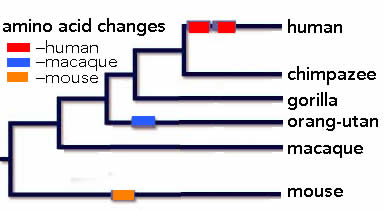 these two amio acid changes alter the activity of the human protein, that is the ensemble of genes that it regulates. That foxp2 has an important role in humans was revealed through studies of individuals in a family that displayed a severe language disorder linked to a mutation that disrupts the function of the foxp2 protein. Individuals carrying this mutant foxp2 allele display speech apraxia, a “severe impairment in the selection and sequencing of fine oral and facial movements, the ability to break up words into their constituent phonemes, and the production and comprehension of word inflections and syntax” (cited in
 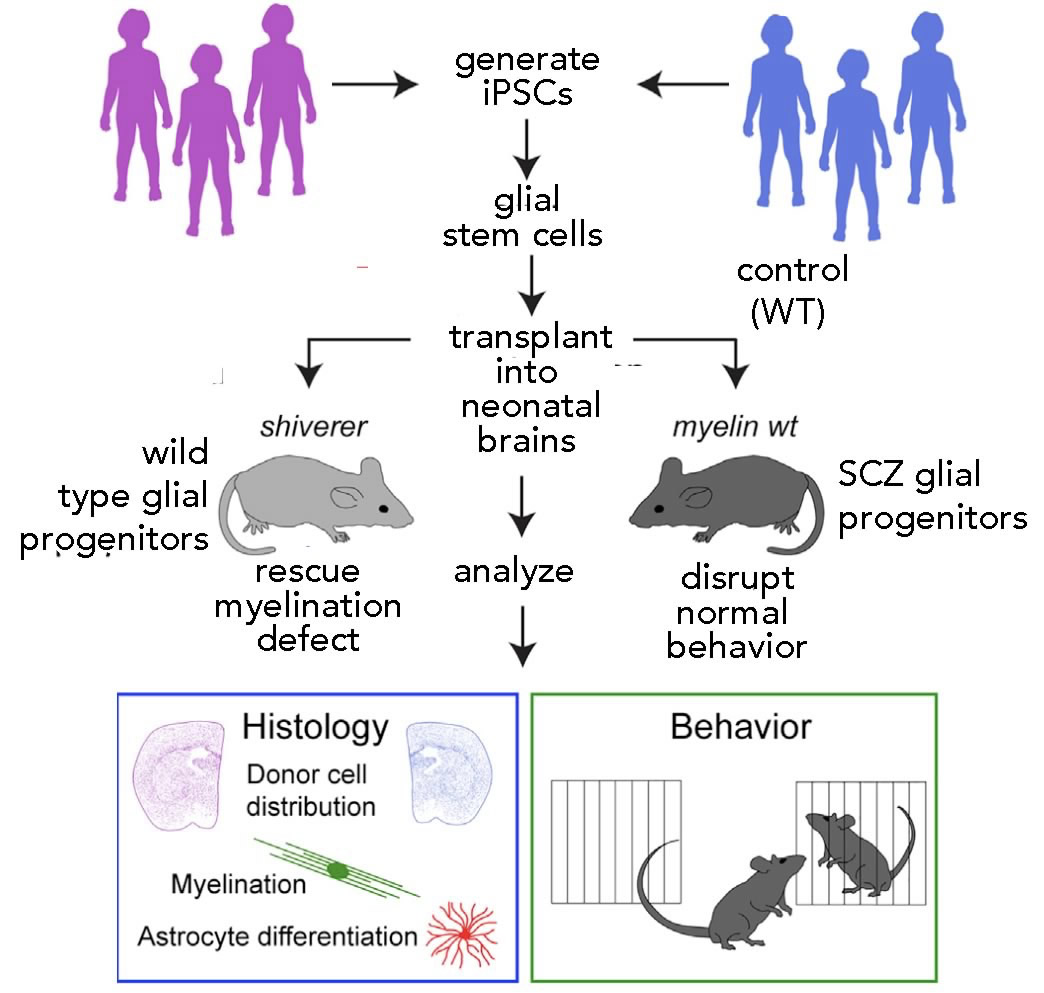 Glial cells are the major non-neuronal component of the central nervous system. Once thought of as passive “support” cells, it is now clear that the two major types of glia, known as astrocytes and oligodendrocytes, play a number of important roles in neural functioning [
 Subsequently, Goldman and associates used a variant of this approach to introduce hGPCs (derived from human embryonic stem cells) carrying either a normal or mutant version of the Huntingtin protein, a protein associated with the severe neural disease Huntington’s chorea (OMIM:
  The second obstacle to pig → human transplantation is the presence of retroviruses within the pig genome. All vertebrate genomes, including those of humans, contain many inserted retroviruses; almost 50% of the human genome is retrovirus-derived sequence (an example of unintelligent design if ever there was one). Most of these endogenous retroviruses are “under control” and are normally benign (see
 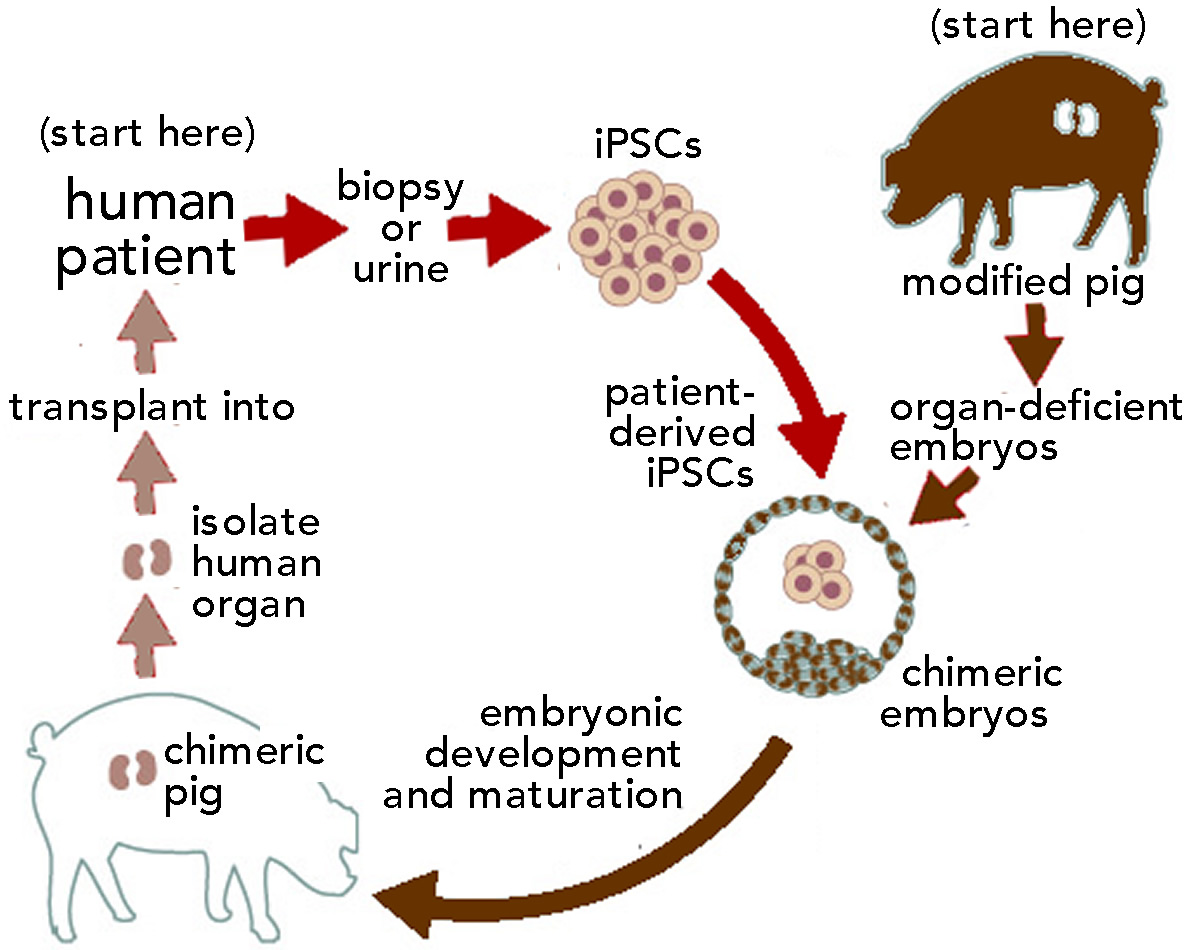 or eyes can be generated. In an embryo that cannot make these organs, which can be a lethal defect, the introduction of stem cells from an animal that can form these organs can lead to the formation of an organ composed primarily of cells derived from the transplanted (human) cells.
 Unfortunately, all too often instructors, particularly in introductory level college science courses, are not the masters of their ships; that is, they are not rewarded for generating more effective course materials. An emphasis on course “coverage” over learning, whether through peer-pressure, institutional apathy, or both, generates unnecessary obstacles to both student engagement and content mastery. To reverse the effects of the reverse DK effect, we need to encourage instructors, course designers, and departments to see the presentation of core disciplinary observations and concepts as the intellectually challenging and valuable endeavor that it is. In its absence, there are serious (and growing) pressures to trivialize or obscure the educational experience – leading to the socially- and personally-damaging growth of fake knowledge.

 The Nobel prize winning work of Kazutoshi Takahashi and Shinya Yamanaka (
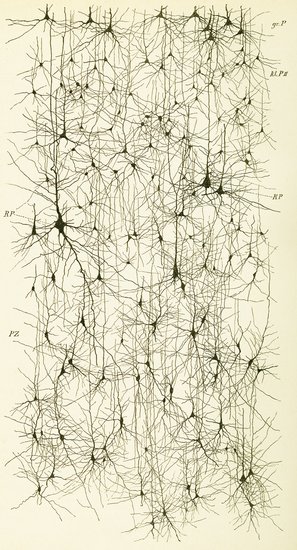
 system. The left panel of the figure shows, in highly schematic form how these cells interact (
 bioliteracy / biofundamentals