Reverse Dunning-Kruger effects and science education

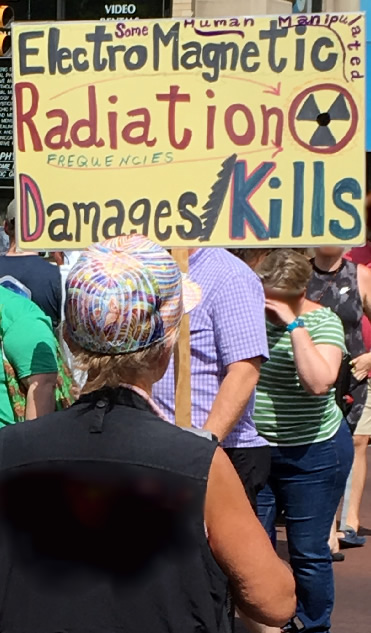
The Dunning-Kruger (DK) effect is the well-established phenomenon that people tend to over estimate their understanding of a particular topic or their skill at a particular task, often to a dramatic degree [link][link]. We see examples of the DK effect throughout society; the current administration (unfortunately) and the nutritional supplements / homeopathy section of Whole Foods spring to mind as examples. But there is a less well-recognized “reverse DK” effect, namely the tendency of instructors, and a range of other public communicators, to over-estimate what the people they are talking to are prepared to understand, appreciate, and accurately apply. The efforts of science communicators and instructors can be entertaining but the failure to recognize and address the reverse DK effect results in ineffective educational efforts. These efforts can themselves help generate the illusion of understanding in students and the broader public (discussed here). While a confused understanding of the intricacies of cosmology or particle physics can be relatively harmless in their social and personal implications, similar misunderstandings become personally and publicly significant when topics such as vaccination, alternative medical treatments, and climate change are in play.

There are two synergistic aspects to the reverse DK effect that directly impact science instruction: the need to understand what one’s audience does not understand together with the need to clearly articulate the conceptual underpinnings needed to understand the subject to be taught. This is in part because modern science has, at its core, become increasingly counter-intuitive over the last approximately 100 years or so, a situation that can cause serious confusions that educators must address directly and explicitly. The first reverse DK effect involves the extent to which the instructor (and by implication the course and textbook designer) has an accurate appreciation of what students think or think they know, what ideas they have previously been exposed to, and what they actually understand about the implications of those ideas.  Are they prepared to learn a subject or does the instructor first have to acknowledge and address conceptual confusions and build or rebuild base concepts?  While the best way to discover what students think is arguably a Socratic discussion, this only rarely occurs for a range of practical reasons. In its place, a number of concept inventory-type testing instruments have been generated to reveal whether various pre-identified common confusions exist in students’ thinking. Knowing the results of such assessments BEFORE instruction can help customize how the instructor structures the learning environment and content to be presented and whether the instructor gives students the space to work with these ideas to develop a more accurate and nuanced understanding of a topic.  Of course, this implies that instructors have the flexibility to adjust the pace and focus of their classroom activities. Do they take the time needed to address student issues or do they feel pressured to plow through the prescribed course content, come hell, high water, or cascading student befuddlement.

A complementary aspect of the reverse DK effect, well-illustrated in the “why magnets attract” interview with the physicist Richard Feynman, is that the instructor, course designer, or textbook author(s) needs to have a deep and accurate appreciation of the underlying core knowledge necessary to understand the topic they are teaching. Such a robust conceptual understanding makes it possible to convey the complexities involved in a particular process and explicitly values appreciating a topic rather than memorizing it.  It focuses on the general, rather than the idiosyncratic. A classic example from many an introductory biology course is the difference between expecting students to remember the steps in glycolysis or the Krebs cycle reaction system, as opposed to the general principles that underlie the non-equilibrium reaction networks involved in all biological functions, a reaction network based on coupled chemical reactions and governed by the behaviors of thermodynamically favorable and unfavorable reactions. Without a explicit discussion of these topics, all too often students are required to memorize names without understanding the underlying rationale driving the processes involved; that is, why the system behaves as it does.  Instructors also give false “rubber band” analogies or heuristics to explain complex phenomena (see Feynman video 6:18 minutes in). A similar situation occurs when considering how molecules come to associate and dissociate from one another, for example in the process of regulating gene expression or repairing mutations in DNA. Most textbooks simply do not discuss the physiochemical processes involved in binding specificity, association, and dissociation rates, such as the energy changes associated with molecular interactions and thermal collisions (don’t believe me? look for yourself!). But these factors are essential for a student to understand the dynamics of gene expression [link], as well as the specificity of modern methods involved in genetic engineering, such as restriction enzymes, polymerase chain reaction, and CRISPR CAS9-mediated mutagenesis. By focusing on the underlying processes involved we can avoid their trivialization and enable students to apply basic principles to a broad range of situations. We can understand exactly why CRISPR CAS9-directed mutagenesis can be targeted to a single site within a multibillion-base pair genome.

Of course, as in the case of recognizing and responding to student misunderstandings and knowledge gaps, a thoughtful consideration of underlying processes takes course time, time that trades the development of a working understanding of core processes and principles for broader “coverage” of frequently disconnected facts, the memorization and regurgitation of which has been privileged over understanding why those facts are worth knowing. If our goal is for students to emerge from a course with an accurate understanding of the basic processes involved rather than a superficial familiarity with a plethora of unrelated facts, however, a Socratic interaction with the topic is essential. What assumptions are being made, where do they come from, how do they constrain the system, and what are their implications?  Do we understand why the system behaves the way it does? In this light, it is a serious educational mystery that many molecular biology / biochemistry curricula fail to introduce students to the range of selective and non-selective evolutionary mechanisms (including social and sexual selection – see link), that is, the processes that have shaped modern organisms.

Both aspects of the reverse DK effect impact educational outcomes. Overcoming the reverse DK effect depends on educational institutions committing to effective and engaging course design, measured in terms of retention, time to degree, and a robust inquiry into actual student learning. Such an institutional dedication to effective course design and delivery is necessary to empower instructors and course designers. These individuals bring a deep understanding of the topics taught and their conceptual foundations and historic development to their students AND must have the flexibility and authority to alter the pace (and design) of a course or a curriculum when they discover that their students lack the pre-existing expertise necessary for learning or that the course materials (textbooks) do not present or emphasize necessary ideas. Radiation-kills-in-BoulderUnfortunately, all too often instructors, particularly in introductory level college science courses, are not the masters of their ships; that is, they are not rewarded for generating more effective course materials. An emphasis on course “coverage” over learning, whether through peer-pressure, institutional apathy, or both, generates unnecessary obstacles to both student engagement and content mastery.  To reverse the effects of the reverse DK effect, we need to encourage instructors, course designers, and departments to see the presentation of core disciplinary observations and concepts as the intellectually challenging and valuable endeavor that it is. In its absence, there are serious (and growing) pressures to trivialize or obscure the educational experience – leading to the socially- and personally-damaging growth of fake knowledge.
empty images holders removed, new image added – 17 December 2020

Is it time to start worrying about conscious human “mini-brains”?

A human iPSC cerebral organoid in which pigmented retinal epithelial cells can be seen (from the work of McClure-Begley et al.).   Also see “Can lab-grown brains become conscious?” by Sara Readon Nature 2020.

The fact that experiments on people are severely constrained is a major obstacle in understanding human development and disease.  Some of these constraints are moral and ethical and clearly appropriate and necessary given the depressing history of medical atrocities.  Others are technical, associated with the slow pace of human development. The combination of moral and technical factors has driven experimental biologists to explore the behavior of a wide range of “model systems” from bacteria, yeasts, fruit flies, and worms to fish, frogs, birds, rodents, and primates.  Justified by the deep evolutionary continuity between these organisms (after all, all organisms appear to be descended from a single common ancestor and share many molecular features), experimental evolution-based studies of model systems have led to many therapeutically valuable insights in humans – something that I suspect a devotee of intelligent design creationism would be hard pressed to predict or explain (post link).

While humans are closely related to other mammals, it is immediately obvious that there are important differences – after all people are instantly recognizable from members of other closely related species and certainly look and behave differently from mice. For example, the surface layer of our brains is extensively folded (they are known as gyrencephalic) while the brain of a mouse is smooth as a baby’s bottom (and referred to as lissencephalic). In humans, the failure of the brain cortex to fold is known as lissencephaly, a disorder associated with severe neurological defects. With the advent of more and more genomic sequence data, we can identify human specific molecular (genomic) differences. Many of these sequence differences occur in regions of our DNA that regulate when and where specific genes are expressed.  Sholtis & Noonan (1) provide an example: the HACNS1 locus is a 81 basepair region that is highly conserved in various vertebrates from birds to chimpanzees; there are 13 human specific changes in this sequence that appear to alter its activity, leading to human-specific changes in the expression of nearby genes (↓). At this point ~1000 genetic elements that are different in humans compared to other vertebrates have been identified and more are likely to emerge (2).  Such human-specific changes can make modeling human-specific behaviors, at the cellular, tissue, organ, and organism level, in non-human model systems difficult and problematic (3, 4).   It is for this reason that scientists have attempted to generate better human specific systems.

human sequence divergence

One particularly promising approach is based on what are known as embryonic stem cells (ESCs) or pluripotent stem cells (PSCs). Human embryonic stem cells are generated from the inner cell mass of a human embryo and so involve the destruction of that embryo – which raises a number of ethical and religious concerns as to when “life begins” (5).  Human pluripotent stem cells are isolated from adult tissues but in most cases require invasive harvesting methods that limit their usefulness.  Both ESCs and PSCs can be grown in the laboratory and can be induced to differentiate into what are known as gastruloids.  Such gastruloids can develop anterior-posterior (head-tail), dorsal-ventral (back-belly), and left-right axes analogous to those found in embryos (6) and adults (top panel ↓). In the case of PSCs, the gastruloid (bottom panel ↓) is essentially a twin of the organism from which the PSCs were derived, a situation that raises difficult questions: is it a distinct individual, is it the property of the donor or the creation of a technician.  The situation will be further complicated if (or rather, when) it becomes possible to generate viable embryos from such gastruloids.

Axes

gastruloid-embryo-comparisonThe Nobel prize winning work of Kazutoshi Takahashi and Shinya Yamanaka (7), who devised methods to take differentiated (somatic) human cells and reprogram them into ESC/PSC-like cells, cells known as induced pluripotent stem cells (iPSCs)(8), represented a technical breakthrough that jump-started this field. While the original methods derived sample cells from tissue biopsies, it is possible to reprogram kidney epithelial cells recovered from urine, a non-invasive approach (910).  Subsequently, Madeline Lancaster, Jurgen Knōblich, and colleagues devised an approach by which such cells could be induced to form what they termed “cerebral organoids” (although Yoshiki Sasai and colleagues were the first to generate neuronal organoids); they used this method to examine the developmental defects associated with microencephaly (11).  The value of the approach was rapidly recognized and a number of studies on human conditions, including  lissencephaly (12), Zika-virus infection-induced microencephaly (13), and Down’s syndrome (14);  investigators have begun to exploit these methods to study a range of human diseases – and rapid technological progress is being made.

The production of cerebral organoids from reprogrammed human somatic cells has also attracted the attention of the media (15).  While “mini-brain” is certainly a catchier name, it is a less accurate description of a cerebral organoid, itself possibly a bit of an overstatement, since it is not clear exactly how “cerebral” such organoids are. For example, the developing brain is patterned by embryonic signals that establish its asymmetries; it forms at the anterior end of the neural tube (the nascent central nervous system and spinal cord) and with distinctive anterior-posterior, dorsal-ventral, and left-right asymmetries, something that simple cerebral organoids do not display.  Moreover, current methods for generating cerebral organoids involve primarily what are known as neuroectodermal cells – our nervous system (and that of other vertebrates) is a specialized form of the embryo’s surface layer that gets internalized during development. In the embryo, the developing neuroectoderm interacts with cells of the circulatory system (capillaries, veins, and arteries), formed by endothelial cells and what are known as pericytes that surround them. These cells, together with interactions with glial cells (astrocytes, a non-neuronal cell type) combine to form the blood brain barrier.  Other glial cells (oligodendrocytes) are also present; in contrast, both types of glia (astrocytes and oligodendrocytes) are rare in the current generation of cerebral organoids. Finally, there are microglial cells,  immune system cells that originate from outside the neuroectoderm; they invade and interact with neurons and glia as part of the brain’s dynamic neural capillary and neuronssystem. The left panel of the figure shows, in highly schematic form how these cells interact (16). The right panel is a drawing of neural tissue stained by the Golgi method (17), which reveals ~3-5% of the neurons present. There are at least as many glial cells present, as well as microglia, none of which are visible in the image. At this point, cerebral organoids typically contain few astrocytes and oligodendrocytes, no vasculature, and no microglia. Moreover, they grow to be about 1 to 3 mm in diameter over the course of 6 to 9 months; that is significantly smaller in volume than a fetal or newborn’s brain. While cerebral organoids can generate structures characteristic of retinal pigment epithelia (top figure) and photo-responsive neurons (18), such as those associated with the retina, an extension of the brain, it is not at all clear that there is any significant sensory input into the neuronal networks that are formed within a cerebral organoid, or any significant outputs, at least compared to the role that the human brain plays in controlling bodily and mental functions.

The reasonable question, then, must be whether a  cerebral organoid, which is a relatively simple system of cells (although itself complex), is conscious. It becomes more reasonable as increasingly complex systems are developed, and such work is proceeding apace. Already researchers are manipulating the developing organoid’s environment to facilitate axis formation, and one can anticipate the introduction of vasculature. Indeed, the generation of microglia-like cells from iPSCs has been reported; such cells can be incorporated into cerebral organoids where they appear to respond to neuronal damage in much the same way as microglia behave in intact neural tissue (19).

We can ask ourselves, what would convince us that a cerebral organoid, living within a laboratory incubator, was conscious? How would such consciousness manifest itself? Through some specific pattern of neural activity, perhaps?  As a biologist, albeit one primarily interested in molecular and cellular systems, I discount the idea, proposed by some physicists and philosophers as well as the more mystical, that consciousness is a universal property of matter (20,21).  I take consciousness to be an emergent property of complex neural systems, generated by evolutionary mechanisms, built during embryonic and subsequent development, and influenced by social interactions (BLOG LINK) using information encoded within the human genome (something similar to this: A New Theory Explains How Consciousness Evolved). While a future concern, in a world full of more immediate and pressing issues, it will be interesting to listen to the academic, social, and political debate on what to do with mini-brains as they grow in complexity and perhaps inevitably, towards consciousness.

Footnotes and references

Thanks to Rebecca Klymkowsky, Esq. and Joshua Sanes, Ph.D. for editing and disciplinary support. Minor updates and the reintroduction of figures 22 Oct. 2020.

  1. Gene regulation and the origins of human biological uniqueness
  2.  See also Human-specific loss of regulatory DNA and the evolution of human-specific traits
  3. The mouse trap
  4. Mice Fall Short as Test Subjects for Some of Humans’ Deadly Ill
  5. The status of the human embryo in various religions
  6. Interactions between Nodal and Wnt signalling Drive Robust Symmetry Breaking and Axial Organisation in Gastruloids (Embryonic Organoids)
  7.  Induction of pluripotent stem cells from mouse embryonic and adult fibroblast cultures by defined factors
  8.  How iPS cells changed the world
  9.  Generation of Induced Pluripotent Stem Cells from Urine
  10. Urine-derived induced pluripotent stem cells as a modeling tool to study rare human diseases
  11. Cerebral organoids model human brain development and microcephaly.
  12. Human iPSC-Derived Cerebral Organoids Model Cellular Features of Lissencephaly and Reveal Prolonged Mitosis of Outer Radial Glia
  13. Using brain organoids to understand Zika virus-induced microcephaly
  14. Probing Down Syndrome with Mini Brains
  15. As an example, see The Beauty of “Mini Brains”
  16. Derived from Central nervous system pericytes in health and disease
  17. Golgi’s method .
  18. Cell diversity and network dynamics in photosensitive human brain organoids
  19. Efficient derivation of microglia-like cells from human pluripotent stem cells
  20. The strange link between the human mind and quantum physics – BBC:
  21. Can Quantum Physics Explain Consciousness?

Go ahead and “teach the controversy:” it is the best way to defend science.

as long as teachers understand the science and its historical context

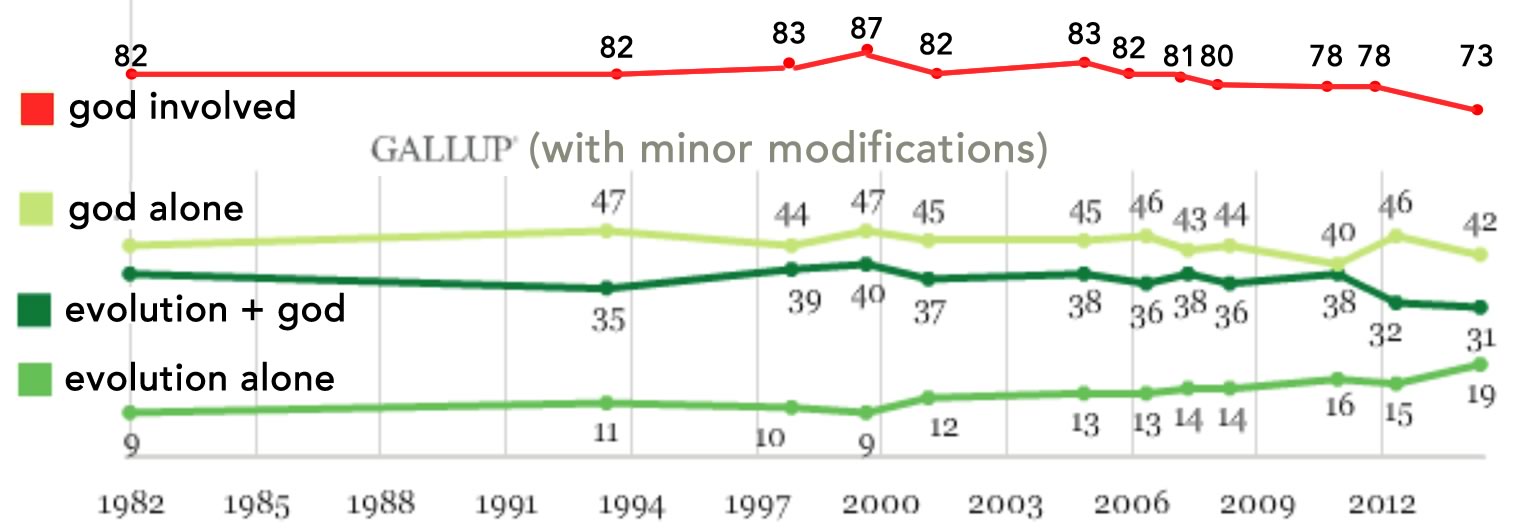
The role of science in modern societies is complex. Science-based observations and innovations drive a range of economically important, as well as socially disruptive, technologies. Many opinion polls indicate that the American public “supports” science, while at the same time rejecting rigorously established scientific conclusions on topics ranging from the safety of genetically modified organisms and the role of vaccines in causing autism to the effects of burning fossil fuels on the global environment [Pew: Views on science and society]. Given that a foundational principle of science is that the natural world can be explained without calling on supernatural actors, it remains surprising that a substantial majority of people appear to believe that supernatural entities are involved in human evolution [as reported by the Gallup organization]; although the theistic percentage has been dropping  (a little) of late.

God+evolution

This situation highlights the fact that when science intrudes on the personal or the philosophical (within which I include the theological and the  ideological), many people are willing to abandon the discipline of science to embrace explanations based on personal beliefs. These include the existence of a supernatural entity that cares for people, at least enough to create them, and that there are reasons behind life’s tragedies.


Where science appears to conflict with various non-scientific positions, the public has pushed back and rejected the scientific. This is perhaps best represented by the recent spate of “teach the controversy” legislative efforts, primarily centered on evolutionary theory and the realities of anthropogenic climate change [see Nature: Revamped ‘anti-science’ education bills]. We might expect to see, on more politically correct campuses, similar calls for anti-GMO, anti-vaccination, or gender-based curricula. In the face of the disconnect between scientific and non-scientific (philosophical, ideological, theological) personal views, I would suggest that an important part of the problem has didaskalogenic roots; that is, it arises from the way science is taught – all too often expecting students to memorize terms and master various heuristics (tricks) to answer questions rather than developing a self-critical understanding of ideas, their origins, supporting evidence, limitations, and practice in applying them.

Science is a social activity, based on a set of accepted core assumptions; it is not so much concerned with Truth, which could, in fact, be beyond our comprehension, but rather with developing a universal working knowledge, composed of ideas based on empirical observations that expand in their explanatory power over time to allow us to predict and manipulate various phenomena.  Science is a product of society rather than isolated individuals, but only rarely is the interaction between the scientific enterprise and its social context articulated clearly enough so that students and the general public can develop an understanding of how the two interact.  As an example, how many people appreciate the larger implications of the transition from an Earth to a Sun- or galaxy-centered cosmology?  All too often students are taught about this transition without regard to its empirical drivers and philosophical and sociological implications, as if the opponents at the time were benighted religious dummies. Yet, how many students or their teachers appreciate that as originally presented the Copernican system had more hypothetical epicycles and related Rube Goldberg-esque kludges, introduced to make the model accurate, than the competing Ptolemic Sun-centered system? Do students understand how Kepler’s recognition of elliptical orbits eliminated the need for such artifices and set the stage for Newtonian physics?  And how did the expulsion of humanity from the center to the periphery of things influence peoples’ views on humanity’s role and importance?


So how can education adapt to better help students and the general public develop a more realistic understanding of how science works?  To my mind, teaching the controversy is a particularly attractive strategy, on the assumption that teachers have a strong grounding in the discipline they are teaching, something that many science degree programs do not achieve, as discussed below. For example, a common attack against evolutionary mechanisms relies on a failure to grasp the power of variation, arising from stochastic processes (mutation), coupled to the power of natural, social, and sexual selection. There is clear evidence that people find stochastic processes difficult to understand and accept [see Garvin-Doxas & Klymkowsky & Fooled by Randomness].  An instructor who is not aware of the educational challenges associated with grasping stochastic processes, including those central to evolutionary change, risks the same hurdles that led pre-molecular biologists to reject natural selection and turn to more “directed” processes, such as orthogenesis [see Bowler: The eclipse of Darwinism & Wikipedia]. Presumably students are even more vulnerable to intelligent-design  creationist arguments centered around probabilities.

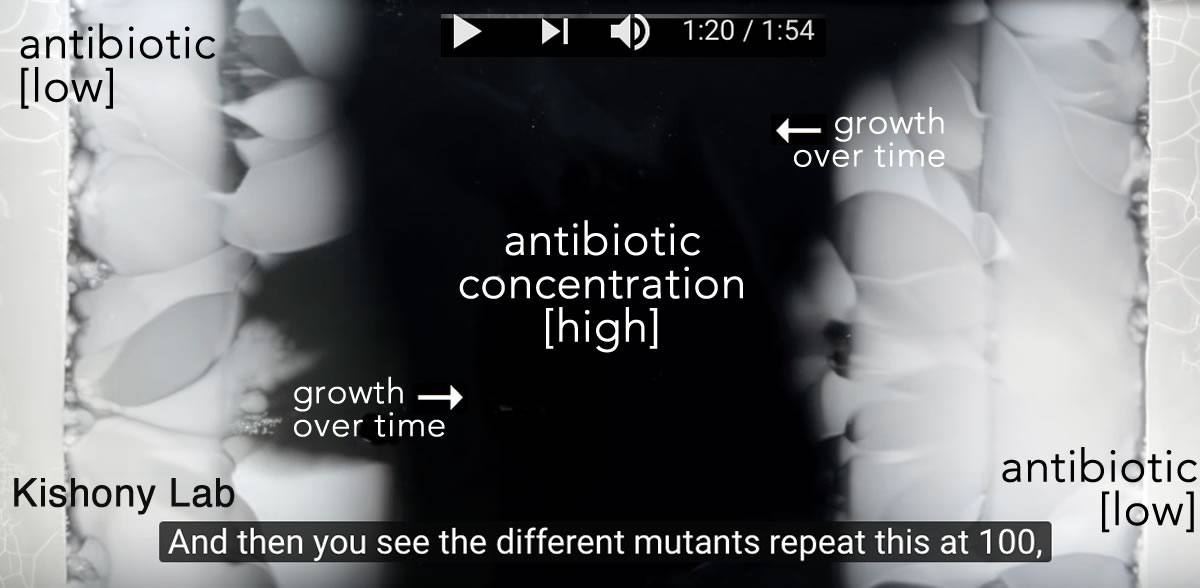
The fact that single cell measurements enable us to visualize biologically meaningful stochastic processes makes designing course materials to explicitly introduce such processes easier [Biology education in the light of single cell/molecule studies].  An interesting example is the recent work on visualizing the evolution of antibiotic resistance macroscopically [see The evolution of bacteria on a “mega-plate” petri dish].bacterial evolution-antibiotic resistancepng

To be in a position to “teach the controversy” effectively, it is critical that students understand how science works, specifically its progressive nature, exemplified through the process of generating and testing, and where necessary, rejecting or revising, clearly formulated and predictive hypotheses – a process antithetical to a Creationist (religious) perspective [a good overview is provided here: Using creationism to teach critical thinking].  At the same time, teachers need a working understanding of the disciplinary foundations of their subject, its core observations, and their implications. Unfortunately, many are called upon to teach subjects with which they may have only a passing familiarity.  Moreover, even majors in a subject may emerge with a weak understanding of foundational concepts and their origins – they may be uncomfortable teaching what they have learned.  While there is an implicit assumption that a college curriculum is well designed and effective, there is often little in the way of objective evidence that this is the case. While many of our dedicated teachers (particularly those I have met as part of the CU Teach program) work diligently to address these issues on their own, it is clear that many have not been exposed to a critical examination of the empirical observations and experimental results upon which their discipline is based [see Biology teachers often dismiss evolution & Teachers’ Knowledge Structure, Acceptance & Teaching of Evolution].  Many is the molecular biology department that does not require formal coursework in basic evolutionary mechanisms, much less a thorough consideration of natural, social, and sexual selection, and non-adaptive mechanisms, such as those associated with founder effects, population bottlenecks, and genetic drift, stochastic processes that play a key role in the evolution of many species, including humankind. Similarly, more ecologically- and physiologically-oriented majors are often “afraid” of the molecular foundations of evolutionary processes. As part of an introductory chemistry curriculum redesign project (CLUE), Melanie Cooper and her group at Michigan State University have found that students in conventional courses often fail to grasp key concepts, and that subsequent courses can sometimes fail to remediate the didaskalogenic damage done in earlier courses [see: an Achilles Heel in Chemistry Education].

The importance of a historical perspective: The power of scientific explanations are obvious, but they can become abstract when their historical roots are forgotten, or never articulated. A clear example is that the value of vaccination is obvious in the presence of deadly and disfiguring diseases. In their absence, due primarily to the effectiveness of wide-spread vaccination, the value of vaccination can be called into question, resulting in the avoidable re-emergence of these diseases.  In this context, it would be important that students understand the dynamics and molecular complexity of biological systems, so that they can explain why it is that all drugs and treatments have potential side-effects, and how each individual’s genetic background influences these side-effects (although in the case of vaccination, such side effects do not include autism).

Often “controversy” arises when scientific explanations have broader social, political, or philosophical implications. Religious objections to evolutionary theory arise primarily, I believe, from the implication that we (humans) are not the result of a plan, created or evolved, but rather that we are accidents of mindless, meaningless, and often gratuitously cruel processes. The idea that our species, which emerged rather recently (that is, a few million years ago) on a minor planet on the edge of an average galaxy, in a universe that popped into existence for no particular reason or purpose ~14 billion years ago, can have disconcerting implications [link]. Moreover, recognizing that a “small” change in the trajectory of an asteroid could change the chance that humanity ever evolved [see: Dinosaur asteroid hit ‘worst possible place’] can be sobering and may well undermine one’s belief in the significance of human existence. How does it impact our social fabric if we are an accident, rather than the intention of a supernatural being or the inevitable product of natural processes?

Yet, as a person who firmly believes in the French motto of liberté, égalité, fraternité and laïcité, I feel fairly certain that no science-based scenario on the origin and evolution of the universe or life, or the implications of sexual dimorphism or “racial” differences, etc, can challenge the importance of our duty to treat others with respect, to defend their freedoms, and to insure their equality before the law. Which is not to say that conflicts do not inevitably arise between different belief systems – in my own view, patriarchal oppression needs to be called out and actively opposed where ever it occurs, whether in Saudi Arabia or on college campuses (e.g. UC Berkeley or Harvard).

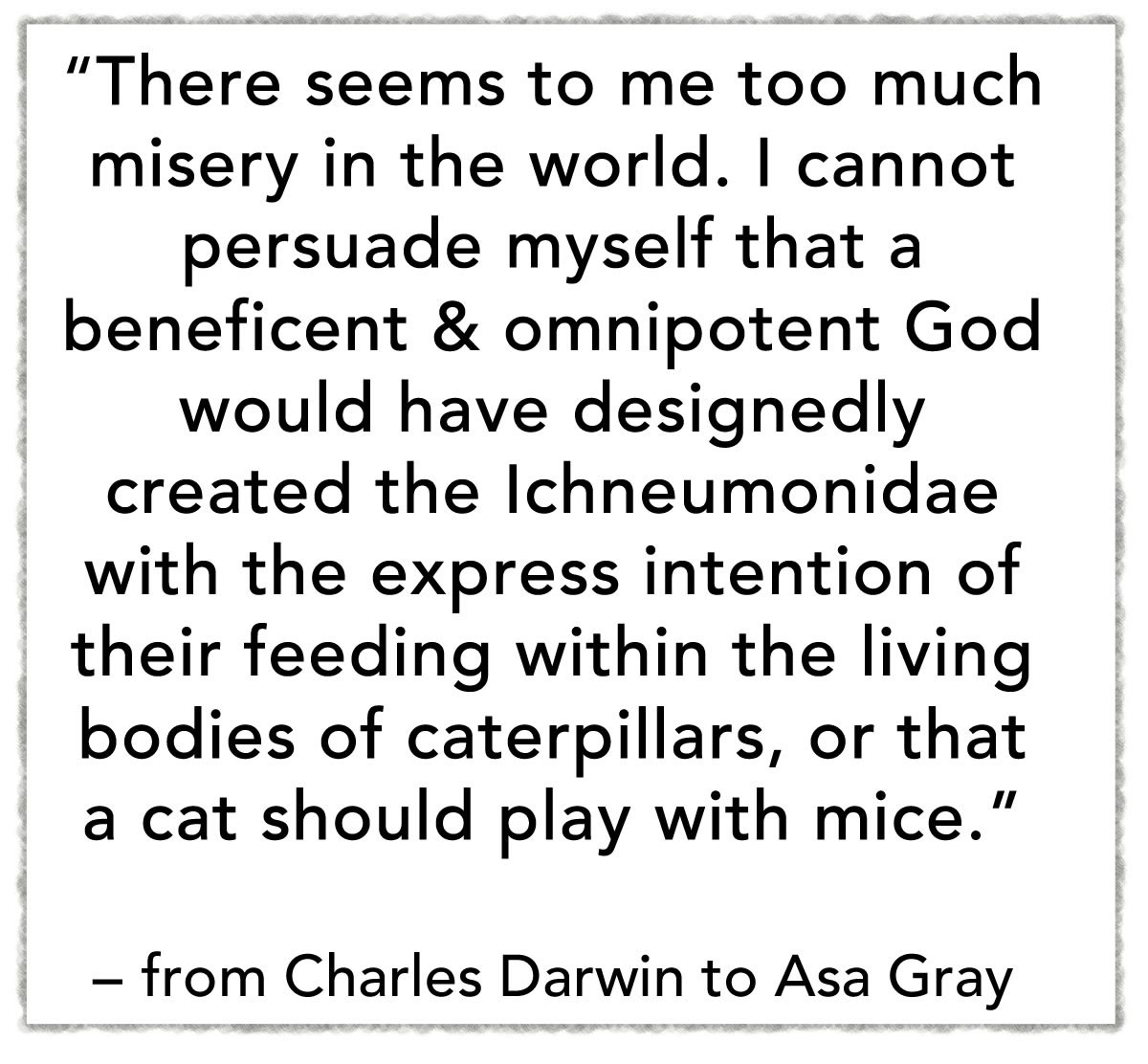
This is not to say that presenting the conflicts between scientific explanations of phenomena and non-scientific, but more important beliefs, such as equality under the law, is easy. When considering a number of natural cruelties, Charles Darwin wrote that evolutionary theory would claim that these are “as small consequences of one general law, leading to the advancement of all organic beings, namely, multiply, vary, let the strongest live  and the weakest die” note the absence of any reference to morality, or even sympathy for the “weakest”.  In fact, Darwin would have argued that the apparent, and overt cruelty that is rampant in the “natural” world is evidence that God was forced by the laws of nature to create the world the way it is, presumably a worlDarwin to Grayd that is absurdly old and excessively vast. Such arguments echo the view that God had no choice other than whether to create or not; that for all its flaws, evils, and unnecessary suffering this is, as posited by Gottfried Leibniz (1646-1716) and satirized by Voltaire (1694–1778) in his novel Candide, the best of all possible worlds. Yet, as a member of a reasonably liberal, and periodically enlightened, society, we see it as our responsibility to ameliorate such evils, to care for the weak, the sick, and the damaged and to improve human existence; to address prejudice and political manipulations [thank you Supreme Court for ruling against race-based redistricting].  Whether anchored by philosophical or religious roots, many of us are driven to reject a scientific (biological) quietism (“a theology and practice of inner prayer that emphasizes a state of extreme passivity”) by actively manipulating our social, political, and physical environment and striving to improve the human condition, in part through science and the technologies it makes possible.

At the same time, introducing social-scientific interactions can be fraught with potential  controversies, particularly in our excessively politicized and self-righteous society. In my own introductory biology class (biofundamentals), we consider potentially contentious issues that include sexual dimorphism and selection and social evolutionary processes and their implications.  As an example, social systems (and we are social animals) are susceptible to social cheating and groups develop defenses against cheaters; how such biological ideas interact with historical, political and ideological perspectives is complex, and certainly beyond the scope of an introductory biology course, but worth acknowledging [PLoS blog link].

yeats quote

In a similar manner, we understand the brain as an evolved cellular system influenced by various experiences, including those that occur during development and subsequent maturation.  Family life interacts with genetic factors in a complex, and often unpredictable way, to shape behaviors.  But it seems unlikely that a free and enlightened society can function if it takes seriously the premise that we lack free-will and so cannot be held responsible for our actions, an idea of some current popularity [see Free will could all be an illusion ]. Given the complexity of biological systems, I for one am willing to embrace the idea of constrained free will, no matter what scientific speculations are currently in vogue [but see a recent video by Sabine Hossenfelder You don’t have free will, but don’t worry, which has me rethinking].

Recognizing the complexities of biological systems, including the brain, with their various adaptive responses and feedback systems can be challenging. In this light, I am reminded of the contrast between the Doomsday scenario of Paul Ehrlich’s The Population Bomb, and the data-based view of the late Hans Rosling in Don’t Panic – The Facts About Population.

All of which is to say that we need to see science not as authoritarian, telling us who we are or what we should do, but as a tool to do what we think is best and why it might be difficult to achieve. We need to recognize how scientific observations inform and may constrain, but do not dictate our decisions. We need to embrace the tentative, but strict nature of the scientific enterprise which, while it cannot arrive at “Truth” can certainly identify non-sense.

Minor edits and updates and the addition of figures that had gone missing –  20 October 2020

After the March for Science, What Now?

Recently, I contributed to a project that turned healthy human tissues into an earlier stage of pancreatic cancer—a disease that carries a dismal 5-year survival rate of 5 percent.


When I described our project to a friend, she asked, “why in the world would you want to grow cancer in a lab?” I explained that by the time a patient learns that he has pancreatic cancer, the tumor has spread throughout the body. At that point, the patient typically has less than a year to live and his tumor cells have racked up a number of mutations, making clinical trials and molecular studies of pancreatic cancer evolution downright difficult. For this reason, our laboratory model of pancreatic cancer was available to scientists who wanted to use it to find the biological buttons that turn healthy cells into deadly cancer. By sharing our discovery, we wanted to enable others in developing drugs to treat cancer and screening tests to diagnose patients early. The complexity of this process demonstrates that science is a team effort that involves lots of time, money, and the brainpower of highly-trained individuals working together toward a single goal.


Many of the challenges we face today—from lifestyle diseases, to the growing strains of antibiotic-resistant superbugs in hospitals, to the looming energy crisis—require scientific facts and solutions. And although there’s never a guarantee of success, scientists persist in hopes that our collective discoveries will reverberate into the future. However, as a corollary, hindering scientific progress means a loss of possibilities.


Unfortunately, the deceleration of scientific progress seems likely possibility. In March, the White House released a document called “America First: A Budget Blueprint to Make America Great Again,” which describes deep cuts to some of the country’s most important funding agencies for science.


As it stands, the National Institutes of Health is set to lose nearly a fifth of its budget; the Department of Energy’s Office of Science, $900 million; and the Environmental Protection Agency, a 31.5 percent budget cut worth $2.6 billion. Imagine the discoveries that could have saved our lives or created jobs, which will instead languish solely as unsupported hypotheses in the minds of underfunded scientists.


Scientists cannot remain idle on the sidelines; we must be active in making the importance of scientific research known. Last weekend’s March on Science drew tens of thousands of people around more than 600 rallies across the world, but the challenge now lies in harnessing the present momentum and energy to make sustained efforts to maintain government funding for a wide range of scientific projects.


The next step is to get involved in shaping public opinion and policy. As it stands, Americans on both sides of the political spectrum have expressed ambivalence about the validity of science on matters ranging from climate change to childhood vaccinations. Academics can start tempering the public’s unease toward scientific authority and increase public support for the sciences by stepping off the ivory tower. Many researchers are already engaging with the masses by posting on social media, penning opinion articles, and appearing on platforms aimed at public consumption (Youtube channels, TED, etc). A researcher is her own best spokesperson in explaining the importance of her work and the scientific process; unfortunately, a scientist’s role as an educator in the classroom and community is often shoved out by the all-encompassing imperative to publish or perish. As a profession, we must become more willing to step out of our laboratories to engage with the public and educate the next generation of science-savvy citizens.


In addition, many scientists have expressed interest in running for office, including UC Berkeley’s Michael Eisen (who also a co-founder of PLOS). When asked by Science why he was considering a run for senate, Eisen responded:


“My motivation was simple. I’m worried that the basic and critical role of science in policymaking is under a bigger threat than at any point in my lifetime. We have a new administration and portions of Congress that don’t just reject science in a narrow sense, but they reject the fundamental idea that undergirds science: That we need to make observations about the world and make our decisions based on reality, not on what we want it to be. For years science has been under political threat, but this is the first time that the whole notion that science is important for our politics and our country has been under such an obvious threat.”


If scientists can enter into the house and senate in greater numbers, they will be able to inject scientific sense into the discussions held by members of legislature whose primary backgrounds are in business and law.


Science is a bipartisan issue that should not be bogged down by the whims of political machinations. We depend on research to address some of the most pressing problems of our time, and America’s greatness lies in part on its leadership utilizing science as an exploration of physical truths and a means of overcoming our present limitations and challenges.


Check out Yoo Jung’s book aimed at helping college students excel in science, What Every Science Student Should Know (University of Chicago Press)

Science, Politics & Marches

Marching is much in the air of late. After the “Women’s March”, that engaged many millions and was motivated in part by misogynistic statements and proposed policies from various politicians, we find ourselves faced with a range of anti-science behaviors, remarks, and proposed policy changes that have encouraged a similar March for Science.  The March for Science has garnered the support of a wide range of scientific organizations, including the American Association for the Advancement of Science (AAAS) and a range of more march-logospecialized professional science organizations, including the Public Library of Science (PLoS).  There have been a number of arguments for and against marching for science, summarized in this PLoS On Science blog post, so I will not repeat them here.  What is clear is that science does not exist independently of humanity, and this implies a complex interaction between scientific observations and ideas, the scientific enterprise, politics, economics, and personal belief systems: it seems evident that not nearly enough effort is spent in our educational systems to help people understand these interactions (see PLoS SciEd post: From the Science March to the Classroom: Recognizing science in politics and politics in science).

What I want to do here is to present some reflections on the relationship between science and politics, by which I include various belief systems (ideologies).

The mystic Giordano Bruno, burnt at the stake by the Roman Catholic Church as a heretic in 1600, is sometimes put forward as a patron saint of science, mistakenly in my view.  Bruno was a mystic, whose ideas were at best loosely grounded in the observable and in no way scientific as we understand the term. His type of magical thinking is similar to that of modern anti-vaccination-ists who claim vaccination can cause autism (it does not)(1) or that GMOs are somehow innately “unhealthy” and more dangerous than “natural” organisms (see: The GMO safety debate is over).  A better model, particularly in the context of current political controversies, would be the many Soviet geneticists who suffered exile and often death (the famed geneticist N.I. Vavilov starved to death in a Soviet gulag in 1943) as a result of the state/party-driven politicization of science, specifically genetics, carried out by Joseph Stalin (1878-1953) and the Communist party/state of the Soviet Union (see: The tragic story of Soviet genetics shows the folly of political meddling in science). In response to the  implications of genetic and evolutionary mechanisms, Stalin favored Lamarckism (inheritance of acquired traits) posited by Ivan Michurin (1855–1935) and Trofim Lysenko (1898–1976)[see link]. Communist ideology required (or rather demanded) that traits, including human traits, be seen as malleable, that the “nature” of plants and people could be altered permanently with appropriate manipulations (vernalization for plants, political re-education for people)[see: The consequences of political dictatorship for Russian science).  No need to wait for the messy, multi-generational processes associated with conventional plant breeding (and Darwinian evolution).  In both cases, the unforgiving realities of the natural world intervened, but not without intense human suffering and starvation associated with both efforts.russion march for science

It is worth noting explicitly that there are, and likely always will be, pressures to politicize science, due in large measure to science’s success in explaining the natural world and providing the basis for its technology-based manipulation. Giordano Bruno was an early martyr in the evolution of a highly ideological world view (illustrated by the house arrest of Galileo and the suppression of heliocentric models of the solar system)(2). Eventually such forms of natural theology were replaced by the apolitical and empirical ideals implicit in Enlightenment science. Aspects of ideological (racist) influences can be seen in 19th century science, most dramatically illustrated by Gould (Morton’s ranking of races by cranial capacity. Unconscious manipulation of data may be a scientific norm)(see link). How racist policies were initially embraced, and then rejected by American geneticists during the course of the 20th century is described by Provine (Geneticists and the Biology of Race Crossing).

More recent events remind us of the pressures to politicize science.  A number of states (Kentucky in 1976, Mississippi in 2006,  Louisiana in 2008, and Tennessee in 2012) have passed bills that allow teachers to present non-scientific ideas to students (think intelligent design creationism and climate change denial).  Such bills continue to come up with depressing frequency.  Most recently an admitted creationist has been appointed to lead a federal  higher education reform task force in the United States [see link]. Is creationism simply alt-science? a position explicitly or tacitly supported by both the religiously orthodox and those of a post-modernist persuasion, such as left-leaning college instructors, who claim that science is a social construct [see: Is Science ‘Forever Tentative’ and ‘Socially Constructed’?].

While such recent anti-science/alt-science attitudes have not had quite the draconian effects found in the Soviet Union, Nazi Germany or eugenist America), I would argue that they have a role in eroding the public’s faith in the scientific understanding of complex processes, a faith that is largely justified even in the face of the so-called “reproducibility crises”, which in a sense is no crises at all, but an expected outcome from the size, complexity, and competing forces acting on scientists and  the scientific enterprise. That said, laws and various forms of coercion dictating right-wing/religious or left-wing/political correctness in science threaten to impact the education of a generation of students. Predictions of climate changed based on human-driven (anthropogenic) increases in atmospheric CO2 levels or the effects of lead in public water systems on human health [link] cannot simply be discarded or discounted based on ideological positions on the role of government in protecting the public interest, a role that neither unfettered capitalism or fundampolitics + science cartoonentalist communism seems particularly good at addressing. Similarly the lack of any demonstrable connection between autism and vaccination (see above), the physicochemical impossibility of homeopathic treatments (or various versions of “Christian Science”), and the lack of evidence for the therapeutic claims made for the rather startling array of nutritional supplements serve to inject a political, ideological, and economic  dimension into scientific discourse.  In fact science is constantly under pressure to distort its message.  Consider the European response to GMOs in favor of the “organic” (non-GMO); most GMOs have been banned from the EU for what appears to be ideological (non-scientific) reasons, even though the same organisms have been found safe and are grown in the US and most of Asia (see this Economist essay).

It is clear that the rejection of scientific observations is wide-spread on both the left and the right, basically whenever scientific observations, ideas, or models lead to disturbing or  discomforting conclusions or implications (link). Consider the violent response when Charles Murray was invited to speak at Middlebury College (see Andrew Sullivan’s Is intersectionality a religion?). That human populations might (and in fact can be expected to) display genetic differences, the result of their migration history and subsequent evolutionary processes, both adaptive and non-adaptive (see Henn et al., The great human expansion), is labelled racist and by implication beyond the pale of scientific discourse, even though it is tacitly recognized by the scientific community to be well established (no one, I think, gets particularly upset at the suggestion that noses are shaped by evolutionary processes and reflect genetic differences between populations (see Climate shaped the human nose) or that nose shape might play a role in human sexual selection (see Facial Attractiveness and Sexual Selection; and sexual dimorphism).  One might even speculate that studies of the role of nose shape in mate selection could form the basis of an interesting research project (see Beauty and the beast: mechanisms of sexual selection in humans.

What often goes undiscussed is whether differences in specific traits (different alleles and allele frequencies) between populations have any meaningful significance in the context f public policy – I would argue that they do not).  What is clear is that in a pre-genomic era recognizing such differences can be of practical value, for example in the treatment of diseases (see Ethnic Differences in Cardiovascular Drug Response). That said, the era of genomics-based personalized diagnosis and treatment is rapidly making such population-based considerations obsolete (see: Genetic tests for disease risks and ethical debate on personal genome testing), while at the same time raising serious issues of privacy and discrimination based on the presence of the “wrong” alleles (see: genome sequencing–ethical issues). In a world of facile genomic engineering the dangers of unfettered technological manipulations move more and more rapidly from science fiction to the boutique (intelligent?) design of people (see: CRISPR gene-editing and human evolution).

So back (about time, you may be thinking) to the original question – if we “march for science”, what exactly are we marching for [link]?  Are we marching to defend the apolitical nature of science and the need to maintain economic support (increased public funding levels) for the scientific enterprise, or are we conflating support for science with a range of social and political positions?  Are we affirming our commitment to a politically independent (skeptical) community of practitioners who serve to produce, reproduce, critically examine, and extend empirical observations and explanatory (predictive) models?

This is not to ignore the various pressures acting on scientists as they carry out their work. These pressures act to tempt (and sometimes reward) practitioners to exaggerate (if not fabricate) the significance of their observations and ideas in order to capture the resources (funds and people) needed to carry out modern science, as well as the public’s attention. Since resources are limited, extra-scientific forces have an increasing impact on the scientific enterprise – enticing scientists to make exaggerated claims and to put forth extra-scientific arguments and various semi-hysterical scenarios based on their observations and models.  In the context of an inherently political event (a march) the apolitical ideals of science can seem too bland to command attention and stir action, not to mention the damage that politicizing science does to the integrity of science.

At the end of the day my decision is not to march, because I believe that science must be protected from the politPearl quote - aegisical and the partisan(see: The pernicious effects of disrespecting the constraints of science); that the ultimate working nature (as opposed to delivered truth) of scientific observations and conclusions must be respected, something rarely seen in any political movement and certainly not on display in the Lysenkoist, climate change, anti-vaccination, or eugenics movements (see this provocative essay: The Disgraceful Episode Of Lysenkoism Brings Us Global Warming Theory.)


Thanks and footnotes
:

Thanks for help on this post from Glenn Branch @ National Center for Science Education.   Of course all opinions are mine alone.

(1) While there is not doubt that vaccinations can, like all drugs and medical interventions, lead to side effects in certain individuals, there is unambiguous evidence against any link between autism and vaccination.

(2) It is worth noting that as originally proposed the Copernican (Sun-centered) model of the solar system was more complex than the Ptolemaic (Earth-centered) system it was meant to replace. It was Kepler’s elliptical, rather than circular, orbits that made the heliocentric model dramatically simpler, more accurate, and more aesthetically compelling.