Determinism versus free will, a false dichotomy 

from wikipedia – Brownian motion

You might be constrained and contingent on past events, but you are not determined! (that said you are not exactly free either).

AI Generated Summary: Arguments for and against determinism and free will in relation to biological systems often overlook the fact that neither is entirely consistent with our understanding of how these systems function. The presence of stochastic, or seemingly random, events is widespread in biological systems and can have significant functional effects. These stochastic processes lead to a range of unpredictable but often useful behaviors. When combined with self-consciousness, such as in humans, these behaviors are not entirely determined but are still influenced by the molecular and cellular nature of living systems. They may feel like free actions, but they are constrained by the inherent biological processes.

Recently two new books have appeared arguing for (1) and against (2) determinism in the context of biological systems. There have also been many posts on the subject (here is the latest one by John Horgan. These works join an almost constant stream of largely unfounded, and bordering on anti-scientific speculation, including suggestions that consciousness has non-biological roots and exists outside of animals. Speaking as a simple molecular/cellular biologist with a more than passing interest in how to teach scientific thinking effectively, it seems necessary to anchor any meaningful discussion of determinism vs free will in clearly defined terms. Just to start, what does it mean to talk about a system as “determined” if we can not accurately predict its behavior?  This brings us to a discussion of what are known as stochastic processes.  

The term random is often use to describe noise, unpredictable variations in measurements or the behavior of a system. Common understanding of the term random implies that noise is without a discernible cause. But the underlying assumption of the sciences, I have been led to believe, is that the Universe is governed exclusively by natural processes; magical or supernatural processes are not necessary and are excluded from scientific explanations. The implication of this naturalistic assumption is that all events have a cause, although the cause(s) may be theoretically or practically unknowable. For example, there are the implications of Heisenberg’s uncertainty principle, which limits our ability to measure all aspects of a system. On the practical side, measuring the position and kinetic energy of each molecule (and the parts of larger molecules) in a biological system is likely to kill the cell. The apparent conclusion is that the measurement accuracy needed to consider a system, particularly a biological system as “determined” is impossible to achieve. In a strict sense, determinism is an illusion. 

The question that remains is how to conceptualize the “random”and noisy aspects of systems.  I would argue that the observable reality of stochasticity, particularly in biological systems at all levels of organization, from single cells to nervous systems, largely resolves the scientific paradox of randomness. Simply put, stochastic processes display a strange and counter-intuitive behavior: they are unpredictable at the level of individual events, but the behaviors of populations become increasingly predictable as population size increases. Perhaps the most widely known examples of stochastic processes are radioactive decay and Brownian motion. Given a large enough population of atoms, it is possible to accurately predict the time it takes for half of the atoms to decay. But knowing the half-life of an isotope does not enable us to predict when any particular atom will decay. In Schrödinger’s famous scenario a living cat is placed in an opaque box containing a radioactive atom; when the atom decays, it activates a process that leads to the death of the cat.  At any particular time after the box is closed, it is impossible to predict with certainty whether the cat is alive or dead because radioactive decay is a stochastic process. Only by opening the box can we know for sure the state of the cat.  We can, if we know the half-life of the isotope, estimate the probability that the cat is alive but rest assured, as a biologist who has a cat, at no time is the cat both alive and dead. We cannot know the “state of the cat” for sure until we open the box.

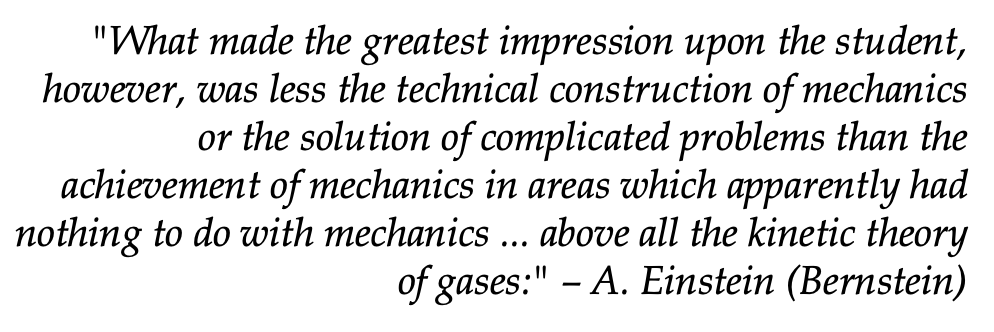
Something similar is going on with Brownian motion, the jiggling of pollen grains in water first described by Robert Brown in 1827. Einstein reasoned that “if tiny but visible particles were suspended in a liquid, the invisible atoms in the liquid would bombard the suspended particles and cause them to jiggle”. His conclusion was that Brownian motion provided evidence for the atomic and molecular nature of matter. Collisions with neighboring molecules provides the energy that drives diffusion; it drives the movement of molecules so that regulatory interactions can occur and provides the energy needed to disrupt such molecular interactions. The stronger the binding interaction between atoms or molecules the longer, ON AVERAGE, they will remain associated with one another. We can measure interaction affinities based on the half-life of interactions in a large enough population, but as with radioactive decay when exactly any particular complex dissociates cannot be predicted.

Molecular processes clearly “obey” rules. Energy is moved around through collisions, but we cannot predict when any particular event will occur. Gene expression is controlled by the assembly and disassembly of multicomponent complexes. The result is that we cannot know for sure how long a particular gene will be active or repressed. The result of such unpredictable assembly/disassembly events leads to what is known as transcriptional bursting; bursts of messenger RNA synthesis from a gene followed by periods of “silence” (3).  A similar behavior is associated with the synthesis of polypeptides (4). Both processes can influence cellular and organismic behaviors. Many aspects of biological systems,  including embryonic development, immune system regulation, and the organization and activity of neurons and supporting cells involved in behavioral responses to external and internal signals (5), display such noisy behaviors.

Why are biological systems so influenced by stochastic processes? Two simple reasons – they are composed of small, sometimes very small numbers of specific molecules. The obvious and universal extreme is that a cell typically contains one to two copies of each gene. Remember, a single change in a single gene can produce a lethal effect on the cell or organism that carries it.  Whether a gene is “expressed” or not can alter, sometimes dramatically, cellular and system behaviors. The number of regulatory, structural, and catalytic molecules (typically proteins) present in a cell is often small leading to a situation in which the effects of large numbers do not apply. Consider a “simple” yeast cell. Using a range of techniques Ho et al (6) estimated that such cells contain about 42 million protein molecules. A yeast cell has around 5300 genes that encode protein components, with an average of 8400 copies of each protein. In the case of proteins present at low levels, the effects of noise can be functionally significant. While human cells are larger and contain more genes (~25,000) each gene remains at one to two copies per cell. In particular, the number of gene regulatory proteins tends to be on the low side. If you are curious the B10NUMB3R5 site hosted by Harvard University provides empirically derived estimates of the average number of various molecules in various organisms and cell types. 

The result is that noisy behaviors in living systems are ubiquitous and their effects unavoidable. Uncontrolled they could lead to the death of the cell and organism. Given that each biological system appears to have an uninterrupted billion year long history going back to the “last universal common ancestor”, it is clear that highly effective feedback systems monitor and adjust the living state, enabling it to respond to molecular and cellular level noise as well as various internal and external inputs. This “internal model” of the living state is continuously updated to (mostly) constrain stochastic effects (7).  

Organisms exploit stochastic noise in various ways. It can be used to produce multiple, and unpredictable behaviors  from a single genome, and are one reason that identical twins are not perfectly identical (8). Unicellular organisms take advantage of stochastic processes to probe (ask questions of) their environment, and respond to opportunities and challenges. In a population of bacteria it is common to find that certain cells withdraw from active cell division, a stochastic decision that renders them resistant to antibiotics that kill rapidly dividing cells. These “persisters” are no different genetically from their antibiotic-sensitive relatives (9). Their presence enables the population to anticipate and survive environmental challenges.  Another unicellular stochastically-regulated system is the bacteria E. coli‘s lac operon, a classic system that appears to have traumatized many a biology student.  It enables the cell to ask “is there lactose in my environment?”  How?  A repressor molecule, LacI, is present in about 10 copies per cell. When more easily digestible sugars are absent the cell enters a stress state. In this state, when the LacI protein is knocked off the gene’s regulatory region there is a burst of gene expression. If lactose is present the proteins encoded by the operon are synthesized and enable lactose to enter and be broken down. One of the breakdown products inhibits the repressor protein, so that the operon remains active. No lactose present? The repressor rebinds and the gene goes silent (10).  Such noisy regulatory processes enables cells to periodically check their environment so that genes stay on only when they are useful.   

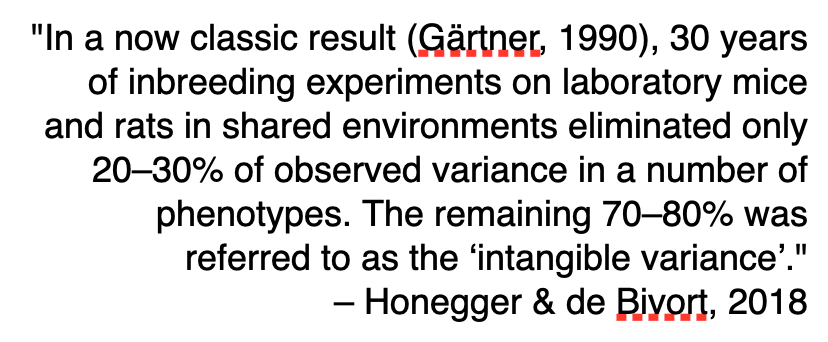
As noted by Honegger & de Bivort (11)(see also post on noise) decades of inbreeding with rodents in shared environments eliminated only 20–30% of the observed variance in a number of phenotypes. Such unpredictability can be beneficial. If an organism always “jumps” in the same direction on the approach of a predator it won’t take long before predators anticipate their behavior. Recent molecular techniques, particularly the ability to analyze the expression of genes at the single cell level, have revealed the noisiness of gene expression within cells of the same “type”.  Surprisingly, in about 10% of human genes, only the maternal or the paternal version of a gene is expressed in a particular cell, leading to regions of the body with effectively different genomes.  This process of “monoallelic expression” is distinct from the dosage compensation associated with the random “inactivation” of one or the other X-chromosomes in females. Monoallelic expression has been linked to  “adaptive signaling processes, and genes linked to age-related diseases such as neurodegeneration and cancer” (12). The end result of noisy gene expression, mutation, and various “downstream” effects is that we are all mosaics, composed of clones of cells that behave differently due to noisy molecular differences.  

Consider your brain. On top of the recently described identification of  over 3000 neural cell types in the human brain (13), there is noisy as well as experience-dependent variation in gene expression, neuronal morphology and connectedness, and in the rates and patterns of neuronal firing due to differences in synaptic structure, position, strength, and other factors. Together these can be expected to influence how you (your brain) perceives and processes the external world, your own internal state, and the effects associated with the interaction between these two “models”.  Of course the current state of your brain has been influenced, constrained by and contingent upon by past inputs and experiences, and the noisy events associated with its development. At the cellular level, the sum of these molecular and cellular interactions can be considered the consciousness of the cell, but this is a consciousness not necessarily aware of itself. In my admittedly naive view, as neural systems, brains, grow in complexity, they become aware of their own workings. As Godfrey-Smith (14) puts it, “brain processes are not causes of thoughts and experiences; they are thoughts and experiences”.  Thoughts become inputs into the brain’s model of itself.

What seems plausible is that as nervous systems increase in complexity, processing increasing amounts of information including information arising from its internal workings, it may come to produce a meta-model that for reasons “known” only to itself needs to make sense of those experiences, feelings, and thoughts. In contrast to the simpler questions asked by bacteria, such as “is there an antibiotic or lactose in my world?”, more complex (neural) systems may ask “who is to blame for the pain and suffering in the world?”  I absent-mindedly respond with a smile to a person at a coffeehouse, and then my model reconsiders (updates) itself depending, in part, upon their response, previous commitments or chores, and whether other thoughts distract or attract “me”. Out of this ferment of updating models emerges self-conscious biological activities – I turn to chat or bury my head back in my book. How I (my model) responds is a complex function of how my model works and how it interprets what is going on, a process influenced by noise, genetics, and past experiences; my history of rewards, traumas, and various emotional and “meaningful” events.

Am I (my model) free to behave independently from these effects? no! But am I (my model) determined by them, again no! The effects of biological noise in its various forms, together with past and present events will be reinforced or suppressed by my internal network and my history of familial, personal, and social experiences. I feel “free” in that there are available choices, because I am both these models and the process of testing and updating them. Tentative models of what is going on (thinking fast) are then updated based on new information or self-reflection (thinking slower). I attempt to discern what is “real” and what seems like an appropriate response. When the system (me) is working non-pathologically, it avoids counter-productive, self-destructive ideations and actions; it can produce sublime metaphysical abstractions and self-sacrificing (altruistic) behaviors.  Mostly it acts to maintain itself and adapt, often resorting to and relying upon the stories it tells itself.  I am neither determined nor free, just an organism coping, or attempting to cope, with the noisy nature of existence, its own internal systems, and an excessively complex neural network.

Added notes: Today (5 Dec. 23) was surprised to discover this article (Might There Be No Quantum Gravity After All?) with the following quote “not all theories need be reversible, they can also be stochastic. In a stochastic theory, the initial state of a physical system evolves according to an equation, but one can only know probabilistically which states might occur in the future—there is no unique state that one can predict.” Makes you think! Also realized that I should have cited Zechner et al (added to REF 11) and now I have to read “Free will without consciousness? by Mudrik et al.,  2022. Trends in Cog. Sciences 26: 555-566.

Literature cited

  1. Sapolsky, R.M. 2023. Determined: A Science of Life Without Free Will. Penguin LLC US
  2. Mitchell, K.J. 2023. Free Agents: How Evolution Gave Us Free Will. Princeton. 
  3. Fukaya, T. (2023). Enhancer dynamics: Unraveling the mechanism of transcriptional bursting. Science Advances, 9(31), eadj3366.
  4. Livingston, N. M., Kwon, J., Valera, O., Saba, J.A., Sinha, N.K., Reddy, P., Nelson, B. Wolfe, C., Ha, T.,Green, R., Liu, J., & Bin Wu (2023). Bursting translation on single mRNAs in live cells. Molecular Cell
  5. Harrison, L. M., David, O., & Friston, K. J. (2005). Stochastic models of neuronal dynamics. Philosophical Transactions of the Royal Society B: Biological Sciences, 360(1457), 1075-1091. 
  6. Ho, B., Baryshnikova, A., & Brown, G. W. (2018). Unification of protein abundance datasets yields a quantitative Saccharomyces cerevisiae proteome. Cell systems, 6, 192-205. 
  7. McNamee & Wolpert (2019). Internal models in biological control. Annual review of control, robotics, and autonomous systems, 2, 339-364.
  8. Czyz, W., Morahan, J. M., Ebers, G. C., & Ramagopalan, S. V. (2012). Genetic, environmental and stochastic factors in monozygotic twin discordance with a focus on epigenetic differences. BMC medicine, 10, 1-12.
  9. Manuse, S., Shan, Y., Canas-Duarte, S.J., Bakshi, S., Sun, W.S., Mori, H., Paulsson, J. and Lewis, K., 2021. Bacterial persisters are a stochastically formed subpopulation of low-energy cells. PLoS biology, 19, p.e3001194.
  10. Vilar, J. M., Guet, C. C. and Leibler, S. (2003). Modeling network dynamics: the lac operon, a case study. J Cell Biol 161, 471-476.
  11. Honegger & de Bivort. 2017. Stochasticity, individuality and behavior & Zechner, C., Nerli, E., & Norden, C. 2020. Stochasticity and determinism in cell fate decisionsDevelopment147, dev181495.
  12. Cepelewicz 2022. Nature Versus Nurture? Add ‘Noise’ to the Debate
  13. Johansen, N., Somasundaram, S.,Travaglini, K.J., Yanny, A.M., Shumyatcher, M., Casper, T., Cobbs, C., Dee, N., Ellenbogen, R., Ferreira, M., Goldy, J., Guzman, J., Gwinn, R., Hirschstein, D., Jorstad, N.L.,Keene, C.D., Ko, A., Levi, B.P.,  Ojemann, J.G., Nadiy, T.P., Shapovalova, N., Silbergeld, D., Sulc, J., Torkelson, A., Tung, H., Smith, K.,Lein, E.S., Bakken, T.E., Hodge, R.D., & Miller, J.A (2023). Interindividual variation in human cortical cell type abundance and expression. Science, 382, eadf2359.
  14. Godfrey-Smith, P. (2020). Metazoa: Animal life and the birth of the mind. Farrar, Straus and Giroux.

Making sense of noise: introducing students to stochastic processes in order to better understand biological behaviors (and even free will).

 Biological systems are characterized by the ubiquitous roles of weak, that is, non-covalent molecular interactions, small, often very small, numbers of specific molecules per cell, and Brownian motion. These combine to produce stochastic behaviors at all levels from the molecular and cellular to the behavioral. That said, students are rarely introduced to the ubiquitous role of stochastic processes in biological systems, and how they produce unpredictable behaviors. Here I present the case that they need to be and provide some suggestions as to how it might be approached.  

Background: Three recent events combined to spur this reflection on stochasticity in biological systems, how it is taught, and why it matters. The first was an article describing an approach to introducing students to homeostatic processes in the context of the bacterial lac operon (Booth et al., 2022), an adaptive gene regulatory system controlled in part by stochastic events. The second were in-class student responses to the question, why do interacting molecules “come back apart” (dissociate).  Finally, there is the increasing attention paid to what are presented as deterministic genetic factors, as illustrated by talk by Kathryn Harden, author of the “The Genetic Lottery: Why DNA matters for social equality” (Harden, 2021).  Previous work has suggested that students, and perhaps some instructors, find the ubiquity, functional roles, and implications of stochastic, that is inherently unpredictable processes, difficult to recognize and apply. Given their practical and philosophical implications, it seems essential to introduce students to stochasticity early in their educational journey.

added 7 March 2023; Should have cited:  You & Leu (2020).

What is stochasticity and why is it important for understanding biological systems? Stochasticity results when intrinsically unpredictable events, e.g. molecular collisions, impact the behavior of a system. There are a number of drivers of stochastic behaviors. Perhaps the most obvious, and certainly the most ubiquitous in biological systems is thermal motion. The many molecules within a solution (or a cell) are moving, they have kinetic energy – the energy of motion and mass. The exact momentum of each molecule cannot, however, be accurately and completely characterized without perturbing the system (echos of Heisenberg). Given the impossibility of completely characterizing the system, we are left uncertain as to the state of the system’s components, who is bound to whom, going forward. 

Through collisions energy is exchanged between molecules.  A number of chemical processes are driven by the energy delivered through such collisions. Think about a typical chemical reaction. In the course of the reaction, atoms are rearranged – bonds are broken (a process that requires energy) and bonds are formed (a process that releases energy). Many (most) of the chemical reactions that occur in biological systems require catalysts to bring their required activation energies into the range available within the cell.   [1]  

What makes the impact of thermal motion even more critical for biological systems is that many (most) regulatory interactions and macromolecular complexes, the molecular machines discussed by Alberts (1998) are based on relatively weak, non-covalent surface-surface interactions between or within molecules. Such interactions are central to most regulatory processes, from the activation of signaling pathways to the control of gene expression. The specificity and stability of these non-covalent interactions, which include those involved in determining the three-dimensional structure of macromolecules, are directly impacted by thermal motion, and so by temperature – one reason controlling body temperature is important.  

So why are these interactions stochastic and why does it matter?  A signature property of a stochastic process is that while it may be predictable when large numbers of atoms, molecules, or interactions are involved, the behaviors of individual atoms, molecules, and interactions are not. A classic example, arising from factors intrinsic to the atom, is the decay of radioactive isotopes. While the half-life of a large enough population of a radioactive isotope is well defined, when any particular atom will decay is, in current theory, unknowable, a concept difficult for students (see Hull and Hopf, 2020). This is the reason we cannot accurately predict whether Schrȍdinger’s cat is alive or dead. The same behavior applies to the binding of a regulatory protein to a specific site on a DNA molecule and its subsequent dissociation: predictable in large populations, not-predictable for individual molecules. The situation is exacerbated by the fact that biological systems are composed of cells and cells are, typically, small, and so contain relatively few molecules of each type (Milo and Phillips, 2015). There are typically one or two copies of each gene in a cell, and these may be different from one another (when heterozygous). The expression of any one gene depends upon the binding of specific proteins, transcription factors, that act to activate or repress gene expression. In contrast to a number of other cellular proteins, “as a rule of thumb, the concentrations of such transcription factors are in the nM range, corresponding to only 1-1000 copies per cell in bacteria or 103-106 in mammalian cells” (Milo and Phillips, 2015). Moreover, while DNA binding proteins bind to specific DNA sequences with high affinity, they also bind to DNA “non-specifically” in a largely sequence independent manner with low affinity. Given that there are many more non-specific (non-functional) binding sites in the DNA than functional ones, the effective concentration of a particular transcription factor can be significantly lower than its total cellular concentration would suggest. For example, in the case of the lac repressor of the bacterium Escherichia coli (discussed further below), there are estimated to be ~10 molecules of the tetrameric lac repressor per cell, but “non-specific affinity to the DNA causes >90% of LacI copies to be bound to the DNA at locations that are not the cognate promoter site” (Milo and Phillips, 2015); at most only a few molecules are free in the cytoplasm and available to bind to specific regulatory sites.  Such low affinity binding to DNA allows proteins to undergo one-dimensional diffusion, a process that can greatly speed up the time it takes for a DNA binding protein to “find” high affinity binding sites (Stanford et al., 2000; von Hippel and Berg, 1989). Most transcription factors bind in a functionally significant manner to hundreds to thousands of gene regulatory sites per cell, often with distinct binding affinities. The effective binding affinity can also be influenced by positive and negative interactions with other transcription and accessory factors, chromatin structure, and DNA modifications. Functional complexes can take time to assemble, and once assembled can initiate multiple rounds of polymerase binding and activation, leading to a stochastic phenomena known as transcriptional bursting. An analogous process occurs with RNA-dependent polypeptide synthesis (translation). The result, particularly for genes expressed at lower levels, is that stochastic (unpredictable) bursts of transcription/translation can lead to functionally significant changes in protein levels (Raj et al., 2010; Raj and van Oudenaarden, 2008).

Figure adapted from Elowitz et al 2002

There are many examples of stochastic behaviors in biological systems. Originally noted by Novick and Weiner (1957) in their studies of the lac operon, it was clear that gene expression occurred in an all or none manner. This effect was revealed in a particularly compelling manner by Elowitz et al (2002) who used lac operon promoter elements to drive expression of transgenes encoding cyan and yellow fluorescent proteins (on a single plasmid) in E. coli.  The observed behaviors were dramatic; genetically identical cells were found to express, stochastically, one, the other, both, or neither transgenes. The stochastic expression of genes and downstream effects appear to be the source of much of the variance found in organisms with the same genotype in the same environmental conditions (Honegger and de Bivort, 2018).

Beyond gene expression, the unpredictable effects of stochastic processes can be seen at all levels of biological organization, from the biased random walk behaviors that underlie various forms of chemotaxis (e.g. Spudich and Koshland, 1976) and the search behaviors in C. elegans (Roberts et al., 2016) and other animals (Smouse et al., 2010), the noisiness in the opening of individual neuronal voltage-gated ion channels (Braun, 2021; Neher and Sakmann, 1976), and various processes within the immune system (Hodgkin et al., 2014), to variations in the behavior of individual organisms (e.g. the leafhopper example cited by Honegger and de Bivort, 2018). Stochastic events are involved in a range of “social” processes in bacteria (Bassler and Losick, 2006). Their impact serves as a form of “bet-hedging” in populations that generate phenotypic variation in a homogeneous environment (see Symmons and Raj, 2016). Stochastic events can regulate the efficiency of replication-associated error-prone mutation repair (Uphoff et al., 2016) leading to increased variation in a population, particularly in response to environmental stresses. Stochastic “choices” made by cells can be seen as questions asked of the environment, the system’s response provides information that informs subsequent regulatory decisions (see Lyon, 2015) and the selective pressures on individuals in a population (Jablonka and Lamb, 2005). Together stochastic processes introduce a non-deterministic (i.e. unpredictable) element into higher order behaviors (Murakami et al., 2017; Roberts et al., 2016).

Controlling stochasticity: While stochasticity can be useful, it also needs to be controlled. Not surprisingly then there are a number of strategies for “noise-suppression”, ranging from altering regulatory factor concentrations, the formation of covalent disulfide bonds between or within polypeptides, and regulating the activity of repair systems associated with DNA replication, polypeptide folding, and protein assembly via molecular chaperones and targeted degradation. For example, the identification of “cellular competition” effects has revealed that “eccentric cells” (sometimes, and perhaps unfortunately referred to as of “losers”) can be induced to undergo apoptosis (die) or migration in response to their “normal” neighbors (Akieda et al., 2019; Di Gregorio et al., 2016; Ellis et al., 2019; Hashimoto and Sasaki, 2020; Lima et al., 2021).

Student understanding of stochastic processes: There is ample evidence that students (and perhaps some instructors as well) are confused by or uncertain about the role of thermal motion, that is the transfer of kinetic energy via collisions, and the resulting stochastic behaviors in biological systems. As an example, Champagne-Queloz et al (2016; 2017) found that few students, even after instruction through molecular biology courses, recognize that collisions with other molecules were  responsible for the disassembly of molecular complexes. In fact, many adopt a more “deterministic” model for molecular disassembly after instruction (see part A panel figure on next page). In earlier studies, we found evidence for a similar confusion among instructors (part B of figure on the next page)(Klymkowsky et al., 2010). 

Introducing stochasticity to students: Given that understanding stochastic (random) processes can be difficult for many (e.g. Garvin-Doxas and Klymkowsky, 2008; Taleb, 2005), the question facing course designers and instructors is when and how best to help students develop an appreciation for the ubiquity, specific roles, and implications of stochasticity-dependent processes at all levels in biological systems. I would suggest that  introducing students to the dynamics of non-covalent molecular interactions, prevalent in biological systems in the context of stochastic interactions (i.e. kinetic theory) rather than a ∆G-based approach may be useful. We can use the probability of garnering the energy needed to disrupt an interaction to present concepts of binding specificity (selectivity) and stability. Developing an understanding of the formation and  disassembly of molecular interactions builds on the same logic that Albert Einstein and Ludwig Böltzman used to demonstrate the existence of atoms and molecules and the reversibility of molecular reactions (Bernstein, 2006). Moreover, as noted by Samoilov et al (2006) “stochastic mechanisms open novel classes of regulatory, signaling, and organizational choices that can serve as efficient and effective biological solutions to problems that are more complex, less robust, or otherwise suboptimal to deal with in the context of purely deterministic systems.”

The selectivity (specificity) and stability of molecular interactions can be understood from an energetic perspective – comparing the enthalpic and entropic differences between bound and unbound states. What is often missing from such discussions, aside from the fact of their inherent complexity, particularly in terms of calculating changes in entropy and exactly what is meant by energy (Cooper and Klymkowsky, 2013) is that many students enter biology classes without a robust understanding of enthalpy, entropy, or free energy (Carson and Watson, 2002).  Presenting students with a molecular  collision, kinetic theory-based mechanism for the dissociation of molecular interactions, may help them better understand (and apply) both the dynamics and specificity of molecular interactions. We can gage the strength of an interaction (the sum of the forces stabilizing an interaction) based on the amount of energy (derived from collisions with other molecules) needed to disrupt it.  The implication of student responses to relevant Biology Concepts Instrument (BCI) questions and beSocratic activities (data not shown), as well as a number of studies in chemistry, is that few students consider the kinetic/vibrational energy delivered through collisions with other molecules (a function of temperature), as key to explaining why interactions break (see Carson and Watson, 2002 and references therein).  Although this paper is 20 years old, there is little or no evidence that the situation has improved. Moreover, there is evidence that the conventional focus on mathematics-centered, free energy calculations in the absence of conceptual understanding may serve as an unnecessary barrier to the inclusion of a more socioeconomically diverse, and under-served populations of students (Ralph et al., 2022; Stowe and Cooper, 2019). 

The lac operon as a context for introducing stochasticity: Studies of the E. coli  lac operon hold an iconic place in the history of molecular biology and are often found in introductory courses, although typically presented in a deterministic context. The mutational analysis of the lac operon helped define key elements involved in gene regulation (Jacob and Monod, 1961; Monod et al., 1963). Booth et al (2022) used the lac operon as the context for their “modeling and simulation lesson”, Advanced Concepts in Regulation of the Lac Operon. Given its inherently stochastic regulation (Choi et al., 2008; Elowitz et al., 2002; Novick and Weiner, 1957; Vilar et al., 2003), the lac operon is a good place to start introducing students to stochastic processes. In this light, it is worth noting that Booth et al describes the behavior of the lac operon as “leaky”, which would seem to imply a low, but continuous level of expression, much as a leaky faucet continues to drip. As this is a peer-reviewed lesson, it seems likely that it reflects widely held mis-understandings of how stochastic processes are introduced to, and understood by students and instructors.

E. coli cells respond to the presence of lactose in growth media in a biphasic manner, termed diauxie, due to “the inhibitory action of certain sugars, such as glucose, on adaptive enzymes (meaning an enzyme that appears only in the presence of its substrate)” (Blaiseau and Holmes, 2021). When these (preferred) sugars are depleted from the media, growth slows. If lactose is present, however, growth will resume following a delay associated with the expression of the proteins encoded by the operon that enables the cell to import and metabolize lactose. Although the term homeostatic is used repeatedly by Booth et al, the lac operon is part of an adaptive, rather than a homeostatic, system. In the absence of glucose, cyclic AMP (cAMP) levels in the cell rise. cAMP binds to and activates the catabolite activator protein (CAP), encoded for by the crp gene. Activation of CAP leads to the altered expression of a number of target genes, whose products are involved in adaption to the stress associated with the absence of common and preferred metabolites. cAMP-activated CAP acts as both a transcriptional repressor and activator, “and has been shown to regulate hundreds of genes in the E. coli genome, earning it the status of “global” or “master” regulator” (Frendorf et al., 2019). It is involved in the adaptation to environmental factors, rather than maintaining the cell in a particular state (homeostasis). 

The lac operon is a classic polycistronic bacterial gene, encoding three distinct polypeptides: lacZ (β-galactosidase), lacY (β-galactoside permease), and lacA (galactoside acetyltransferase). When glucose or other preferred energy sources are present, expression of the lac operon is blocked by the inactivity of CAP. The CAP protein is a homodimer and its binding to DNA is regulated by the binding of the allosteric effector cAMP.  cAMP is generated from ATP by the enzyme adenylate cyclase, encoded by the cya gene. In the absence of glucose the enyzme encoded by the crr gene is phosphorylated and acts to activate adenylate cyclase (Krin et al., 2002).  As cAMP levels increase, cAMP binds to the CAP protein, leading to a dramatic change in its structure (↑), such that the protein’s  DNA binding domain becomes available to interact with promoter sequences (figure from Sharma et al., 2009).

Binding of activated (cAMP-bound) CAP is not, by itself sufficient to activate expression of the lac operon because of the presence of the constitutively expressed lac repressor protein, encoded for by the lacI gene. The active repressor is a tetramer, present at very low levels (~10 molecules) per cell. The lac operon contains three repressor (“operator”) binding sites; the tetrameric repressor can bind two operator sites simultaneously (upper figure → from Palanthandalam-Madapusi and Goyal, 2011). In the absence of lactose, but in the presence of cAMP-activated CAP, the operon is expressed in discrete “bursts” (Novick and Weiner, 1957; Vilar et al., 2003). Choi et al (2008) found that these burst come in two types, short and long, with the size of the burst referring to the number of mRNA molecules synthesized (bottm figure adapted from Choi et al ↑). The difference between burst sizes arises from the length of time that the operon’s repressor binding sites are unoccupied by repressor. As noted above, the tetravalent repressor protein can bind to two operator sites at the same time. When released from one site, polymerase binding and initiation produces a small number of mRNA molecules. Persistent binding to the second site means that the repressor concentration remains locally high, favoring rapid rebinding to the operator and the cessation of transcription (RNA synthesis). When the repressor releases from both operator sites, a rarer event, it is free to diffuse away and interact (non-specifically, i.e. with low affinity) with other DNA sites in the cell, leaving the lac operator sites unoccupied for a longer period of time. The number of such non-specific binding sites greatly exceeds the number (three) of specific binding sites in the operon. The result is the synthesis of a larger “burst” (number) of mRNA molecules. The average length of time that the operator  sites remain unoccupied is a function of the small number of repressor molecules present and the repressor’s low but measurable non-sequence specific binding to DNA. 

The expression of the lac operon leads to the appearance of β-galactosidase and β-galactoside permease. An integral membrane protein, β-galactoside permease enables extracellular lactose to enter the cell while cytoplasmic β-galactosidase catalyzes its breakdown and the generation of allolactone, which binds to the lac repressor protein, inhibiting its binding to operator sites, and so removing repression of transcription. In the absence of lactose, there are few if any of the proteins (β-galactosidase and β-galactoside permease) needed to activate the expression of the lac operon, so the obvious question is how, when lactose does appear in the extracellular media, does the lac operon turn on? Booth et al and the Wikipedia entry on the lac operon (accessed 29 June 2022) describe the turn on of the lac operon as “leaky” (see above). The molecular modeling studies of Vilar et al and Choi et al (which, together with Novick and Weiner, are not cited by Booth et al) indicate that the system displays distinct threshold and maintenance concentrations of lactose needed for stable lac gene expression. The term “threshold” does not occur in the Booth et al article. More importantly, when cultures are examined at the single cell level, what is observed is not a uniform increase in lac expression in all cells, as might be expected in the context of leaky expression, but more sporadic (noisy) behaviors. Increasing numbers of cells are “full on” in terms of lac operon expression over time when cultured in lactose concentrations above the operon’s activation threshold. This illustrates the distinctly different implications of a leaky versus a stochastic process in terms of their impacts on gene expression. While a leak is a macroscopic metaphor that produces a continuous, dependable, regular flow (drips), the occurrence of “bursts” of gene expression implies a stochastic (unpredictable) process ( figure from Vilar et al ↓). 

As the ubiquity and functionally significant roles of stochastic processes in biological systems becomes increasingly apparent, e.g. in the prediction of phenotypes from genotypes (Karavani et al., 2019; Mostafavi et al., 2020), helping students appreciate and understand the un-predictable, that is stochastic, aspects of biological systems becomes increasingly important. As an example, revealed dramatically through the application of single cell RNA sequencing studies, variations in gene expression between cells of the same “type” impacts organismic development and a range of behaviors. For example, in diploid eukaryotic cells is now apparent that in many cells, and for many genes, only one of the two alleles present is expressed; such “monoallelic” expression can impact a range of processes (Gendrel et al., 2014). Given that stochastic processes are often not well conveyed through conventional chemistry courses (Williams et al., 2015) or effectively integrated into, and built upon in molecular (and other) biology curricula; presenting them explicitly in introductory biology courses seems necessary and appropriate.

It may also help make sense of discussions of whether humans (and other organisms) have “free will”.  Clearly the situation is complex. From a scientific perspective we are analyzing systems without recourse to non-natural processes. At the same time, “Humans typically experience freely selecting between alternative courses of action” (Maoz et al., 2019)(Maoz et al., 2019a; see also Maoz et al., 2019b)It seems possible that recognizing the intrinsically unpredictable nature of many biological processes (including those of the central nervous system) may lead us to conclude that whether or not free will exists is in fact a non-scientific, unanswerable (and perhaps largely meaningless) question. 

footnotes

[1]  For this discussion I will ignore entropy, a factor that figures in whether a particular reaction in favorable or unfavorable, that is whether, and the extent to which it occurs.  

Acknowledgements: Thanks to Melanie Cooper and Nick Galati for taking a look and Chhavinder Singh for getting it started. Updated 6 January 2023.

literature cited:

Akieda, Y., Ogamino, S., Furuie, H., Ishitani, S., Akiyoshi, R., Nogami, J., Masuda, T., Shimizu, N., Ohkawa, Y. and Ishitani, T. (2019). Cell competition corrects noisy Wnt morphogen gradients to achieve robust patterning in the zebrafish embryo. Nature communications 10, 1-17.

Alberts, B. (1998). The cell as a collection of protein machines: preparing the next generation of molecular biologists. Cell 92, 291-294.

Bassler, B. L. and Losick, R. (2006). Bacterially speaking. Cell 125, 237-246.

Bernstein, J. (2006). Einstein and the existence of atoms. American journal of physics 74, 863-872.

Blaiseau, P. L. and Holmes, A. M. (2021). Diauxic inhibition: Jacques Monod’s Ignored Work. Journal of the History of Biology 54, 175-196.

Booth, C. S., Crowther, A., Helikar, R., Luong, T., Howell, M. E., Couch, B. A., Roston, R. L., van Dijk, K. and Helikar, T. (2022). Teaching Advanced Concepts in Regulation of the Lac Operon With Modeling and Simulation. CourseSource.

Braun, H. A. (2021). Stochasticity Versus Determinacy in Neurobiology: From Ion Channels to the Question of the “Free Will”. Frontiers in Systems Neuroscience 15, 39.

Carson, E. M. and Watson, J. R. (2002). Undergraduate students’ understandings of entropy and Gibbs free energy. University Chemistry Education 6, 4-12.

Champagne-Queloz, A. (2016). Biological thinking: insights into the misconceptions in biology maintained by Gymnasium students and undergraduates”. In Institute of Molecular Systems Biology. Zurich, Switzerland: ETH Zürich.

Champagne-Queloz, A., Klymkowsky, M. W., Stern, E., Hafen, E. and Köhler, K. (2017). Diagnostic of students’ misconceptions using the Biological Concepts Instrument (BCI): A method for conducting an educational needs assessment. PloS one 12, e0176906.

Choi, P. J., Cai, L., Frieda, K. and Xie, X. S. (2008). A stochastic single-molecule event triggers phenotype switching of a bacterial cell. Science 322, 442-446.

Coop, G. and Przeworski, M. (2022). Lottery, luck, or legacy. A review of “The Genetic Lottery: Why DNA matters for social equality”. Evolution 76, 846-853.

Cooper, M. M. and Klymkowsky, M. W. (2013). The trouble with chemical energy: why understanding bond energies requires an interdisciplinary systems approach. CBE Life Sci Educ 12, 306-312.

Di Gregorio, A., Bowling, S. and Rodriguez, T. A. (2016). Cell competition and its role in the regulation of cell fitness from development to cancer. Developmental cell 38, 621-634.

Ellis, S. J., Gomez, N. C., Levorse, J., Mertz, A. F., Ge, Y. and Fuchs, E. (2019). Distinct modes of cell competition shape mammalian tissue morphogenesis. Nature 569, 497.

Elowitz, M. B., Levine, A. J., Siggia, E. D. and Swain, P. S. (2002). Stochastic gene expression in a single cell. Science 297, 1183-1186.

Feldman, M. W. and Riskin, J. (2022). Why Biology is not Destiny. In New York Review of Books. NY.

Frendorf, P. O., Lauritsen, I., Sekowska, A., Danchin, A. and Nørholm, M. H. (2019). Mutations in the global transcription factor CRP/CAP: insights from experimental evolution and deep sequencing. Computational and structural biotechnology journal 17, 730-736.

Garvin-Doxas, K. and Klymkowsky, M. W. (2008). Understanding Randomness and its impact on Student Learning: Lessons from the Biology Concept Inventory (BCI). Life Science Education 7, 227-233.

Gendrel, A.-V., Attia, M., Chen, C.-J., Diabangouaya, P., Servant, N., Barillot, E. and Heard, E. (2014). Developmental dynamics and disease potential of random monoallelic gene expression. Developmental cell 28, 366-380.

Harden, K. P. (2021). The genetic lottery: why DNA matters for social equality: Princeton University Press.

Hashimoto, M. and Sasaki, H. (2020). Cell competition controls differentiation in mouse embryos and stem cells. Current Opinion in Cell Biology 67, 1-8.

Hodgkin, P. D., Dowling, M. R. and Duffy, K. R. (2014). Why the immune system takes its chances with randomness. Nature Reviews Immunology 14, 711-711.

Honegger, K. and de Bivort, B. (2018). Stochasticity, individuality and behavior. Current Biology 28, R8-R12.

Hull, M. M. and Hopf, M. (2020). Student understanding of emergent aspects of radioactivity. International Journal of Physics & Chemistry Education 12, 19-33.

Jablonka, E. and Lamb, M. J. (2005). Evolution in four dimensions: genetic, epigenetic, behavioral, and symbolic variation in the history of life. Cambridge: MIT press.

Jacob, F. and Monod, J. (1961). Genetic regulatory mechanisms in the synthesis of proteins. Journal of molecular biology 3, 318-356.

Karavani, E., Zuk, O., Zeevi, D., Barzilai, N., Stefanis, N. C., Hatzimanolis, A., Smyrnis, N., Avramopoulos, D., Kruglyak, L. and Atzmon, G. (2019). Screening human embryos for polygenic traits has limited utility. Cell 179, 1424-1435. e1428.

Klymkowsky, M. W., Kohler, K. and Cooper, M. M. (2016). Diagnostic assessments of student thinking about stochastic processes. In bioArXiv: http://biorxiv.org/content/early/2016/05/20/053991.

Klymkowsky, M. W., Underwood, S. M. and Garvin-Doxas, K. (2010). Biological Concepts Instrument (BCI): A diagnostic tool for revealing student thinking. In arXiv: Cornell University Library.

Krin, E., Sismeiro, O., Danchin, A. and Bertin, P. N. (2002). The regulation of Enzyme IIAGlc expression controls adenylate cyclase activity in Escherichia coli. Microbiology 148, 1553-1559.

Lima, A., Lubatti, G., Burgstaller, J., Hu, D., Green, A., Di Gregorio, A., Zawadzki, T., Pernaute, B., Mahammadov, E. and Montero, S. P. (2021). Cell competition acts as a purifying selection to eliminate cells with mitochondrial defects during early mouse development. bioRxiv, 2020.2001. 2015.900613.

Lyon, P. (2015). The cognitive cell: bacterial behavior reconsidered. Frontiers in microbiology 6, 264.

Maoz, U., Sita, K. R., Van Boxtel, J. J. and Mudrik, L. (2019a). Does it matter whether you or your brain did it? An empirical investigation of the influence of the double subject fallacy on moral responsibility judgments. Frontiers in Psychology 10, 950.

Maoz, U., Yaffe, G., Koch, C. and Mudrik, L. (2019b). Neural precursors of decisions that matter—an ERP study of deliberate and arbitrary choice. Elife 8, e39787.

Milo, R. and Phillips, R. (2015). Cell biology by the numbers: Garland Science.

Monod, J., Changeux, J.-P. and Jacob, F. (1963). Allosteric proteins and cellular control systems. Journal of molecular biology 6, 306-329.

Mostafavi, H., Harpak, A., Agarwal, I., Conley, D., Pritchard, J. K. and Przeworski, M. (2020). Variable prediction accuracy of polygenic scores within an ancestry group. Elife 9, e48376.

Murakami, M., Shteingart, H., Loewenstein, Y. and Mainen, Z. F. (2017). Distinct sources of deterministic and stochastic components of action timing decisions in rodent frontal cortex. Neuron 94, 908-919. e907.

Neher, E. and Sakmann, B. (1976). Single-channel currents recorded from membrane of denervated frog muscle fibres. Nature 260, 799-802.

Novick, A. and Weiner, M. (1957). Enzyme induction as an all-or-none phenomenon. Proceedings of the National Academy of Sciences 43, 553-566.

Palanthandalam-Madapusi, H. J. and Goyal, S. (2011). Robust estimation of nonlinear constitutive law from static equilibrium data for modeling the mechanics of DNA. Automatica 47, 1175-1182.

Raj, A., Rifkin, S. A., Andersen, E. and van Oudenaarden, A. (2010). Variability in gene expression underlies incomplete penetrance. Nature 463, 913-918.

Raj, A. and van Oudenaarden, A. (2008). Nature, nurture, or chance: stochastic gene expression and its consequences. Cell 135, 216-226.

Ralph, V., Scharlott, L. J., Schafer, A., Deshaye, M. Y., Becker, N. M. and Stowe, R. L. (2022). Advancing Equity in STEM: The Impact Assessment Design Has on Who Succeeds in Undergraduate Introductory Chemistry. JACS Au.

Roberts, W. M., Augustine, S. B., Lawton, K. J., Lindsay, T. H., Thiele, T. R., Izquierdo, E. J., Faumont, S., Lindsay, R. A., Britton, M. C. and Pokala, N. (2016). A stochastic neuronal model predicts random search behaviors at multiple spatial scales in C. elegans. Elife 5, e12572.

Samoilov, M. S., Price, G. and Arkin, A. P. (2006). From fluctuations to phenotypes: the physiology of noise. Science’s STKE 2006, re17-re17.

Sharma, H., Yu, S., Kong, J., Wang, J. and Steitz, T. A. (2009). Structure of apo-CAP reveals that large conformational changes are necessary for DNA binding. Proceedings of the National Academy of Sciences 106, 16604-16609.

Smouse, P. E., Focardi, S., Moorcroft, P. R., Kie, J. G., Forester, J. D. and Morales, J. M. (2010). Stochastic modelling of animal movement. Philosophical Transactions of the Royal Society B: Biological Sciences 365, 2201-2211.

Spudich, J. L. and Koshland, D. E., Jr. (1976). Non-genetic individuality: chance in the single cell. Nature 262, 467-471.

Stanford, N. P., Szczelkun, M. D., Marko, J. F. and Halford, S. E. (2000). One-and three-dimensional pathways for proteins to reach specific DNA sites. The EMBO Journal 19, 6546-6557.

Stowe, R. L. and Cooper, M. M. (2019). Assessment in Chemistry Education. Israel Journal of Chemistry.

Symmons, O. and Raj, A. (2016). What’s Luck Got to Do with It: Single Cells, Multiple Fates, and Biological Nondeterminism. Molecular cell 62, 788-802.

Taleb, N. N. (2005). Fooled by Randomness: The hidden role of chance in life and in the markets. (2nd edn). New York: Random House.

Uphoff, S., Lord, N. D., Okumus, B., Potvin-Trottier, L., Sherratt, D. J. and Paulsson, J. (2016). Stochastic activation of a DNA damage response causes cell-to-cell mutation rate variation. Science 351, 1094-1097.

You, Shu-Ting, and Jun-Yi Leu. “Making sense of noise.” Evolutionary Biology—A Transdisciplinary Approach(2020): 379-391.

Vilar, J. M., Guet, C. C. and Leibler, S. (2003). Modeling network dynamics: the lac operon, a case study. J Cell Biol 161, 471-476.

von Hippel, P. H. and Berg, O. G. (1989). Facilitated target location in biological systems. Journal of Biological Chemistry 264, 675-678.

Williams, L. C., Underwood, S. M., Klymkowsky, M. W. and Cooper, M. M. (2015). Are Noncovalent Interactions an Achilles Heel in Chemistry Education? A Comparison of Instructional Approaches. Journal of Chemical Education 92, 1979–1987.


Sounds like science, but it ain’t …

we are increasingly assailed with science-related “news” – stories that too often involve hype and attempts to garner attention (and no, half-baked ideas are not theories, they are often non-scientific speculation or unconstrained fantasies).

The other day, as is my addiction, I turned to the “Real Clear Science” website to look for novel science-based stories (distractions from the more horrifying news of the day). I discovered two links that seduced me into clicking: “Atheism is not as rare or as rational as you think” by Will Gervais and Peter Sjöstedt-H’s “Consciousness and higher spatial dimensions“.  A few days later I encountered “Consciousness Is the Collapse of the Wave Function” by Stuart Hameroff. On reading them (more below), I faced the realization that science itself, and its distorted popularization by both institutional PR departments and increasingly by scientists and science writers, may be partially responsible for the absurdification of public discourse on scientific topics [1].  In part the problem arises from the assumption that science is capable of “explaining” much more than is actually the case. This insight is neither new nor novel. Timothy Caulfield’s essay Pseudoscience and COVID-19 — we’ve had enough already focuses on the fact that various, presumably objective data-based, medical institutions have encouraged the public’s thirst for easy cures for serious, and often incurable diseases.  As an example, “If a respected institution, such as the Cleveland Clinic in Ohio, offers reiki — a science-free practice that involves using your hands, without even touching the patient, to balance the “vital life force energy that flows through all living things” — is it any surprise that some people will think that the technique could boost their immune systems and make them less susceptible to the virus?” That public figures and trusted institutions provide platforms for such silliness [see Did Columbia University cut ties with Dr. Oz?] means that there is little to distinguish data-based treatments from faith- and magical-thinking based placebos. The ideal of disinterested science, while tempered by common human frailties, is further eroded by the lure of profit and/or hope of enhanced public / professional status and notoriety.  As noted by Pennock‘ “Science never guarantees absolute truth, but it aims to seek better ways to assess empirical claims and to attain higher degrees of certainty and trust in scientific conclusions“. Most importantly, “Science is a set of rules that keep the scientists from lying to each other. [2]

It should surprise no one that the failure to explicitly recognize the limits, and evolving nature of scientific knowledge, opens the door to self-interested hucksterism at both individual and institutional levels. Just consider the number of complementary/alternative non-scientific “medical” programs run by prestigious institutions. The proliferation of pundits, speaking outside of their areas of established expertise, and often beyond what is scientifically knowable (e.g. historical events such as the origin of life or the challenges of living in the multiverse which are, by their very nature, unobservable) speaks to the increasingly unconstrained growth of pathological, bogus, and corrupted science  which, while certainly not new [3], has been facilitated by the proliferation of public, no-barrier, no-critical feedback platforms [1,4].  Ignoring the real limits of scientific knowledge and rejecting, or ignoring, the expertise of established authorities, rejects the ideals that have led to science that “works”.  

Of course, we cannot blame the distortion of science for every wacky idea; crazy, conspiratorial and magical thinking may well be linked to the cognitive “features” (or are they bugs) of the human brain. Norman Cohn describes the depressing, and repeated pattern behind the construction of dehumanizing libels used to justify murderous behaviors towards certain groups [5].  Recent studies indicate that brains, whether complex or simple neural networks, appear to construct emergent models of the world, models they use to coordinate internal perceptions with external realities [6].  My own (out of my area of expertise) guess is that the complexity of the human brain is associated with, and leads to the emergence of internal “working models” that attempt to make sense of what is happening to us, in part to answer questions such as why the good die young and the wicked go unpunished. It seems likely that our social nature (and our increasing social isolation) influences these models, models that are “checked” or “validated” against our experiences. 

It was in this context that Gervais’s essay on atheism caught my attention. He approaches two questions: “how Homo sapiens — and Homo sapiens alone — came to be a religious species” and “how disbelief in gods can exist within an otherwise religious species?”  But is Homo sapiens really a religious species and what exactly is a religion? Is it a tool that binds social groups of organisms together, a way of coping with, and giving meaning to, the (apparent) capriciousness of existence and experience, both, or something else again?  And how are we to know what is going on inside other brains, including the brains of chimps, whales, or cephalopods? In this light I was struck by an essay by Sofia Deleniv “The ‘me’ illusion: How your brain conjures up your sense of self” that considers the number of species that appear to be able to recognize themselves in a mirror. Turns out, this is not nearly as short a list as was previously thought, and it seems likely that self-consciousness, the ability to recognize yourself as you, may be a feature of many such systems.  Do other organisms possess emergent “belief systems” that help process incoming and internal signals, including their own neural noise? When the author says, “We then subtly gauge participants’ intuitions” by using “a clever experiment to see how people mentally represent atheists” one is left to wonder whether there are direct and objective measures of “intuitions” or “mental representations”?   Then the shocker, after publishing a paper claiming that “Analytic Thinking Promotes Religious Disbelief“, the authors state that “the experiments in our initial Science paper were fatally flawed, the results no more than false positives.’ One is left to wonder did the questions asked make sense in the first place. While it initially seemed scientific (after all it was accepted and published in a premiere scientific journal), was it ever really science? 

Both “Consciousness and Higher Spatial Dimensions” and “Consciousness Is the Collapse of the Wave Function”, sound very scientific. Some physicists (the most sciencey of scientists, right?) have been speculating via “string theory” and “multiverses”, a series of unverified (and likely unverifiable) speculations, that they universe we inhabit has many many more than the three spatial dimensions we experience.  But how consciousness, an emergent property of biological (cellular) networks, is related to speculative physics is not clear, no matter what Nobel laureates in physics may say.  Should we, the people, take these remarks seriously?  After all these are the same folks who question the reality of time (for no good reason, as far as I can tell, as I watch my new grandchild and myself grow older rather than younger). 

Part of the issue involves what has been called “the hard problem of consciousness”, but as far as I can tell, consciousness is not a hard problem, but a process that emerges from systems of neural cells, interacting with one another and their environment in complex ways, not unlike the underlying processes of embryonic development, in which a new macroscopic organism composed of thousands to billions of cells emerges from a single cell.  And if the brain and body are generating signals (thoughts) then in makes sense these in turn feed back into the system, and as consciousness becomes increasingly complex, these thoughts need to be “understood” by the system that produced them.  The system may be forced to make sense of itself (perhaps that is how religions and other explanatory beliefs come into being, settling the brain so that it can cope with the material world, whether a nematode worm, an internet pundit, a QAnon wack-o, a religious fanatic, or a simple citizen, trying to make sense of things.

Thanks to Melanie Cooper for editorial advice and Steve Pollock for checking my understanding of physics; all remaining errors are mine alone!

  1. Scheufele, D. A. and Krause, N. M. (2019). Science audiences, misinformation, and fake news. Proceedings of the National Academy of Sciences 116, 7662-7669
  2. Kenneth S. Norris, cited in False Prophet by Alexander Kohn (and cited by John Grant in Corrupted Science. 
  3.  See Langmuir, I. (1953, recovered and published in 1989). “Pathological science.” Research-Technology Management 32: 11-17; “Corrupted Science: Fraud, Ideology, and Politics in Science” and “Bogus Science: or, Some people really believe these things” by John Grant (2007 and 2009)
  4.  And while I personally think Sabine Hossenfelder makes great explanatory videos, even she is occasionally tempted to go beyond the scientifically demonstrable: e.g. You don’t have free will, but don’t worry and An update on the status of superdeterminism with some personal notes  
  5.  Norman Cohn’s (1975) “Europe’s Inner Demons” will reveal.
  6. Kaplan, H. S. and Zimmer, M. (2020). Brain-wide representations of ongoing behavior: a universal principle? Current opinion in neurobiology 64, 60-69.

Misinformation in and about science.

originally published as https://facultyopinions.com/article/739916951 – July 2021

There have been many calls for improved “scientific literacy”. Scientific literacy has been defined in a number of, often ambiguous, ways (see National Academies of Sciences and Medicine, 2016 {1}). According to Krajcik & Sutherland (2010) {2} it is “the understanding of science content and scientific practices and the ability to use that knowledge”, which implies “the ability to critique the quality of evidence or validity of conclusions about science in various media, including newspapers, magazines, television, and the Internet”. But what types of critiques are we talking about, and how often is this ability to critique, and the scientific knowledge it rests on, explicitly emphasized in the courses non-science (or science) students take? As an example, highlighted by Sabine Hossenfelder (2020) {3}, are students introduced to the higher order reasoning and understanding of the scientific enterprise needed to dismiss a belief in a flat (or a ~6000 year old) Earth?

While the sources of scientific illiteracy are often ascribed to social media, religious beliefs, or economically or politically motivated distortions, West and Bergstrom point out how scientists and the scientific establishment (public relations departments and the occasional science writer) also play a role. They identify the problems arising from the fact that the scientific enterprise (and the people who work within it) act within “an attention economy” and “compete for eyeballs just as journalists do.” The authors provide a review of all of the factors that contribute to misinformation within the scientific literature and its media ramifications, including the contribution of “predatory publishers” and call for “better ways of detecting untrustworthy publishers.” At the same time, there are ingrained features of the scientific enterprise that serve to distort the relevance of published studies, these include not explicitly identifying the organism in which the studies are carried out, and so obscuring the possibility that they might not be relevant to humans (see Kolata, 2013 {4}). There are also systemic biases within the research community. Consider the observation, characterized by Pandey et al. (2014) {5} that studies of “important” genes, expressed in the nervous system, are skewed: the “top 5% of genes absorb 70% of the relevant literature” while “approximately 20% of genes have essentially no neuroscience literature”. What appears to be the “major distinguishing characteristic between these sets of genes is date of discovery, early discovery being associated with greater research momentum—a genomic bandwagon effect”, a version of the “Matthew effect” described by Merton (1968) {6}. In the context of the scientific community, various forms of visibility (including pedigree and publicity) are in play in funding decisions and career advancement. Not pointed out explicitly by West and Bergstrom is the impact of disciplinary experts who pontificate outside of their areas of expertise and speculate beyond what can be observed or rejected experimentally, including speculations on the existence of non-observable multiverses, the ubiquity of consciousness (Tononi & Koch, 2015 {7}), and the rejection of experimental tests as a necessary criterion of scientific speculation (see Loeb, 2018 {8}) spring to mind.

Many educational institutions demand that non-science students take introductory courses in one or more sciences in the name of cultivating “scientific literacy”. This is a policy that seems to me to be tragically misguided, and perhaps based more on institutional economics than student learning outcomes. Instead, a course on “how science works and how it can be distorted” would be more likely to move students close to the ability to “critique the quality of evidence or validity of conclusions about science”. Such a course could well be based on an extended consideration of the West and Bergstrom article, together with their recently published trade book “Calling bullshit: the art of skepticism in a data-driven world” (Bergstrom and West, 2021 {9}), which outlines many of the ways that information can be distorted. Courses that take this approach to developing a skeptical (and realistic) approach to understanding how the sciences work are mentioned, although what measures of learning outcomes have been used to assess their efficacy are not described.

literature cited

  1. Science literacy: concepts, contexts, and consequencesCommittee on Science Literacy and Public Perception of Science, Board on Science Education, Division of Behavioral and Social Sciences and Education, National Academies of Sciences, Engineering, and Medicine.2016 10 14; PMID: 27854404
  2. Supporting students in developing literacy in science. Krajcik JS, Sutherland LM.Science. 2010 Apr 23; 328(5977):456-459PMID: 20413490
  3. Flat Earth “Science”: Wrong, but not Stupid. Hossenfelder S. BackRe(Action) blog, 2020, Aug 22 (accessed Jul 29, 2021)
  4. Mice fall short as test subjects for humans’ deadly ills. Kolata G. New York Times, 2013, Feb 11 (accessed Jul 29, 2021)
  5. Functionally enigmatic genes: a case study of the brain ignorome. Pandey AK, Lu L, Wang X, Homayouni R, Williams RW.PLoS ONE. 2014; 9(2):e88889PMID: 24523945
  6. The Matthew Effect in Science: The reward and communication systems of science are considered.Merton RK.Science. 1968 Jan 5; 159:56-63 PMID: 17737466
  7. Consciousness: here, there and everywhere? Tononi G, Koch C.Philos Trans R Soc Lond B Biol Sci. 2015 May 19; 370(1668)PMID: 25823865
  8. Theoretical Physics Is Pointless without Experimental Tests. Loeb A. Scientific American blog, 2018, Aug 10 [ Blog piece] (accessed Jul 29, 2021)
  9. Calling bullshit: the art of skepticism in a data-driven world.Bergstrom CT, West JD. Random House Trade Paperbacks, 2021ISBN: ‎ 978-0141987057

Anti-Scientific & anti-vax propaganda (1926 and today)

“Montaigne concludes, like Socrates, that ignorance aware of itself is the only true knowledge” – from “Forbidden Knowledge” by Roger Shattuck

A useful review of the history of the anti-vaccination movement: Poland & Jacobson 2011. The Age-Old Struggle against the Antivaccinationists NEJM

Science educators and those who aim to explain the implications of scientific or clinical observations to the public have their work cut out for them. In large part, this is because helping others, including the diverse population of health care providers and their clients, depends upon more than just critical thinking skills. Equally important is what might be termed “disciplinary literacy,” the ability to evaluate whether the methods applied are adequate and appropriate and so whether a particular observation is relevant to or able to resolve a specific question. To illustrate this point, I consider an essay from 1926 by Peter Frandsen and a 2021 paper by Ou et al. (2021) on the mechanism of hydroxychloroquine inhibition of SARS-CoV-2 replication in tissue culture cells.                

In Frandsen’s essay, well before the proliferation of unfettered web-based social pontification and ideologically-motivated distortions, he notes that “pseudo and unscientific cults are springing up and finding it easy to get a hold on the popular mind,” and “are making some headway in establishing themselves on an equally recognized basis with scientific medicine,” in part due to their ability to lobby politicians to exclude them from any semblance of “truth in advertising.”  Of particular resonance were the efforts in Minnesota, California, and Montana to oppose mandatory vaccination for smallpox. Given these successful anti-vax efforts, Frandsen asks, “is it any wonder that smallpox is one thousand times more prevalent in Montana than in Massachusetts in proportion to population?”  One cannot help but analogize to today’s COVID-19 statistics on the dramatically higher rate of hospitalization for the unvaccinated (e.g. Scobie et al., 2021). The comparison is all the more impactful (and disheartening) given the severity of smallpox as a disease, its elimination, in 1977, together with the near elimination of other dangerous viral human diseases (poliomyelitis and measles) primarily via vaccination efforts (Hopkins, 2013), and the discouraging number of high profile celebrities, some of whom I for one previously considered admirable figures (various forms of influencers in modern parlance) who actively promulgate positions that directly contradict objective and reproducible observation and embrace blatantly scientifically untenable beliefs (the vaccine-autism link serves as a prime example).                 

While much is made of the idea that education-based improvements in critical thinking ability can render its practitioners less susceptible to unwarranted conspiracy theories and beliefs (Lantian et al., 2021), the situation becomes more complex when we consider how it is that presumably highly educated practitioners, e.g. medical doctors, can become conspiracists (ignoring for the moment the more banal, and likely universal, reasons associated with greed and the need to draw attention to themselves).  As noted, many is the conspiracist who considers themselves to be a “critical freethinker” (see Lantian et al). The fact that they fail to recognize the flaws in their own thinking leads us to ask, what are they missing?            

A point rarely considered is what we might term “disciplinary literacy.” That is, do the members of an audience have the background information necessary to question foundational presumptions associated with an observation? Here I draw on personal experience. I have (an increasingly historical) interest in the interactions between intermediate filaments and viral infection (Doedens et al., 1994; Murti et al., 1988). In 2020, I found myself involved quite superficially with studies by colleagues here at the University of Colorado Boulder; they reproduced the ability of hydroxychloroquine to inhibit coronavirus replication in cultured cells.  Nevertheless, and in the face of various distortions, it quickly became apparent that hydroxychloroquine was ineffective for treating SARS-CoV-2 infection in humans. So, what disciplinary facts did one need to understand this apparent contradiction (which appears to have fueled unreasonable advocacy of hydroxychloroquine treatment for COVID)? The paper by Ou et al. (2021) provides a plausible mechanistic explanation. The process of in vitro infection of various cells appears to involve endocytosis followed by proteolytic events leading to the subsequent movement of viral nucleic acid into the cytoplasm, a prerequisite for viral replication. Hydroxychloroquine treatment acts by blocking the acidification of the endosome, which inhibits the capsid cleavage reaction and the subsequent cytoplasmic transport of the virus’s nucleic acid genome (see figure 1, Ou et al. 2021).  In contrast, in vivo infection involves a surface protease, rather than endocytosis, and is therefore independent of endosomal acidification.  Without a (disciplinary) understanding of the various mechanisms involve in viral entry, and their relevance in various experimental contexts, it remains a mystery for why hydroxychloroquine treatment blocks viral replication in one system (in vitro cultured cells) and not another (in vivo).             

 In the context of science education and how it can be made more effective, it appears that helping students understand underlying cellular processes, experimental details, and their often substantial impact on observed outcomes is central. This is in contrast to the common focus (in many courses) on the memorization of largely irrelevant details. Understanding how one can be led astray by the differences between experimental systems (and inadequate sample sizes) is essential. One cannot help but think of how mouse studies on diseases such as sepsis (Kolata, 2013) and Alzheimer’s (Reardon, 2018) have been haunted by the assumption that systems that differ in physiologically significant details are good models for human disease and the development of effective treatments. Helping students understand how we come to evaluate observations and the molecular and physiological mechanisms involved should be the primary focus of a modern education in the biological sciences, since it helps build up the disciplinary literacy needed to distinguish reasoned argument from anti-scientific propaganda. 

Acknowledgement: Thanks to Qing Yang for bringing the Ou et al paper to my attention.  

Literature cited:
Shattuck, R. (1996). Forbidden knowledge: from Prometheus to pornography. New York: St. Martin’s Press.

Doedens, J., Maynell, L. A., Klymkowsky, M. W. and Kirkegaard, K. (1994). Secretory pathway function, but not cytoskeletal integrity, is required in poliovirus infection. Arch Virol. suppl. 9, 159-172.

Hopkins, D. R. (2013). Disease eradication. New England Journal of Medicine 368, 54-63.

Kolata, G. (2013). Mice fall short as test subjects for some of humans’ deadly ills. New York Times 11, 467-477.

Lantian, A., Bagneux, V., Delouvée, S. and Gauvrit, N. (2021). Maybe a free thinker but not a critical one: High conspiracy belief is associated with low critical thinking ability. Applied Cognitive Psychology 35, 674-684.

Murti, K. G., Goorha, R. and Klymkowsky, M. W. (1988). A functional role for intermediate filaments in the formation of frog virus 3 assembly sites. Virology 162, 264-269.
 
Ou, T., Mou, H., Zhang, L., Ojha, A., Choe, H. and Farzan, M. (2021). Hydroxychloroquine-mediated inhibition of SARS-CoV-2 entry is attenuated by TMPRSS2. PLoS pathogens 17, e1009212.

Reardon, S. (2018). Frustrated Alzheimer’s researchers seek better lab mice. Nature 563, 611-613.

Scobie, H. M., Johnson, A. G., Suthar, A. B., Severson, R., Alden, N. B., Balter, S., Bertolino, D., Blythe, D., Brady, S. and Cadwell, B. (2021). Monitoring incidence of covid-19 cases, hospitalizations, and deaths, by vaccination status—13 US jurisdictions, April 4–July 17, 2021. Morbidity and Mortality Weekly Report 70, 1284.