Science, Politics & Marches

Marching is much in the air of late. After the “Women’s March”, that engaged many millions and was motivated in part by misogynistic statements and proposed policies from various politicians, we find ourselves faced with a range of anti-science behaviors, remarks, and proposed policy changes that have encouraged a similar March for Science.  The March for Science has garnered the support of a wide range of scientific organizations, including the American Association for the Advancement of Science (AAAS) and a range of more march-logospecialized professional science organizations, including the Public Library of Science (PLoS).  There have been a number of arguments for and against marching for science, summarized in this PLoS On Science blog post, so I will not repeat them here.  What is clear is that science does not exist independently of humanity, and this implies a complex interaction between scientific observations and ideas, the scientific enterprise, politics, economics, and personal belief systems: it seems evident that not nearly enough effort is spent in our educational systems to help people understand these interactions (see PLoS SciEd post: From the Science March to the Classroom: Recognizing science in politics and politics in science).

What I want to do here is to present some reflections on the relationship between science and politics, by which I include various belief systems (ideologies).

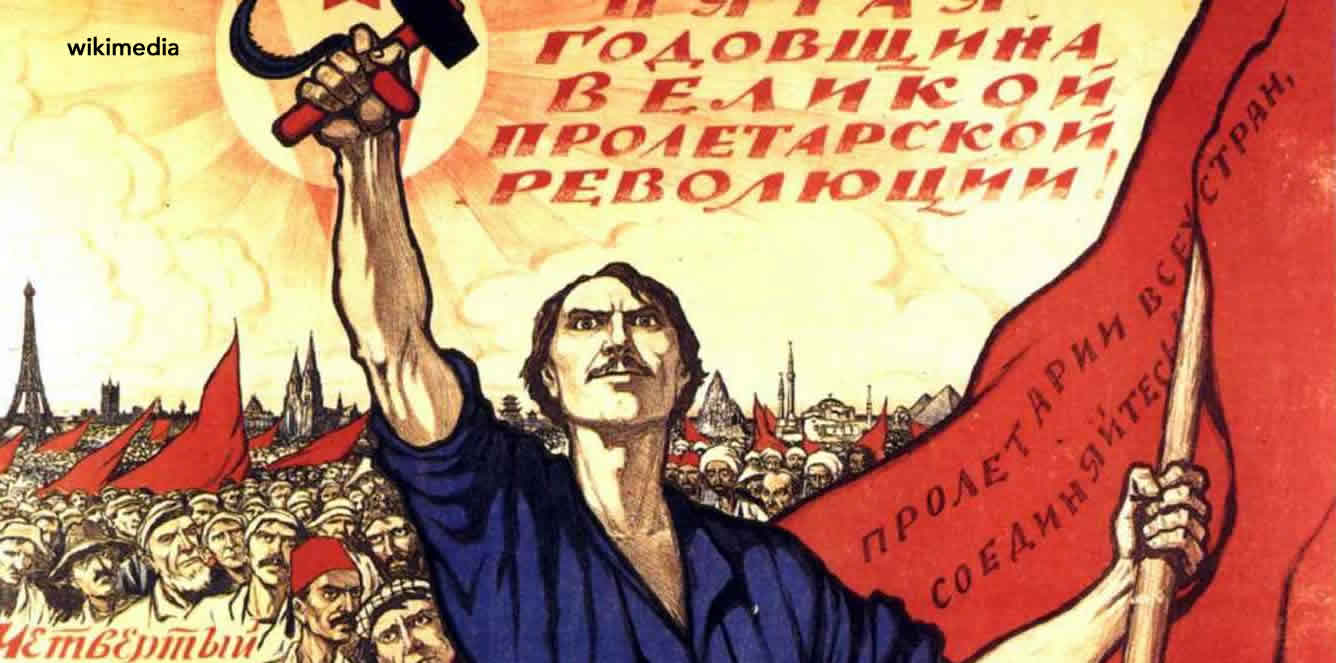
The mystic Giordano Bruno, burnt at the stake by the Roman Catholic Church as a heretic in 1600, is sometimes put forward as a patron saint of science, mistakenly in my view.  Bruno was a mystic, whose ideas were at best loosely grounded in the observable and in no way scientific as we understand the term. His type of magical thinking is similar to that of modern anti-vaccination-ists who claim vaccination can cause autism (it does not)(1) or that GMOs are somehow innately “unhealthy” and more dangerous than “natural” organisms (see: The GMO safety debate is over).  A better model, particularly in the context of current political controversies, would be the many Soviet geneticists who suffered exile and often death (the famed geneticist N.I. Vavilov starved to death in a Soviet gulag in 1943) as a result of the state/party-driven politicization of science, specifically genetics, carried out by Joseph Stalin (1878-1953) and the Communist party/state of the Soviet Union (see: The tragic story of Soviet genetics shows the folly of political meddling in science). In response to the  implications of genetic and evolutionary mechanisms, Stalin favored Lamarckism (inheritance of acquired traits) posited by Ivan Michurin (1855–1935) and Trofim Lysenko (1898–1976)[see link]. Communist ideology required (or rather demanded) that traits, including human traits, be seen as malleable, that the “nature” of plants and people could be altered permanently with appropriate manipulations (vernalization for plants, political re-education for people)[see: The consequences of political dictatorship for Russian science).  No need to wait for the messy, multi-generational processes associated with conventional plant breeding (and Darwinian evolution).  In both cases, the unforgiving realities of the natural world intervened, but not without intense human suffering and starvation associated with both efforts.russion march for science
It is worth noting explicitly that there are, and likely always will be, pressures to politicize science, due in large measure to science’s success in explaining the natural world and providing the basis for its technology-based manipulation. Giordano Bruno was an early martyr in the evolution of a highly ideological world view (illustrated by the house arrest of Galileo and the suppression of heliocentric models of the solar system)(2). Eventually such forms of natural theology were replaced by the apolitical and empirical ideals implicit in Enlightenment science. Aspects of ideological (racist) influences can be seen in 19th century science, most dramatically illustrated by Gould (Morton’s ranking of races by cranial capacity. Unconscious manipulation of data may be a scientific norm)(see link). How racist policies were initially embraced, and then rejected by American geneticists during the course of the 20th century is described by Provine (Geneticists and the Biology of Race Crossing).

More recent events remind us of the pressures to politicize science.  A number of states (Kentucky in 1976, Mississippi in 2006,  Louisiana in 2008, and Tennessee in 2012) have passed bills that allow teachers to present non-scientific ideas to students (think intelligent design creationism and climate change denial).  Such bills continue to come up with depressing frequency.  Most recently an admitted creationist has been appointed to lead a federal  higher education reform task force in the United States [see link]. Is creationism simply alt-science? a position explicitly or tacitly supported by both the religiously orthodox and those of a post-modernist persuasion, such as left-leaning college instructors, who claim that science is a social construct [see: Is Science ‘Forever Tentative’ and ‘Socially Constructed’?].

While such recent anti-science/alt-science attitudes have not had quite the draconian effects found in the Soviet Union, Nazi Germany or eugenist America), I would argue that they have a role in eroding the public’s faith in the scientific understanding of complex processes, a faith that is largely justified even in the face of the so-called “reproducibility crises”, which in a sense is no crises at all, but an expected outcome from the size, complexity, and competing forces acting on scientists and  the scientific enterprise. That said, laws and various forms of coercion dictating right-wing/religious or left-wing/political correctness in science threaten to impact the education of a generation of students. Predictions of climate changed based on human-driven (anthropogenic) increases in atmospheric CO2 levels or the effects of lead in public water systems on human health [link] cannot simply be discarded or discounted based on ideological positions on the role of government in protecting the public interest, a role that neither unfettered capitalism or fundampolitics + science cartoonentalist communism seems particularly good at addressing. Similarly the lack of any demonstrable connection between autism and vaccination (see above), the physicochemical impossibility of homeopathic treatments (or various versions of “Christian Science”), and the lack of evidence for the therapeutic claims made for the rather startling array of nutritional supplements serve to inject a political, ideological, and economic  dimension into scientific discourse.  In fact science is constantly under pressure to distort its message.  Consider the European response to GMOs in favor of the “organic” (non-GMO); most GMOs have been banned from the EU for what appears to be ideological (non-scientific) reasons, even though the same organisms have been found safe and are grown in the US and most of Asia (see this Economist essay).

It is clear that the rejection of scientific observations is wide-spread on both the left and the right, basically whenever scientific observations, ideas, or models lead to disturbing or  discomforting conclusions or implications (link). Consider the violent response when Charles Murray was invited to speak at Middlebury College (see Andrew Sullivan’s Is intersectionality a religion?). That human populations might (and in fact can be expected to) display genetic differences, the result of their migration history and subsequent evolutionary processes, both adaptive and non-adaptive (see Henn et al., The great human expansion), is labelled racist and by implication beyond the pale of scientific discourse, even though it is tacitly recognized by the scientific community to be well established (no one, I think, gets particularly upset at the suggestion that noses are shaped by evolutionary processes and reflect genetic differences between populations (see Climate shaped the human nose) or that nose shape might play a role in human sexual selection (see Facial Attractiveness and Sexual Selection; and sexual dimorphism).  One might even speculate that studies of the role of nose shape in mate selection could form the basis of an interesting research project (see Beauty and the beast: mechanisms of sexual selection in humans.

What often goes undiscussed is whether differences in specific traits (different alleles and allele frequencies) between populations have any meaningful significance in the context f public policy – I would argue that they do not).  What is clear is that in a pre-genomic era recognizing such differences can be of practical value, for example in the treatment of diseases (see Ethnic Differences in Cardiovascular Drug Response). That said, the era of genomics-based personalized diagnosis and treatment is rapidly making such population-based considerations obsolete (see: Genetic tests for disease risks and ethical debate on personal genome testing), while at the same time raising serious issues of privacy and discrimination based on the presence of the “wrong” alleles (see: genome sequencing–ethical issues). In a world of facile genomic engineering the dangers of unfettered technological manipulations move more and more rapidly from science fiction to the boutique (intelligent?) design of people (see: CRISPR gene-editing and human evolution).

So back (about time, you may be thinking) to the original question – if we “march for science”, what exactly are we marching for [link]?  Are we marching to defend the apolitical nature of science and the need to maintain economic support (increased public funding levels) for the scientific enterprise, or are we conflating support for science with a range of social and political positions?  Are we affirming our commitment to a politically independent (skeptical) community of practitioners who serve to produce, reproduce, critically examine, and extend empirical observations and explanatory (predictive) models?

This is not to ignore the various pressures acting on scientists as they carry out their work. These pressures act to tempt (and sometimes reward) practitioners to exaggerate (if not fabricate) the significance of their observations and ideas in order to capture the resources (funds and people) needed to carry out modern science, as well as the public’s attention. Since resources are limited, extra-scientific forces have an increasing impact on the scientific enterprise – enticing scientists to make exaggerated claims and to put forth extra-scientific arguments and various semi-hysterical scenarios based on their observations and models.  In the context of an inherently political event (a march) the apolitical ideals of science can seem too bland to command attention and stir action, not to mention the damage that politicizing science does to the integrity of science.

At the end of the day my decision is not to march, because I believe that science must be protected from the politPearl quote - aegisical and the partisan(see: The pernicious effects of disrespecting the constraints of science); that the ultimate working nature (as opposed to delivered truth) of scientific observations and conclusions must be respected, something rarely seen in any political movement and certainly not on display in the Lysenkoist, climate change, anti-vaccination, or eugenics movements (see this provocative essay: The Disgraceful Episode Of Lysenkoism Brings Us Global Warming Theory.)


Thanks and footnotes
:

Thanks for help on this post from Glenn Branch @ National Center for Science Education.   Of course all opinions are mine alone.

(1) While there is not doubt that vaccinations can, like all drugs and medical interventions, lead to side effects in certain individuals, there is unambiguous evidence against any link between autism and vaccination.

(2) It is worth noting that as originally proposed the Copernican (Sun-centered) model of the solar system was more complex than the Ptolemaic (Earth-centered) system it was meant to replace. It was Kepler’s elliptical, rather than circular, orbits that made the heliocentric model dramatically simpler, more accurate, and more aesthetically compelling.

From the Science March to the Classroom: Recognizing science in politics and politics in science

Jeanne Garbarino (with edits by Mike Klymkowsky)

Purely scientific discussions are hallmarked by objective, open, logical, and skeptical thought; they can describe and explain natural phenomena or provide insights into a broader questions. At the same time, scientific discussions are generally incomplete and tentative (sometimes for well understood reasons). True advocates of the scientific method appreciate the value of its skeptical and tentative approach, and are willing to revise even long-held positions in response to new, empirically-derived evidence or logical contradictions. Over time, science’s scope and conclusions have expanded and evolved dramatically; they provide an increasingly accurate working model of a wide range of processes, from the formation of the universe to the functioning of the human mind. The result is that the ubiquity of science’s impacts on society are clear and growing. However, discussing and debating the details of how science works, and the current consensus view on various phenomena, such as global warming or the causes of cancer or autism, is very different from discussing and debating how a scientific recommendation fits into a societal framework. As described in a recent National Academies Press report on Communicating Science Effectively  [link], “the decision to communicate science [outside of academia] always involves an ethical component. Choices about what scientific evidence to communicate and when, how, and to whom, are a reflection of values.”

Over the last ~150 years, the accelerating pace of advances in science and technology have enabled future sustainable development, but they have also disrupted traditional social and economic patterns. Closing coal mines in response to climate predictions (and government regulations) may be sensible when viewed broadly, but are disruptive to those who have, for generations, made a living mining coal. Similarly, a number of prognosticators have speculated on the impact of robotics and artificial intelligence on traditional socioeconomic roles and rules. Whether such impacts are worth the human costs is rarely explicitly considered and discussed in the public forum, or the classroom. As members of the scientific community, our educational and outreach efforts must go beyond simply promoting an appreciation of, and public support for science. They must also consider its limitations, as well as the potential ethical and disruptive effects on individuals, communities, and/or societies. Making policy decisions with large socioeconomic impacts based on often tentative models raises risks of alienating the public upon which modern science largely depends.

Citizens, experts or not, are often invited to contribute to debates and discussions surrounding science and technology at the local and national levels. Yet, many people are not provided with the tools to fully and effectively engage in these discussions, which involves critically analyzing the scope, resolution, and stability of scientific conclusions. As such, the acceptance or rejection of scientific pronouncements is often framed as an instrument of political power, casting a shadow on core scientific principles and processes, framing scientists as partisan players in a political game. The watering down of the role of science and science-based policies in the public sphere, and the broad public complacency associated with (often government-based, regulatory) efforts, is currently being challenged by the international March For Science effort. The core principles and goals of this initiative [link] are well articulated, and, to my mind, representative of a democratic society. However, a single march on a single day is not sufficient to promote a deep social transformation, and promote widespread dispassionate argumentation and critical thinking. Perspectives on how scientific knowledge can help shape current and future events, as well as the importance of recognizing both the implications and limits of science, are perspectives that must be taught early, often, and explicitly. Social or moral decisions are not mutually exclusive from scientific evidence or ideas, but overlap is constrained by the gates set by values that are held.

In this light, I strongly believe the sociopolitical nature of science in practice must be taught alongside traditional science content. Understanding the human, social, economic and broader (ecological) costs of action AND inaction can be used to highlight the importance of framing science in a human context. If the expectation is for members of our society to be able to evaluate and weigh in on scientific debates at all levels, I believe we are morally obligated to supply future generations with the tools required for full participation. This posits that scientists and science educators, together with historian, philosophers, and economists, etc., need to go beyond the teaching of simple facts and theories by considering how these facts and theories developed over time, their impact on people’s thinking, as well as the socioeconomic forces that shape societies. Highlighting the sociopolitical implications of science-based ideas in classrooms can also motivate students to take a greater interest in scientific learning in particular, and related social and political topics in general. It can help close the gap between what is learned in school and what is required for the critical evaluation of scientific applications in society, and how scientific ideas can and should be evaluated when it comes to social policy or person beliefs.

A “science in a social context” approach to science teaching may also address the common student question, “When will I ever use this?” All too often, scientific content in schools is presented in ways that are abstract, decontextualized, and can feel irrelevant to students. Such an approach can leave a student unable or unwilling to engage in meaningful and substantive discussions on the applications and limitations of science in society. The entire concept of including cost-benefit analyses when considering the role of science in shaping decisions is often over-looked, as if scientific conclusions are black and white. Furthermore, the current culture of science in classrooms leaves little room for students to assess how scientific information does and does not align with their cultural identities, often framing science as inherently conflicting or alien, forcing a choice between one way of seeing the world over the other, when a creative synthesis seems more reasonable. Shifting science education paradigms toward a strategy that promotes “education through science” (as opposed to “science through education”) recognizes student needs and motivations as critical to learning, and opens up channels for introducing science as something that is relevant and enriching to their lives. Centered on the German philosophy of Allgemeinbildung [link] that describes “the competence for participation in critical dialogue on currently important matters,” this approach has been found to be effective in motivating students to develop the necessary skills to implement empirical evidence when forming arguments and making decisions.

In extending the idea of the perceived value of science in sociopolitical debates, students can build important frameworks for effectively engaging with society in the future. A relevant example is the increasing accessibility of genome editing technology, which represents an area of science poised to deeply impact the future of society. In a recent report [link] on the ethics of genome editing, assembled by an panel of clinicians and scientists (experts), it is recommended that the United States should proceed — cautiously — with genome editing studies on human embryos. However, as pointed out [link], this panel failed to include ANY public participation in this decision. This effort, fundamentally ignores “a more conscious evaluation of how this impacts social standing, stigma and identity, ethics that scientists often tend to cite pro forma and then swiftly scuttle.” As this discussion increasingly shifts into the mainstream, it will be essential to engage with the public in ways that promote a more careful and thoughtful analysis of scientific issues [link], as opposed to hyperbolic fear mongering (as seen in regard to most GMO discussions)[link] or reserving genetic engineering to the hyper-affluent. Another, more timely example, involves the the level at which an individual’s genome be used to predict a future outcome or set of outcomes, and whether this information can be used by employers in any capacity [link]. By incorporating a clear description of how science is practiced (including the factors that influence what is studied, and what is done with the knowledge generated), alongside the transfer of traditional scientific knowledge, we can help provide future citizens with tools for critical evaluation as they navigate these uncharted waters.

It is also worth noting tcorrupted sciencehat the presentation of science in a sociopolitical contexts can emphasize learning of more than just science. Current approaches to education tend to compartmentalize academic subjects, framing them as standalone lessons and philosophies. Students go through the school day motions, attending English class, then biology, then social studies, then trigonometry, etc., and the natural connections among subject areas are often lost. When framing scientific topics in the context of sociopolitical discussions and debates, stu
dents have more opportunities to explore aspects of society that are, at face value, unrelated to science.

Drawing from lessons commonly taught in American History class, the Manhattan Project [link] offers an excellent opportunity to discuss the fundamentals of nuclear chemistry as well as sociopolitical implications of a scientific discovery. At face value, harnessing nuclear fission marked a dramatic milestone for science. However, when this technology was pursued by the United States government during World War II — at the urging of the famed physicist Albert Einstein and others — it opened up the possibility of an entirely new category of warfare, impacting individuals and communities at all levels. The reactions set off by the Manhattan Project, and the consequent 1945 bombing of Hiroshima and Nagasaki, are ones that are still felt in international power politics, agriculture, medicine, ecology, economics, research ethics, transparency in government, and, of course, the Presidency of the United States. The Manhattan Project represents an excellent case study on the relationship between science, technology, and society, as well as the project’s ongoing influence on these relationships. The double-edged nature often associated with scientific discoveries are important considerations of the scientific enterprise, and should be taught to students accordingly.

A more meaningful approach to science education requires including the social aspects of the scientific enterprise. When considering a heliocentric view of the solar system, it is worthwhile recognizing its social impacts as well as its scientific foundations (particularly before Kepler). If we want people to see science as a human enterprise that can inspire rather than dictate decisions and behaviors, it will require resifting how science — and scientists — are viewed in the public eye. As written here [link]. we need to restore the relationship between scientific knowledge and social goals by specifically recognizing how

'So... cutting my funding, eh? Well, I've got a pair of mutant fists that say otherwise!'
‘So… cutting my funding, eh? Well, I’ve got a pair of mutant fists that say otherwise!’

science can be used, inappropriately, to drive public opinion. As an example, in the context of CO2-driven global warming, one could (with equal scientific validity) seek to reduce CO2 generation or increase CO2 sequestration. Science does not tell us which is better from a human perspective (although it could tell us which is likely to be easier, technically). While science should inform relevant policy, we must also acknowledge the limits of science and how it fits into many human contexts. There is clearly a need for scientists to increase participation in public discourse, and explicitly consider the uncertainties and risks (social, economic, political) associated with scientific observations. Additionally, scientists need to recognize the limits of their own expertise.

A pertinent example was the call by Paul Ehrlich to limit, in various draconian ways, human reproduction – a political call well beyond his expertise. In fact, recognizing when someone has gone beyond what science can legitimately tell us [link] could help rebuild respect for the value of science-based evidence. Scientists and science educators need to be cognizant of these limits, and genuinely listen to the valid concerns and hesitations held by many in society, rather than dismiss them. The application of science has been, and will always be, a sociopolitical issue, and the more we can do to prepare future decision makers, the better society will be.

Jeanne Garbarino, PhD, Director of Science Outreach, The Rockefeller University, NY, NY

Jeanne earned herJGarbarino Ph.D. in metabolic biology from Columbia University, followed by a postdoc in the Laboratory of Biochemical Genetics and Metabolism at The Rockefeller University, where she now serves as Director of Science Outreach. In this role, she works to provide K-12 communities with equitable access to authentic biomedical research opportunities and resources. You can find Jeanne on social media under the handle @JeanneGarb.

Power Posing & Science Education

Developing a coherent understanding of a scientific idea is neither trivial nor easy and it is counter-productive to pretend that it is.

For some time now the idea of “active learning” (as if there is any other kind) has become a mantra in the science education community (see Active Learning Day in America: link). Yet the situation is demonstrably more complex, and depends upon what exactly is to be learned, something rarely stated explicitly in many published papers on active learning (an exception can be found here with respect to understanding evolutionary mechanisms : link).  The best of such work generally relies on results from multiple-choice “concept tests” that  provide, at best, a limited (low resolution) characterization of what students know. Moreover it is clear that, much like in other areas, research into the impact of active learning strategies is rarely reproduced (see: link, link & link).

As is clear from the level of aberrant and non-sensical talk about the implications of “science” currently on display in both public and private spheres (link : link), the task of effective science education and rigorous scientific (data-based) decision making is not a simple one.  As noted by many there is little about modern science that is intuitively obvious and most is deeply counterintuitive or actively disconcerting (see link).  In the absence of a firm religious or philosophical perspective, scientific conclusions about the size and age of the Universe, the various processes driving evolution, and the often grotesque outcomes they can produce can be deeply troubling; one can easily embrace a solipsistic, ego-centric and/or fatalistic belief/behavioral system.

There are two videos of Richard Feynman that capture much of what is involved in, and required for understanding a scientific idea and its implications. The first involves the basis scientific process, where the path to a scientific understanding of a phenomena begins with a guess, but these are a special kind of guess, namely a guess that implies unambiguous (and often quantitative) predictions of what future (or retrospective) observations will reveal (video: link).  This scientific discipline (link) implies the willingness to accept that scientifically-meaningful ideas need to have explicit, definable, and observable implications, while those that do not are non-scientific and need to be discarded. As witness the stubborn adherence to demonstrably untrue ideas (such as where past Presidents were born or how many people attended an event or voted legally), which mark superstitious and non-scientific worldviews.  Embracing a scientific perspective is not easy, nor is letting go of a favorite idea (or prejudice).  The difficulty of thinking and acting scientifically needs to be kept in the mind of instructors; it is one of the reasons that peer review continues to be important – it reminds us that we are part of a community committed to the rules of scientific inquiry and its empirical foundations and that we are accountable to that community.

The second Feynman video (video : link) captures his description of what it means to understand a particular phenomenon scientifically, in this particular case, why magnets attract one another.  The take home message is that many (perhaps most) scientific ideas require a substantial amount of well-understood background information before one can even begin a scientifically meaningful consideration of the topic. Yet all too often such background information is not considered by those who develop (and deliver) courses and curricula. To use an example from my own work (in collaboration with Melanie Cooper @MSU), it is very rare to find course and curricular materials (textbooks and such) that explicitly recognize (or illustrate) the underlying assumptions involved in a scientific explanation.  Often the “central dogma” of molecular biology is taught as if it were simply a description of molecular processes, rather than explicitly recognizing that information flows from DNA outward (link)(and into DNA through mutation and selection).  Similarly it is rare to see stated explicitly that random collisions with other molecules supply the energy needed for chemical reactions to proceed or to break intermolecular interactions, or that the energy released upon complex formation is transferred to other molecules in the system (see : link), even though these events control essentially all aspects of the systems active in organisms, from gene expression to consciousness.

The basic conclusion is that achieving a working understanding of a scientific ideas is hard, and that, while it requires an engaging and challenging teacher and a supportive and interactive community, it is also critical that students be presented with conceptually coherent content that acknowledges and presents all of the ideas needed to actually understand the concepts and observations upon which a scientific understanding is based (see “now for the hard part” :  link).  Bottom line, there is no simple or painless path to understanding science – it involves a serious commitment on the part of the course designer as well as the student, the instructor, and the institution (see : link).

This brings us back to the popularity of the “active learning” movement, which all too often ignores course content and the establishment of meaningful learning outcomes.  Why then has it attracted such attention?  My own guess it that is provides a simple solution that circumvents the need for instructors (and course designers) to significantly modify the materials that they present to students.  The current system rarely rewards or provides incentives for faculty to carefully consider the content that they are presenting to students, asking whether it is relevant or sufficient for students’ to achieve a working understanding of the subject presented, an understanding that enables the student to accurately interpret and then generate reasoned and evidence-based (plausible) responses.

Such a reflective reconsideration of a topic will often result in dramatic changes in course (and curricular) emphasis; traditional materials may be omitted or relegated to more specialized courses.  Such changes can provoke a negative response from other faculty, based of often inherited (an uncritically accepted) ideas about course “coverage”, as opposed to desired and realistic student learning outcomes.  Given the resistance of science faculty (particularly at institutions devoted to scientific research) to investing time in educational projects (often a reasonable strategy, given institutional reward systems), there is a seductive lure to easy fixes. One such fix is to leave the content unaltered and to “adopt a pose” in the classroom.

All of which brings me to the main problem – the frequency with which superficial (low cost, but often ineffectual) strategies can act to inhibit and distract from significant, but difficult reforms.  One cannot help but be reminded of other quick fixes for complex problems.  The most recent being the idea, promulgated by Amy Cuddy (Harvard: link) and others, that adopting a “power pose” can overcome various forms of experienced- and socioeconomic-based prejudices and injustices, as if over-coming a person’sexperiences and situation is simply a matter of will. The message is that those who do not succeed have only themselves to blame, because the way to succeed is (basically) so damn simple.  So imagine one’s surprise (or not) when one discovers that the underlying biological claims associated with “power posing” are not true (or at least cannot be replicated, even by the co-authors of the original work (see Power Poser: When big ideas go bad: link).  Seems as if the lesson that needs to be learned, both in science education and more generally, is that claims that seem too easy or universal are unlikely to be true.  It is worth remembering that even the most effective modern (and traditional) medicines, all have potentially dangerous side effects. Why, because they lead to significant changes to the system and such modifications can discomfort the comfortable. This stands in stark contrast to non-scientific approaches; homeopathic “remedies” come to mind, which rely on placebo effects (which is not to say that taking ineffective remedies does not itself  involve risks.)

As in the case of effective medical treatments, the development and delivery of engaging and meaningful science education reform often requires challenging current assumptions and strategies that are often based in outdated traditions, and are influenced more by the constraints of class size and the logistics of testing than they are by the importance of achieving demonstrable enhancements of students’ working understanding of complex ideas.

In an age of rampant narcissism and social cheating – the importance of teaching social evolutionary mechanisms.

As socioeconomic inequality grows,  the publicly acknowledged importance of traits such as honesty, loyalty, self-sacrifice, and reciprocity appears to have fallen out of favor with some of our socio-economic and political elites. How many people condeHutton quotemn a person as dishonest one day and embrace them the next? Dishonesty and selfishness no longer appear to be taboo, or a source of shame that needs to be expurgated (perhaps my Roman Catholic upbringing is bubbling to the surface here).  A disavowal of shame and guilt and the lack of serious social censure appears to be on the rise, particularly within the excessively wealthy and privileged, as if the society from which they extracted their wealth and fame does not deserve their active participation and support [link: Hutton, 2009].  They have embraced a “winning takes all” strategy.

birds in a flockIf an understanding of evolutionary mechanisms is weak within the general population [link], the situation is likely to be much worse when it comes to an understanding of the role and outcomes of social evolutionary mechanisms. Yet, the evolutionary origins of social systems, and the mechanisms by which such systems are maintained against the effects of what are known as “social cheaters”, are critical to understanding and defending, human social behaviors  such as honesty, cooperation, loyalty, self-sacrifice, self-restraint, mutual respect, responsibility and kindness.

While evolutionary processes are often caricatured as favoring selfish behaviors, the facts tell a more complex, organism-specific story [link: Aktipis 2016]. Cooperation between organisms underlies a wide range of behaviors, from sexual reproduction and the formation of multicellular organisms (animals, plants, and people) to social systems, ranging from microbial films to bee colonies and construction companies [see Bourke, 2011: Principles of Social Evolution] [Wikipedia link].

One of the best studied of social systems involves the cellular slime mold Dictyostelium discoideum [Wikipedia link].  When life is good, that is when the world is moist and bacteria, the food of these organisms, are plentiful, D. discoideum live and reproduce happily as single celled amoeba-like individuals in soil.  Given their small size (~5 μm diameter), they cannot travel far, but that does not matter as long as their environment is hospitable.  When the environment turns hostile, however, an important survival strategy is to migrate to a new location – but what is a little guy to do?  The answer in this species is to cooperate.  Individual amoeba begin to secrete a chemical that acts to attract others; eventually thousands of individuals aggregate to form a multicellular “slug”; slugs migrate around to 1066px-Dicty_Life_Cycle_H01.svgfind a hospitable place and then differentiate into a fruiting body that stands ~1mm (20x the size of an individual amoeba) above the ground.  To form the stalk that lifts the “fruiting body” into the air, a subset of cells (once independent individuals) change shape. These stalk cells die, while the rest of the cells form the fruiting body, which consists of spores – cells specialized to survive dehydration.  Spores are released into the air where they float and are dispersed over a wide range.  Those spores that land in a happy place (moist and verdant), revert to the amoeboid life style, eat, grow, divide and generate a new (clonal) population of amoeboid cells: they have escaped from a hostile environment to inhabit a new world, a migration made possible by the sacrifice of the cells that became the stalk (and died in the process).  Similar types of behavior occur in a wide range of macroscopic organisms [Scrambling to the top: link].  Normally, who becomes a stalk cell and who becomes a spore is a stochastic process [see previous PLoS blog post on stochastics and biology education].
Cheaters in the slime mold system are individuals who take part in the aggregation process (they respond to the migration signal and become part of the slug), but have altered their behavior to avoid becoming a stalk cell – no self-sacrifice for them. Instead they become spores.  In the short run, such a strategy can be beneficial to the individual, after all it has a better chance of survival if it can escape a hostile environment.  But imagine a population made up only of cheaters – no self-sacrifice, no stalk, no survival advantage = death [see link: Strassmann & Queller, 2009].

A classic example of social cheating with immediate relevance to the human situation is cancer.  Within a sexually reproducing multicellular organism, reproduction is strictly restricted to the cells of the germ line – eggs and sperm.  The other cells of the organism, known collectively as somatic cells, have ceded their reproductive rights to the organism as a whole.  While somatic cells can divide, they divide in a controlled and strictly regulated (unselfish) way.  Somatic cells do not survive the death of the organism – only germ line cells (sperm and eggs) are able to produce a new organism.  In the end cellular cooperation has been a productive strategy, as witness the number of different types of multicellular organisms, including humans.  If a somatic cell breaks the social contract and cheats, that is, begins to divide (asexually) in an independent manner, it can lead to the formation of a  tumor and later, if the cells of the tumor start to migrate within the organism, to metastatic cancer.  More rarely (apparently) such cells can migrate between organisms, as in the case of transmissible cancers in dogs, Tasmanian Devils, and clams [see links: Murchison 2009 and Ujvari et al 2016).  The growth and evolution of the tumor cell leads to the death of the organism and the cancer cells’ own extinction, another example of the myopic nature of evolutionary processes.

In the case of cancer the organism’s defenses against social cheaters comes in two forms, intrinsic to the individual cheater cells, in the form of cell suicide (known through a number of technical terms including apoptosis, anoikis and necroptosis)[link: Su et al., 2015] and extrinsic and organismic processes, such as the ability of the organism’s immune system to identify and kill cancer cells – a phenomena with therapeutically relevant implications [link: Ledford, 2014].  We can think of these two processes as guilt + shame (leading to cellular suicide) and policing + punishment (leading to immune system killing).  For a cell to escape growth control and to evolve to produce metastatic disease, it needs to inactivate or ignore intrinsic cell death systems and to evade the immune system.

To consider another example, social systems are based on cooperation, often involving the sharing of resources with those in need.  A recent example is the sharing of food (blood) between vampire bats [see link: Carter & Wilkinson, 2013].  The rules, as noted by Aktipis, are simple, 1) ask only when in need and 2) give when asked and able.  In this context, we can identify two types of social cheaters – those who ask when they do not need and those you fail to give when asked and able.  People who refuse to work even when they can and when jobs are available fall into the first group, the rich who avoid taxes and fail to donate significant funds to charities the other.  It is an interesting question of how to characterize those who borrow money and fail to repay it.  Bankruptcy laws that protect the wealth of the borrower while leading to losses to the lender might be seen as acting to undermine the social contract (clearly philosophers’ and economists’ comments here would be relevant).

Given that social systems at all levels are based on potentially costly traits, such as honesty, loyalty, self-sacrifice, and reciprocity, the evolutionary origins of social systems must lie in their ability to increase reproductive success, either directly or through effects on relatives, a phenomena known as inclusive fitness [Wikipedia link]. Evolutionary processes also render social systems vulnerable to cheating and so have driven the development of a range of defenses against various forms of social cheaters (see above).  But recent political and cultural events appear to be acting to erode and/or ignore society’s defenses.

So what to do?  Revolution? From a PLoS Science education perspective, one strategy suggests itself:  to encourage (require) that students and the broader public be introduced to effective instruction on social evolutionary mechanisms, the traits they can generate (various forms of altruism and cooperation), the reality and pernicious effects of social cheaters, and the importance of defenses against them.  In this light, it appears that social evolutionary processes are missing from the Next Generation Science Standards [NGSS link]. Understanding the biology, together with effective courses in civics [see link: Teaching Civics in the Year of The Donald] might serve to bolster the defense of civil society.

December 22, 2016, minor update 23 October 2020 – Mike Klymkowsky

Featured image is used with permission from Matthew Lutz (Princeton University).

Army ants’ ‘living’ bridges span collective intelligence, ‘swarm’ robotics (PNAS)

The pernicious effects of disrespecting the constraints of science

By Mike Klymkowsky

Recent political events and the proliferation of “fake news” and the apparent futility of fact checking in the public domain have led me to obsess about the role played by the public presentation of science. “Truth” can often trump reality, or perhaps better put, passionately held beliefs can overwhelm a circumspect worldview based on a critical and dispassionate analysis of empirically established facts and theories. Those driven by various apocalyptic visions of the world, whether religious or political, can easily overlook or corrupted sciencetrivialize evidence that contradicts their assumptions and conclusions. While historically there have been periods during which non-empirical presumptions are called into question, more often than not such periods have been short-lived. Some may claim that the search for absolute truth, truths significant enough to sacrifice the lives of others for, is restricted to the religious, they are sadly mistaken – political, often explicitly anti-religious  movements are also susceptible, often with horrific consequences, think Nazism and communist-inspired apocalyptic purges. The history of eugenics and forced sterilization based on flawed genetic and ideological premises have similar roots.
Given the seductive nature of belief-based “Truth”, many turned to science as a bulwark against wishful and arational thinking. The evolving social and empirical (data-based) nature of the scientific enterprise, beginning with guesses as to how the world (or rather some small part of the world) works, then following the guess’s logical implications together with the process of testing those implications through experiment or observation, leading to the revision (or abandonment) of the original guess, moving it toward hypothesis and then, as it becomes more explanatory and accurately predictive, and as those predictions are confirmed, into a theory.  So science is a dance between speculation and observation. In contrast to a free form dance, the dance of science is controlled by a number of rigid, and oppressive to some, constraints [see Feynman &  Rothman 2020. How does Science Really work].

Perhaps surprisingly, this scientific enterprise has converged onto a small set of over-arching theories and universal laws that appear to explain much of what is observable, these include the theory of general relativity, quantum and atomic theory, the laws of thermodynamics, and the theory of evolution. With the noticeable exception of relativity and quantum mechanics, these conceptual frameworks appear to be compatible with one another. As an example, organisms, and behaviors such as consciousness, obey and are constrained by, well established and (apparently) universal physical and chemical rules.

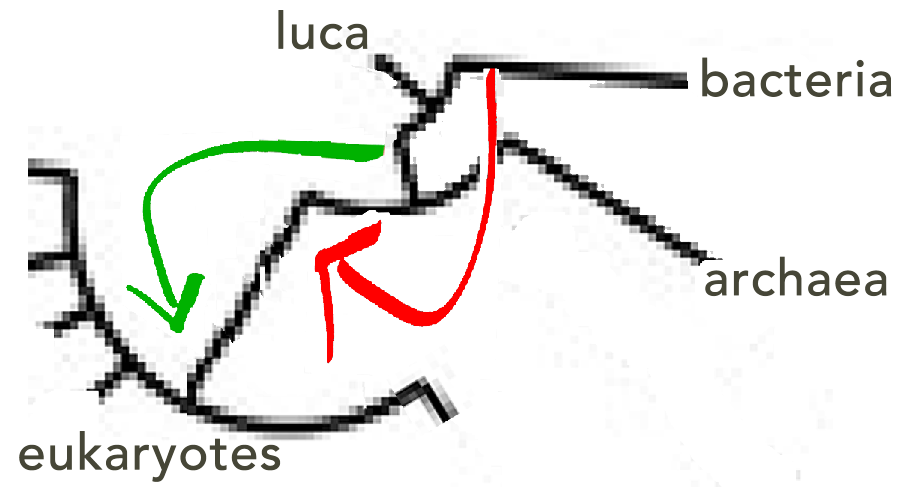
endosymbiosis-1.fwA central constraint on scientific thinking is that what cannot in theory be known is not a suitable topic for scientific discussion. This leaves outside of the scope of science a number of interesting topics, ranging from what came before the “Big Bang” to the exact steps in the origin of life. In the latter case, the apparently inescapable conclusion that all terrestrial organisms share a complex “Last Universal Common Ancestor” (LUCA) makes theoretically unconfirmable speculations about pre-LUCA living systems outside of science.  While we can generate evidence that the various building blocks of life can be produced abiogenically (a process begun with Wohler’s synthesis of urea) we can only speculate as to the systems that preceded LUCA.

Various pressures have led many who claim to speak scientifically (or to speak for science) to ignore the rules of the scientific enterprise – they often act as if their are no constraints, no boundaries to scientific speculation. Consider the implications of establishing “astrobiology” programs based on speculation (rather than observations) presented with various levels of certainty as to the ubiquity of life outside of Earth [the speculations of Francis Crick and Leslie Orgel on “directed panspermia”: and the psuedoscientific Drake equation come to mind, see Michael Crichton’s famous essay on Aliens and global warming]. Yet such public science pronouncements appear to ignore (or dismiss) the fact that we know, and can study, only one type of life (at the moment), the descendants of LUCA. They appear untroubled when breaking the rules and abandoning the discipline that has made science a powerful, but strictly constrained human activity.

Whether life is unique to Earth or not requires future explorations and discoveries that may (or given the technological hurdles involved, may not) occur. Similarly postulating theoretically unobservable alternative universes or the presence of some form of consciousness in inanimate objects [an unscientific speculation illustrated here] crosses a dividing line between belief for belief’s sake, and the scientific – it distorts and obscures the rules of the game, the rules that make the game worth playing [again, the Crichton article cited above makes this point]. A recent rather dramatic proposal from some in the physical-philosophical complex has been the claim that the rules of prediction and empirical confirmation (or rejection) are no longer valid – that we can abandon requiring scientific ideas to make observable predictions [see Ellis & Silk]. It is as if objective reality is no longer the benchmark against which scientific claims are made; that perhaps mathematical elegance (see Sabine Hossenfelder’s Losts in Math) or spiritual comfort are more important – and well they might be (more important) but they are outside of the limited domain of science. At the 2015 “Why Trust a Theory” meeting, the physicist Carlo Rovelli concluded “by pointing out that claiming that a theory is valid even though no experiment has confirmed it destroys the confidence that society has in science, and it also misleads young scientists into embracing sterile research programs.” [quote from Massimo’s Pigliucci’s Footnotes to Plato blog].

While the examples above are relatively egregious, it is worth noting that various pressures for glory, fame, and funding can to impact science more frequently – leading to claims that are less obviously non-scientific, but that bend (and often break) the scientific charter. Take, for example, claims about animal models of human diseases. Often the expediencies associated with research make the use of such animal models necessary and productive, but they remain a scientific compromise. While mice, rats, chimpanzees, and humans are related evolutionarily, they also carry distinct traits associated with each lineage’s evolutionary history, and the associated adaptive and non-adaptive processes and events associated with that history. A story from a few years back illustrates how the differences between the immune systems of mice and humans help explain why the search, in mice, for drugs to treat sepsis in humans was so relatively unsuccessful [Mice Fall Short as Test Subjects for Some of Humans’ Deadly Ills]. A similar type of situation occurs when studies in the mouse fail to explicitly acknowledge how genetic background influences experimental phenotypes [Effect of the genetic background on the phenotype of mouse mutations], as well as how details of experimental scenarios influence human relevance [Can Animal Models of Disease Reliably Inform Human Studies?].

Speculations that go beyond science (while hiding under the aegis of science – see any of a number of articles on quantum consciousness) – may seem just plain silly, but by abandoning the rules of science they erode the status of the scientific process.  How, exactly, would one distinguish a conscious from an unconscious electron?

In science (again as pointed out by Crichton) we do not agree through consensus but through data and respect for critical analyzed empirical observations. The laws of thermodynamics, general relativity, the standard model of particle physics, and evolution theory are conceptual frameworks that we are forced (if we are scientifically honest) to accept. Moreover the implications of these scientific frameworks can be annoying to some; there is no possibility of a “zero waste” process that involves physical objects, no free lunch (perpetual motion machine), no efficient, intelligently-designed evolutionary process (just blind variation and differential reproduction), and no zipping around the galaxy. The apparent limitation of motion to the speed of light means that a “Star Wars” universe is impossible – happily, I would argue, given the number of genocidal events that appear to be associated with that fictional vision – just too many storm troopers for my taste.

Whether our models for the behavior of Earth’s climate or the human brain can be completely accurate (deterministic), given the roles of chaotic and stochastic events in these systems, remains to be demonstrated; until they are, there is plenty of room for conflicting interpretations and prescriptions. That atmospheric levels of greenhouse gases are increasing due to human activities is unarguable, what it implies for future climate is less clear, and what to do about it (a social, political, and economic discussion informed but not determined by scientific observations) is another.

As we discuss science, we must teach (and continually remind ourselves, even if we are working scientific practitioners) about the limits of the scientific enterprise. As science educators, one of our goals needs to be to help students develop an appreciation of the importance of an honest and critical attitude to observations and conclusions, a recognition of the limits of scientific pronouncements. We need to explicitly identify, acknowledge, and respect the constraints under which effective science works and be honest in labeling when we have left scientific statements, lest we begin to walk down the path of little lies that morph into larger ones.  In contrast to politicians and other forms of religious and secular mystics, we should know better than to be seduced into abandoning scientific discipline, and all that that entails.

Minor update + figures reintroduced 20 October 2020

M.W. Klymkowsky  web site:  http://klymkowskylab.colorado.edu