
A recently retired, yet a still spritely molecular/cellular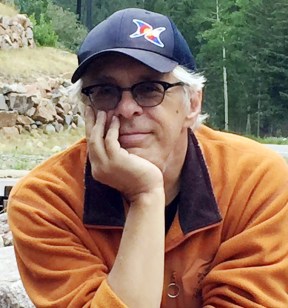 biologist at UC Boulder, my other academic interest has been how scientific ideas are understood, misunderstood, presented to students so that they actually learn them (as an example see Making mechanistic sense).
Background: The child of immigrants and a first gen. college student, I earned degrees in biophysics from Penn State working with Alex Keith and Wally Snipes and a Ph.D. from CalTech working with Bob Stroud. At UCSF the neurobiology group (Zach Hall et al) rescued me. After post-doctoral work with Martin Raff (University College London) and Lee Rubin (Rockefeller University), I moved to Boulder in 1983. I have studied a range of topics, from bacterial virus assembly, neurotransmitter receptor structure, cytoskeletal organization, signaling systems, and ciliary functions – much of the later work in the context of the clawed frog Xenopus laevis. A summary can be found here.
With NSF support, Kathy Garvin-Doxas and I developed the Biological Concepts Instrument (BCI) [link] to monitor and identify conceptual confusions in students. During a sabbatical with Ernst Hafen and colleagues, I taught “Teaching and Learning Biology” (a course initially developed with Erin Furtak and later taught with Will Lindsay as part of CU Teach). I worked with Annie Champagne-Queloz and other on (link to) a modified form of the BCI.
Around the same time as the original BCI, I developed a transformed version of our introductory molecular biology course sequence, first as an interactive web site and a suite of virtuallaboratory activities developed by Tom Lundy. These projects led to a long term and on-going collaboration with Melanie Cooper (Michigan State University) and the NSF-supported, research validated reformed and open educational resource (free OER) curricula in general chemistry (CLUE: Chemistry, Life, the Universe & Everything), organic chemistry (OCLUE), and molecular biology (biofundamentals) – see (LibreText site + biofundamentals text site).
As part of these projects we developed the beSocratic formative assessment system and have integrated a genAI-based instructor-free back system based on student responses to these activities. These allow us to monitor what students do and do not “get” in a class, a course, or a curriculum and enable instructors, departments, and administrators on student learning outcomes and possible modifications of scope and pedagogical approaches . The process is similar to analyzing student explanations for why, in a multiple choice test, the wrong answers are wrong (see “The end of multiple choice tests”).
I was a Pew Biomedical Scholar and am a Fellow of the American Association for the Advancement of Science (AAAS). I was named the 2012-2013 Outstanding Undergraduate Science Teacher by the Society for College Science Teaching and have received a Boulder Faculty Assembly Teaching Excellence award. I have been co-director (now advisor) along with Valerie Otero to CU Teach , the science teaching certification program at CU Boulder.
I have served as a PLOS ONE Academic Editor since 2010. My orcid ID is: http://orcid.org/0000-0001-5816-9771
 bioliteracy / biofundamentals